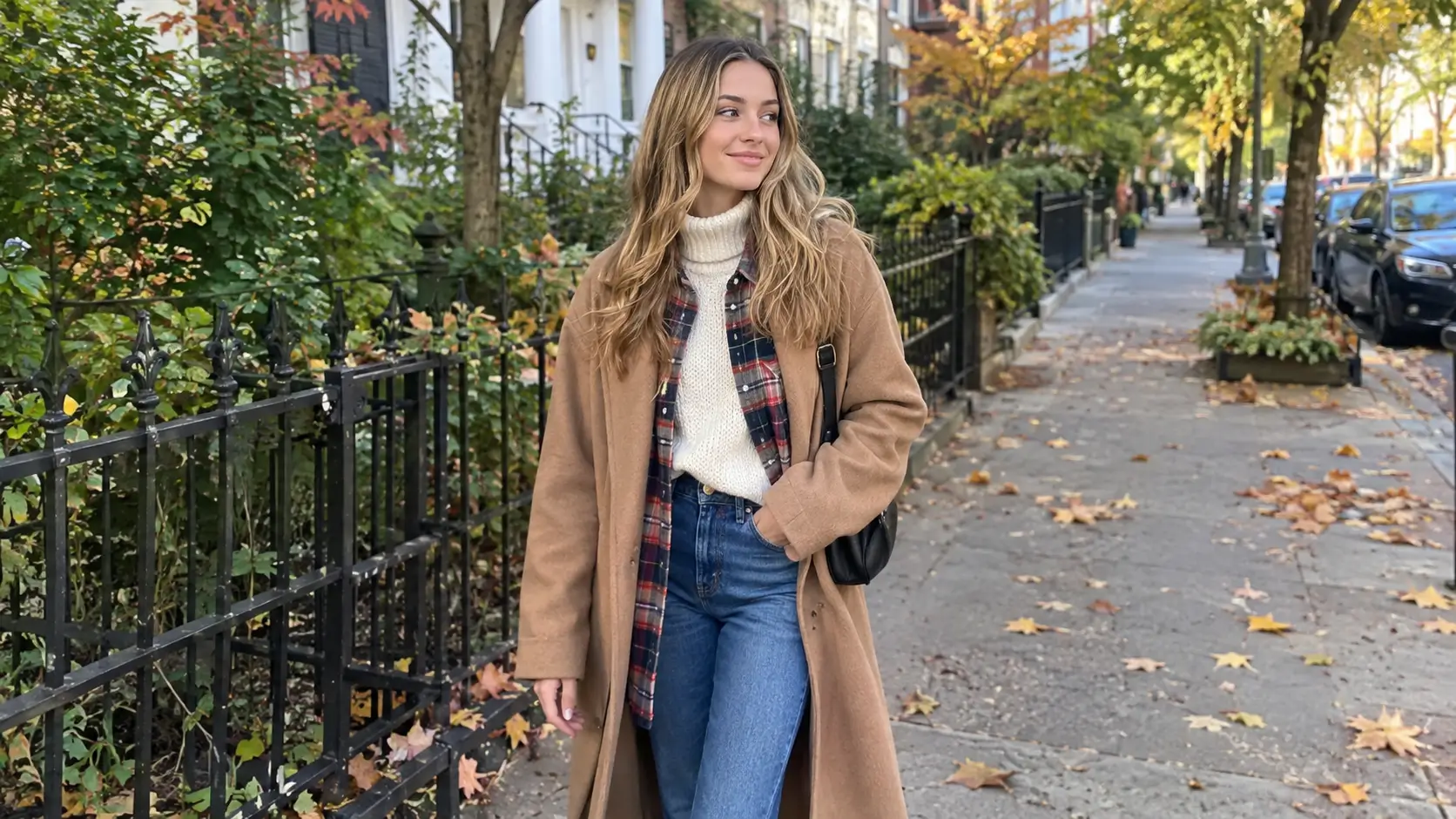
A fall morning that starts at 45 degrees can sit at 68 by early afternoon, and most outfits aren’t built to handle both ends of that swing without a coat you end up carrying around all day.
Layering fixes that, but only when the pieces are chosen to come off in order, something you can peel down to at lunch and build back up to by the time you’re walking out after dinner. The 19 combinations below cover weekday errands, desk days, thrifted pieces, and the kind of layering that still looks put together after you’ve been sitting on a couch for an hour.
They’re grouped by where you’re actually wearing them, so skip ahead to whatever your Tuesday looks like.
Weekend-Easy Layers
These hold up through a farmers market, a coffee run, and whatever gets added to the day without a second trip home to change.
1. Flannel Tied Over a Hoodie
A flannel shirt worn open and knotted at the waist over a plain hoodie, with straight-leg jeans and slip-on sneakers underneath.
Knotting the flannel is what keeps it from doubling the hoodie’s bulk at the hip. The two soft layers trap enough warmth on their own that you don’t need a heavier coat until the temperature actually drops.

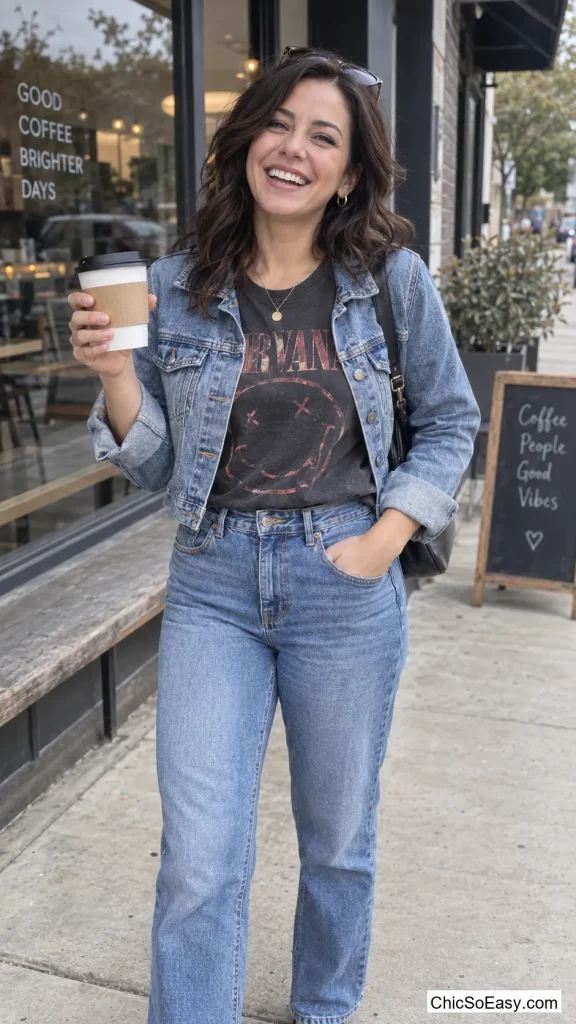
2. Thrifted Band Tee Under Denim
A worn-in band tee, ideally something secondhand with a cracked print, tucked loosely into medium-wash straight jeans, with a cropped denim jacket left open on top.
The faded tee keeps the denim-on-denim from reading matchy. Cropping the jacket at the waistband also matters here, since a longer style would stack right on top of the jeans instead of stopping where they start.
If the morning is colder than the forecast promised, swap the cropped jacket for an oversized one and cuff the sleeves twice so the tee still shows at the wrist.
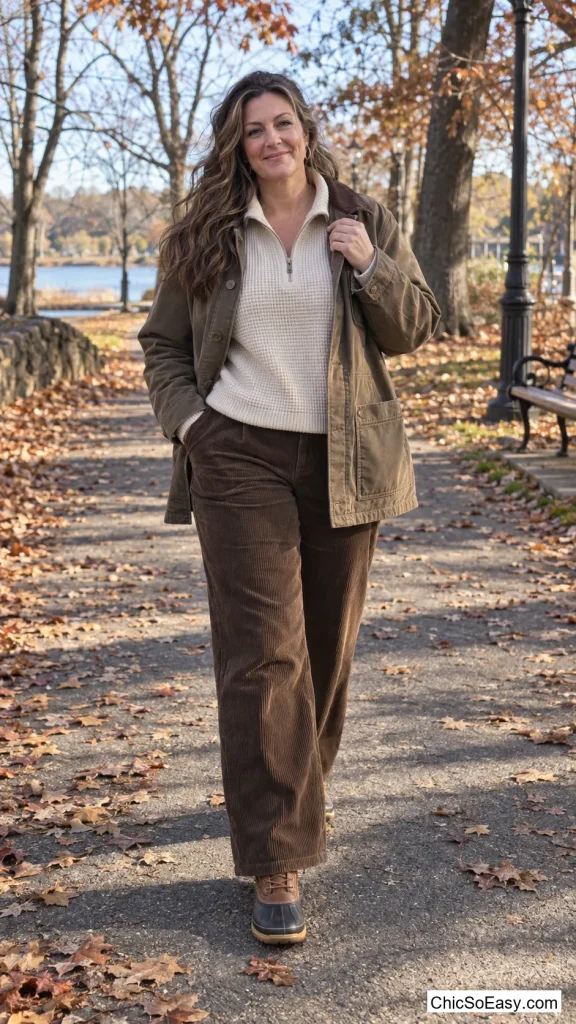
3. Half-Zip Pullover Under a Barn Coat
A fleece or waffle-knit half-zip pullover zipped to the collarbone, worn under a long canvas barn coat left unbuttoned, with wide-leg corduroys and duck boots.
The barn coat’s boxy cut has enough room to fit a full pullover underneath without pulling at the shoulders, and the length covers the hips so the corduroys don’t need to coordinate with anything above them.
Office-Ready Layers
Built to survive a full seated day: a meeting, lunch out, a walk to the parking garage, without wrinkling into something you have to explain.
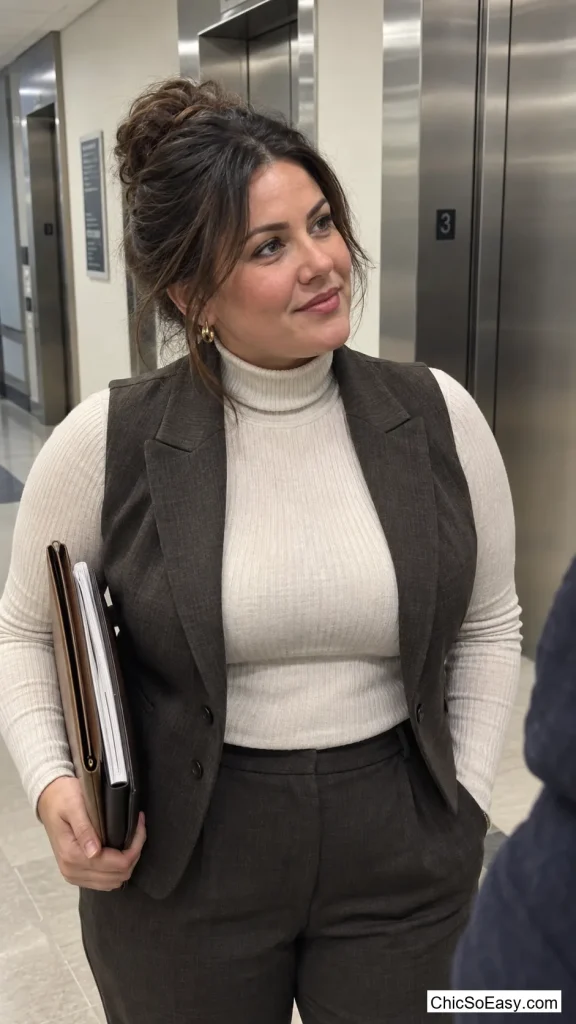
4. Turtleneck Under a Menswear Vest
A fitted ribbed turtleneck under a structured menswear-style vest, the kind with a notched collar and welt pockets, paired with tailored trousers and loafers.
The vest’s structure carries the shoulder line, so the soft turtleneck underneath doesn’t read sloppy on its own. Skipping sleeves also means the outfit stays slim enough to fit under a coat later without bunching at the elbow.
5. Silk Cami Under a Wool Blazer
A silk or satin cami with thin straps worn under an oversized wool blazer buttoned at the top button only, with straight trousers and pointed flats.
The cami’s slight sheen catches light at the collar without adding warmth the blazer doesn’t need help with. Leaving just the top button closed keeps the blazer from squaring off the whole silhouette the way a fully buttoned one would.
If the office runs cold, a thin ribbed layer under the cami solves it without changing anything visible in the outfit.

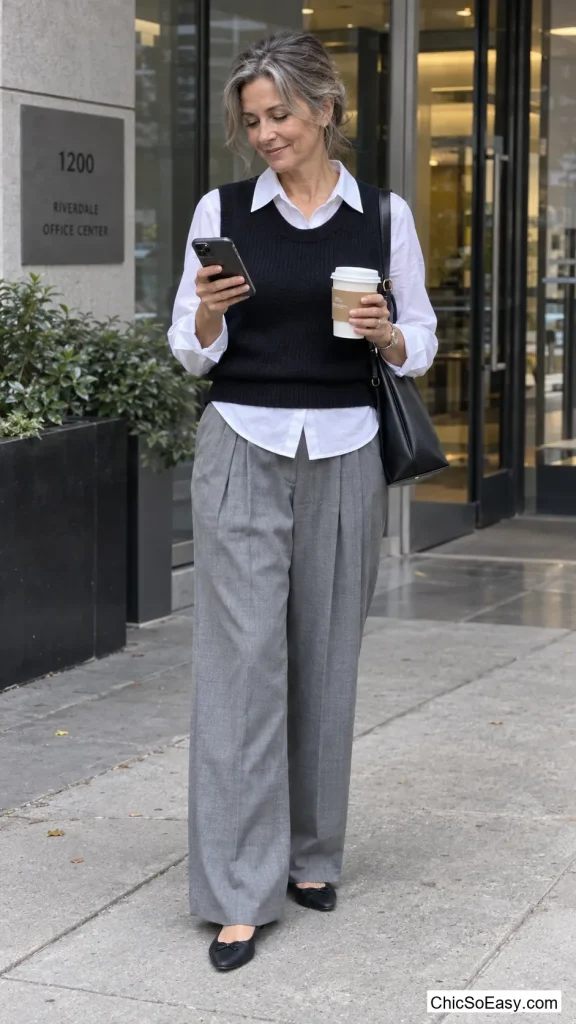
6. Sweater Vest Over a Collared Shirt
A cotton collared shirt with the sleeves left long, buttoned underneath a fine-gauge sweater vest, tucked into pleated wide-leg pants.
The collar and cuffs peeking past the vest do the work a full sweater would otherwise hide. The outfit ends up reading layered without the extra fabric of a cardigan or blazer stacked on top.
Date Night Layers
Enough coverage to walk there in the cold, nothing so bulky it has to come off the second you sit down.
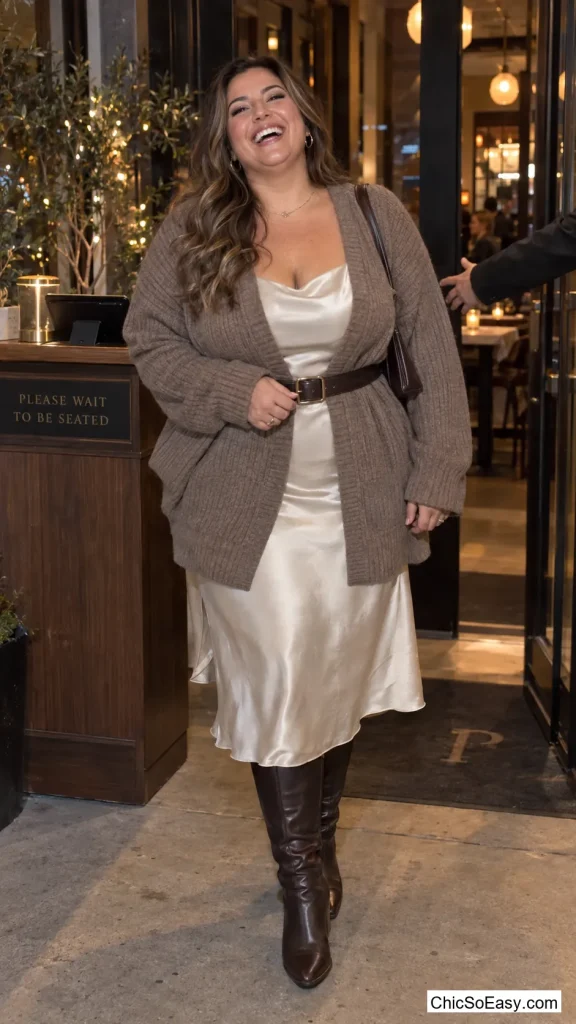
7. Slip Dress Under an Oversized Cardigan
A bias-cut slip dress worn under an oversized cardigan, belted at the waist over the cardigan instead of under it, with knee-high boots.
Belting over the cardigan pulls the shape back in after the oversized layer, so the slip dress still reads as the outfit instead of disappearing underneath it entirely.
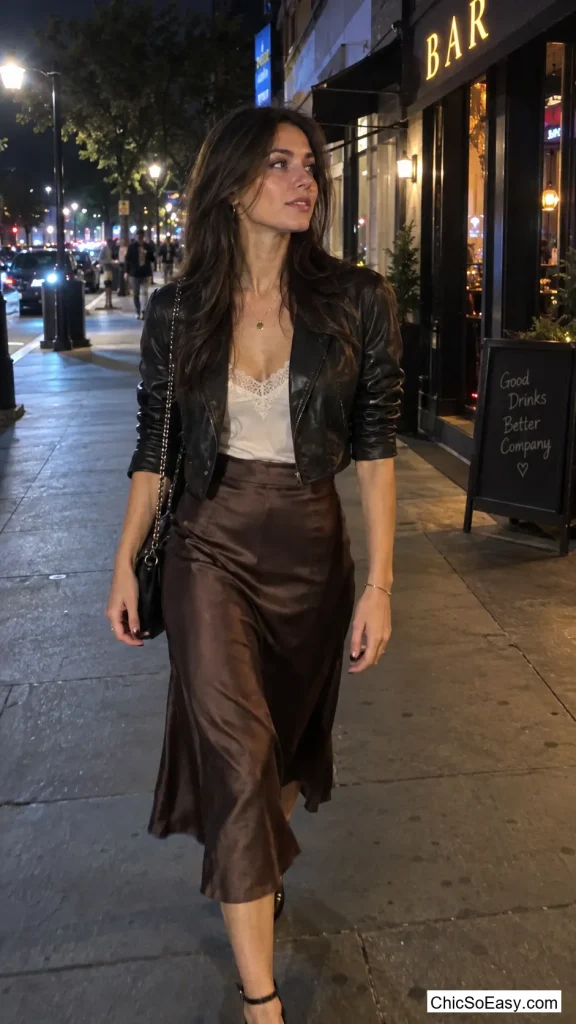
8. Lace Cami Under Cropped Leather
A lace-trim cami tucked into a high-waisted midi skirt, with a cropped leather jacket on top and the sleeves pushed up to the elbow.
The jacket’s crop length lines up with the skirt’s waistband, so the lace cami shows in a narrow strip instead of getting fully covered. Pushing the sleeves up keeps the proportions from going top-heavy against the skirt.
If there’s standing around outside before you get in anywhere, a thin base layer under the cami buys extra comfort before the jacket has to come off.
9. Satin Slip Skirt With Moto Boots
A satin slip skirt with a ribbed tank tucked in and a moto-style jacket over top, finished with ankle-height moto boots.
Satin’s sheen and leather’s matte finish contrast enough that the outfit doesn’t read as one texture head to toe. The ribbed tank also keeps the slip skirt from sliding around under the jacket through the night.

Thrifted & Budget Layers
None of these need a new purchase. They’re built from pieces that are either already in the closet or easy to find secondhand.
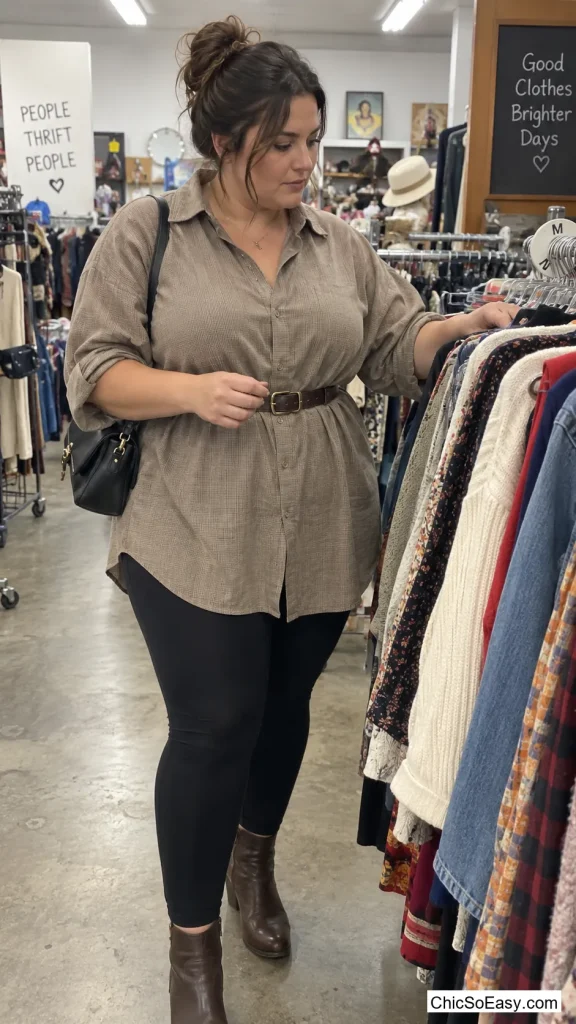
10. Men’s Button-Down Belted Over Leggings
An oversized men’s button-down shirt, borrowed, thrifted, or picked up straight from the men’s section, belted at the natural waist, worn over black leggings with ankle boots.
The belt is what turns a shirt three sizes too big into a shape instead of a shapeless layer. Leggings also mean the shirt’s length doesn’t matter the way it would with jeans, since there’s nothing underneath it has to line up with.
11. Cardigan Buttoned Backward Over a Tank
A plain cardigan worn backward, buttons at the spine instead of the front, over a fitted tank top and straight jeans.
Worn backward, the cardigan’s round neckline sits like a boatneck sweater instead of a cardigan. That’s the whole trick: one thrift find reads as two different sweaters depending on which way it faces.
A cardigan with a slightly stretched-out neckline actually works better for this than a brand-new one, since the stretch lets the boatneck shape sit flatter across the collarbone.
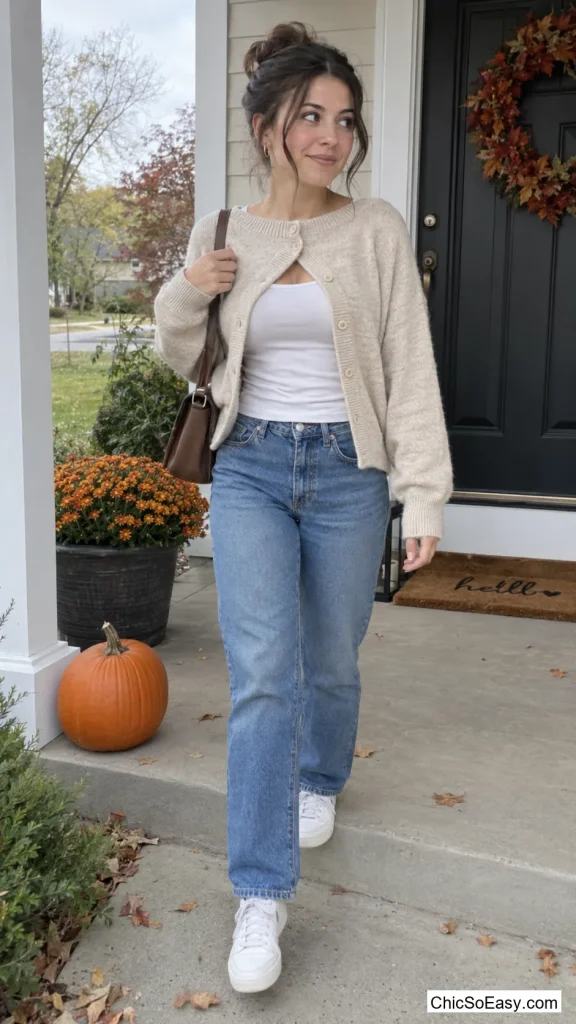
12. Soft Tee Under a Cable Knit
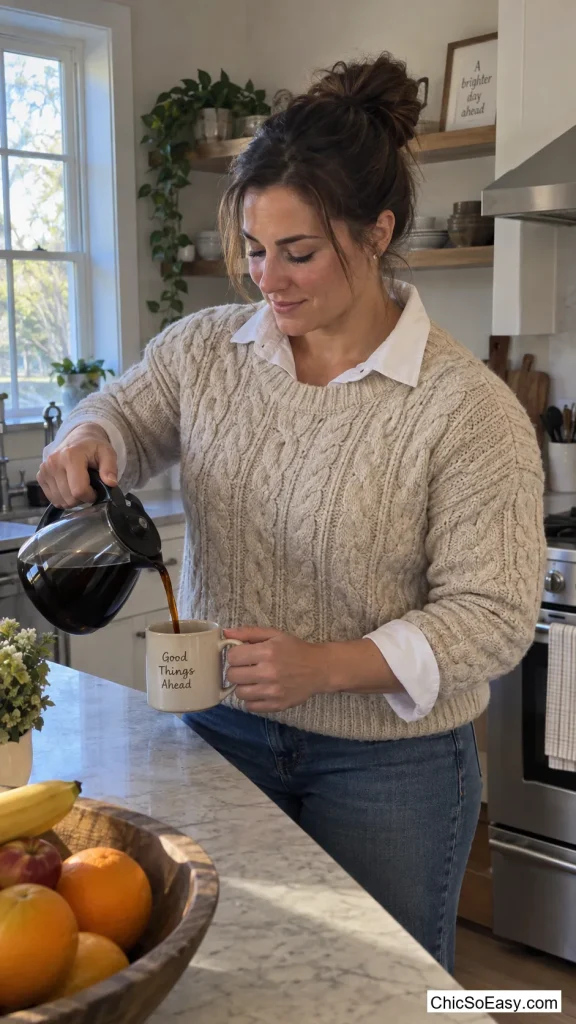
A worn-soft cotton tee with the collar popped out over the neckline of a chunky cable-knit sweater, paired with straight jeans and the cuffs rolled once.
Popping the tee collar out is the detail that makes a thrifted cable knit look intentional instead of just pulled on. The rolled cuffs show enough of the tee sleeve underneath to read as a real second layer, not an afterthought.
Cozy-at-Home Layers
For the days that start on the couch and might not leave the house. Still layered, just built for sitting instead of standing.
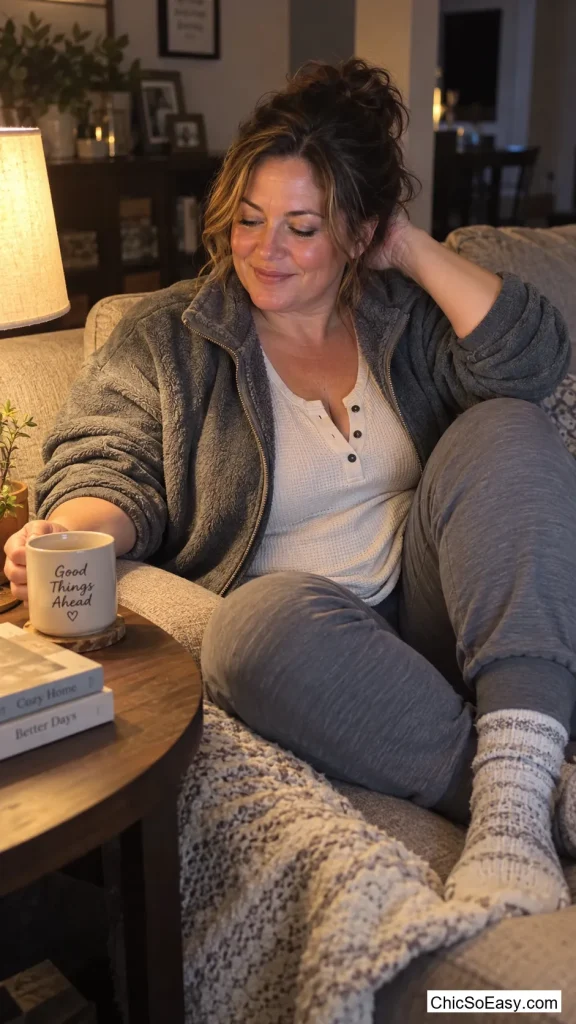
13. Henley Under an Unzipped Fleece
A waffle-knit henley left unbuttoned at the top two buttons, under a quarter-zip fleece pullover worn unzipped with the sleeves pushed up, paired with joggers.
Leaving both layers open at the neck keeps the outfit from feeling sealed up, which matters more indoors than it sounds like it would. A fully zipped fleece over a buttoned henley starts to feel like outerwear worn inside a warm house.
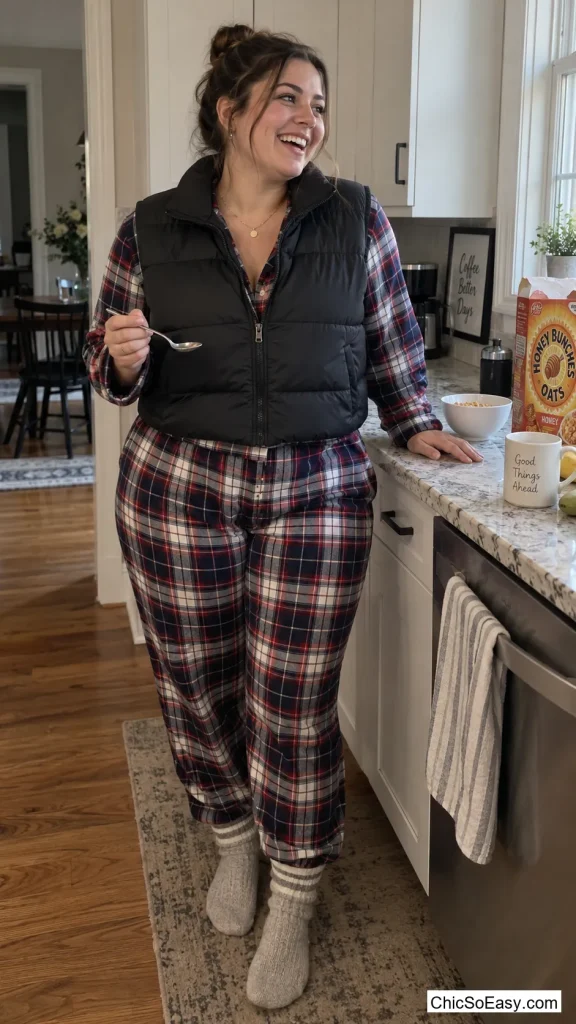
14. Puffer Vest Over Flannel Pajamas
A cropped puffer vest zipped over a flannel pajama top, tucked into the matching flannel pants, with wool socks pulled up over the ankle.
The vest adds real warmth without sleeves getting in the way of anything you’re doing around the house. Matching the pajama set, instead of mixing it with regular clothes, is what keeps this from looking like laundry day instead of a deliberate outfit.
If there’s any chance of answering the door, a plain crewneck swaps in for the pajama top in about ten seconds without touching the rest of the outfit.
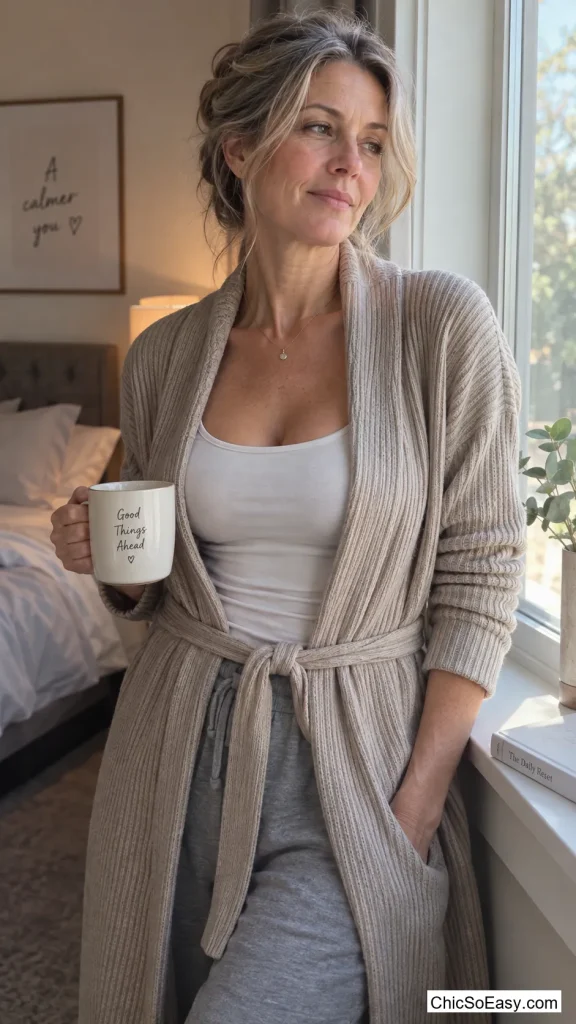
15. Belted Long Cardigan Over a Tank
A long ribbed cardigan belted loosely at the waist over a fitted tank and soft joggers, with slides on or bare feet at home.
The belt does the same job here it does in the thrifted section above, turning a shapeless long layer into something with a waistline. It’s tied loose enough, though, that sitting down doesn’t mean it digs in the whole time.
Bold Texture Layers
These lean into contrast on purpose: corduroy against knit, faux fur against wool, one texture doing something the layer next to it isn’t.
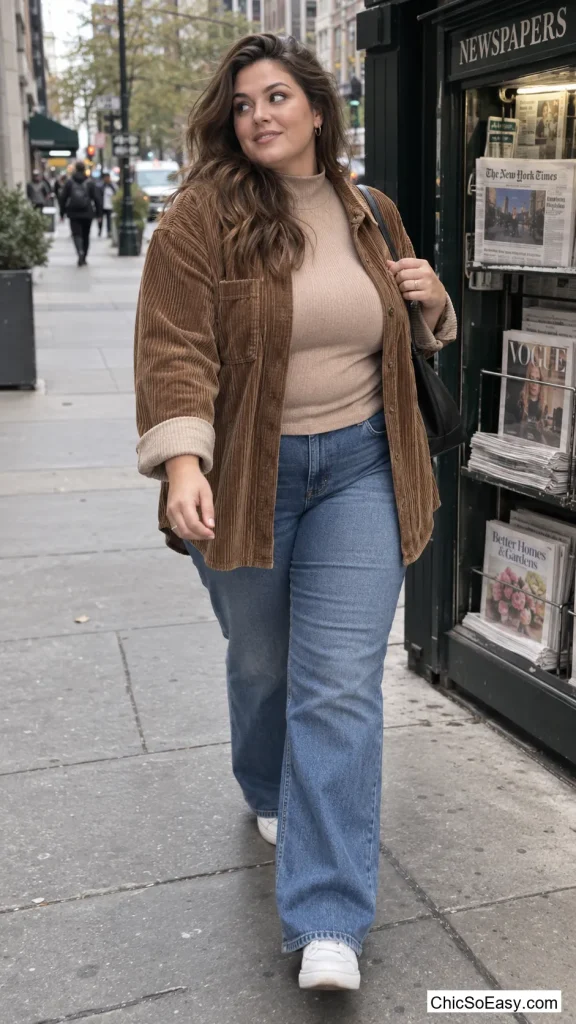
16. Corduroy Shacket Over a Mock Neck
A wide-wale corduroy shacket worn open over a fitted mock-neck sweater, with the shacket’s contrast cuffs rolled back once to show at the wrist.
Corduroy and fine-gauge knit read as two clearly different textures next to each other, which is the reason to wear them together instead of picking one. Rolling the cuffs back is what actually shows the contrast instead of hiding it under the sleeve.
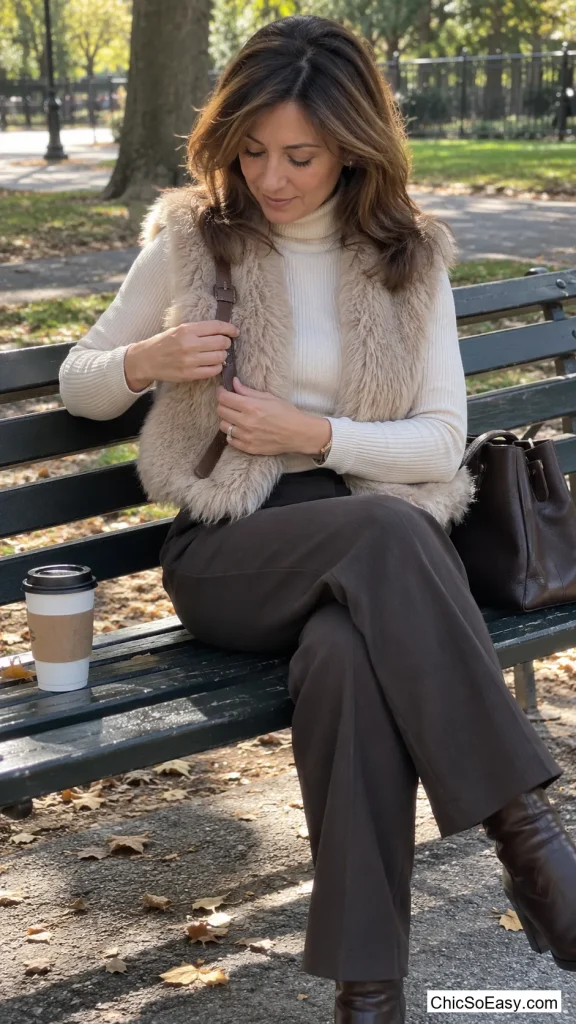
17. Faux Fur Vest Over a Turtleneck
A cropped faux fur vest worn open over a fitted turtleneck, with straight-leg trousers and the turtleneck’s ribbing showing at the collar and cuffs.
Keeping the vest cropped and open is what stops the faux fur from taking over the whole outfit. A longer or zipped version starts to look like the coat instead of a layer worn under one.
Faux fur flattens fast when it’s stuffed in a bag, so this one travels better worn than carried. If it has to come off, drape it over something rather than fold it.
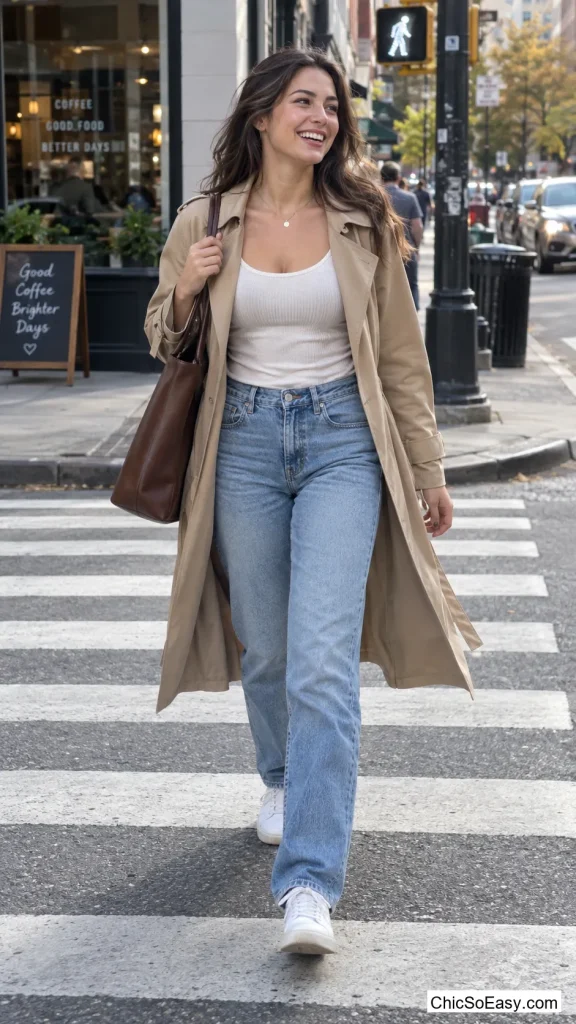
18. Trench Coat Over Just a Tank
A classic trench coat belted at the waist, worn open over nothing heavier than a ribbed tank top, with straight jeans and the trench doing all the actual warmth work.
The trench holds its shape whether it’s over a sweater or just a tank, so this version trades bulk for silhouette on a day that’s cold enough for a coat but not cold enough for two sweaters underneath it.
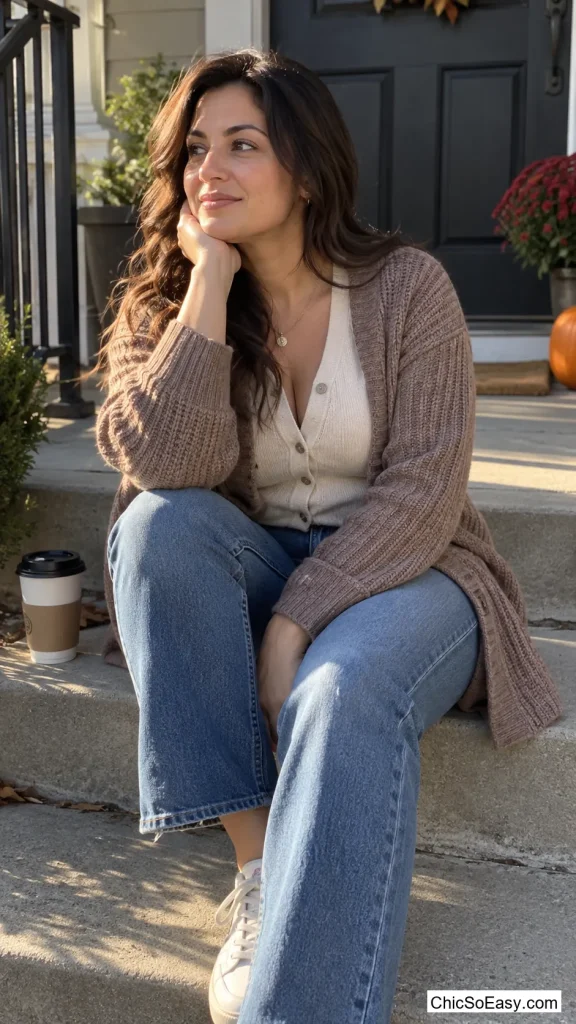
19. Two Cardigans Layered Together
A thin, fitted cardigan worn buttoned as the base layer, with a second, chunkier cardigan worn open on top and left unbuttoned the whole day.
Two cardigans in different weights read as an intentional layer instead of a mismatch. The thin one does the job a shirt usually does, and the chunky one does the job a jacket usually does.
Final Thoughts
None of these need every piece bought new, or bought at all. Half of them work with something already folded in a drawer, styled one way for a Tuesday and a different way for a Friday.
Pick two or three that match how your week is actually shaped, and let the rest sit until the temperature drops far enough to need them.