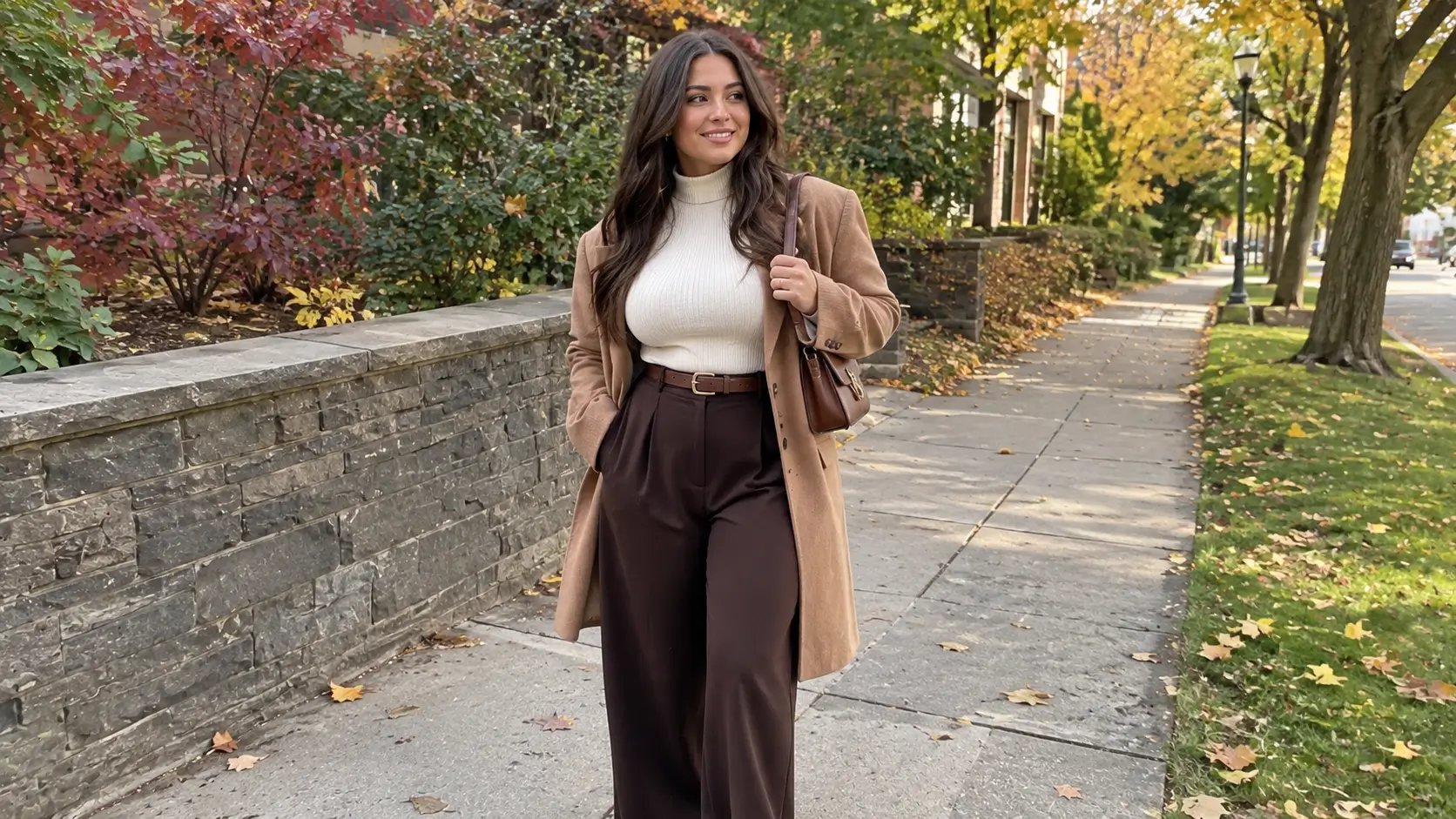
Jeans that fit through the hips and thighs but gape two inches at the back waistband. Or jeans that button comfortably at the waist and then cut off circulation everywhere below it. If that’s the fitting-room experience you’ve had more falls than you’d like to count, the problem was never your body — it’s that most denim is still cut for a straighter hip-to-waist ratio than a pear shape actually has.
This list splits the difference. Some of these looks solve the jeans problem directly, with cuts that were actually built for a defined waist and fuller hip. Others skip denim entirely for the days when nothing in the jeans drawer feels right, swapping in corduroy, ponte, or wool instead.
The throughline across all seventeen is the same: add some structure or color up top to balance the shoulder line, keep the bottom half clean and mostly dark, and let the waist show through somewhere in the outfit. None of it requires buying a whole new wardrobe before the first cold morning.
The Jeans That Actually Work
Before giving up on denim altogether, these three cuts are the ones actually built for a hip-to-waist difference — worth trying before writing off jeans for the season.
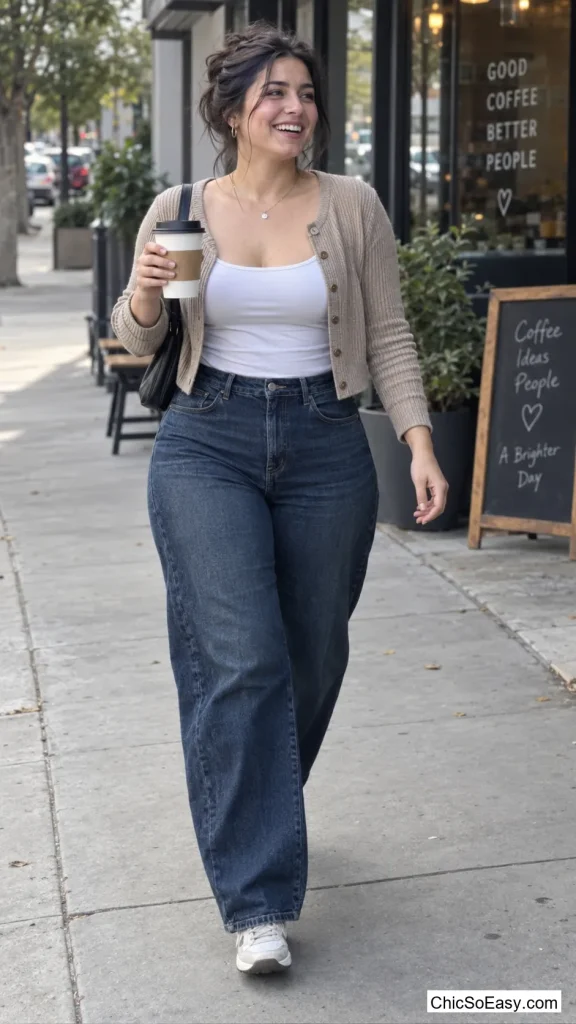
1. High-Rise Barrel-Leg Jeans and a Cropped Cardigan
Barrel-leg jeans curve out gently from the knee and taper back in at the ankle, which is closer to the actual shape of a pear hip than a straight or skinny cut ever manages. Pair a high-rise pair in a dark rinse with a cropped cardigan that buttons at the ribcage, left open over a plain tank.
The barrel shape follows the line your hip already makes instead of fighting it, and the high rise closes the waistband gap that usually shows up at the back. Because the cardigan stops well above the hip, nothing doubles up on volume down there — the eye lands on the open cardigan front and the tank underneath instead.
Size the jeans to your hip measurement and expect some extra room at the waistband before a tailor takes it in a half inch — that’s a five-minute fix and cheaper than another failed online order.
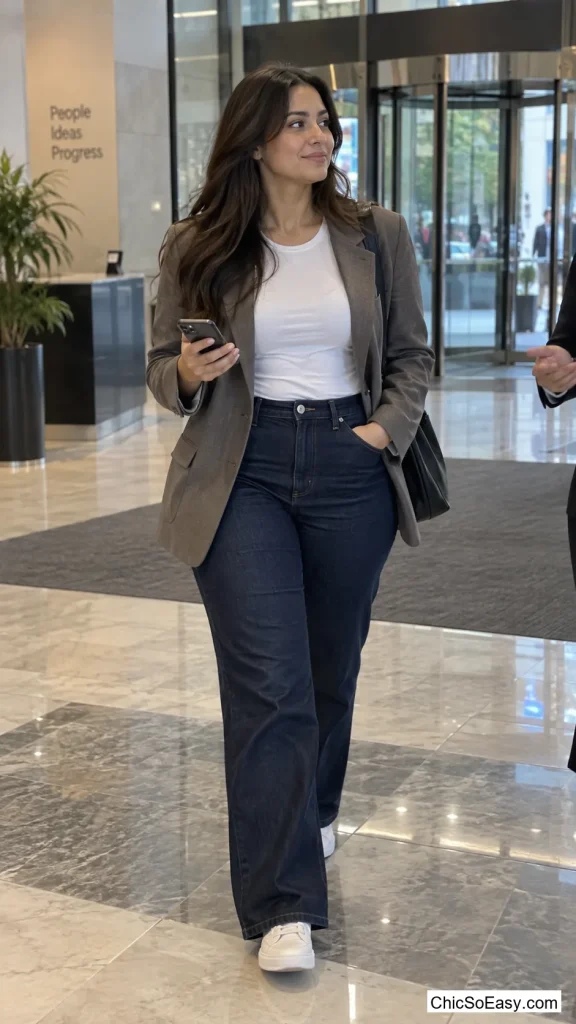
2. Trouser-Cut Jeans Under an Oversized Blazer
Trouser-cut jeans skip the back pockets and heavy stitching of regular denim for a flat front and a straight, uncreased leg, closer to dress pants than blue jeans. Wear a pair in a dark indigo wash under an oversized blazer left unbuttoned, with a fitted white tee underneath.
The flat front and straight leg give a clean vertical line the whole way down, and the oversized blazer shoulder adds width up top without needing to be tailored close to the body. It reads more put-together than a regular denim-and-blazer combo because the jean itself isn’t trying to look casual.
3. Dark Straight-Leg Jeans With a Funnel-Neck Popover
A straight-leg jean in a dark, uniform wash paired with a funnel-neck popover sweater in a heavier knit — something that pulls over the head rather than buttoning, so the neckline sits close and tall.
Straight leg is the safest jean cut for a pear shape because it doesn’t cling at the thigh or flare for extra attention at the hip — it just falls. The funnel neck does the opposite job up top, adding height and structure right at the collarbone so the eye starts there.

Fall Days You Skip Jeans Entirely
Some mornings no pair of jeans in the closet feels right, and that’s fine — these swap out denim completely without losing the fall-weather feel.
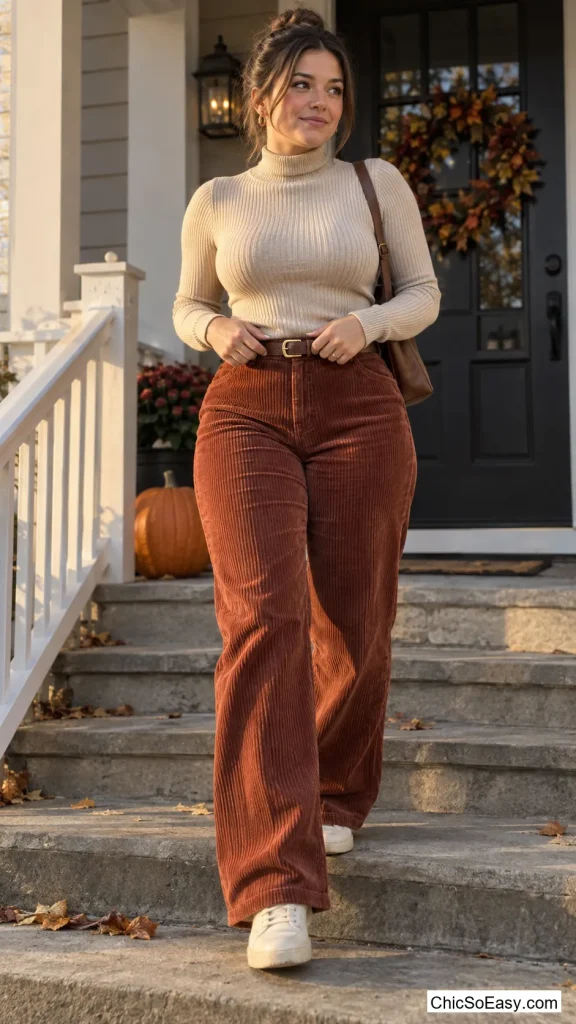
4. Wide-Wale Corduroy Trousers With a Ribbed Turtleneck
Wide-wale corduroy trousers, cut with a relaxed straight leg and sitting at the natural waist, worn with a fitted ribbed turtleneck tucked in and a thin leather belt left visible.
Corduroy has enough structure to hang straight from the hip instead of clinging the way jersey or thin cotton would, so it reads as put-together rather than loungewear. The ribbed turtleneck stays close through the shoulders and torso, which keeps the top half from getting lost under a heavier bottom.
Rust, olive, or a deep brown wale reads as fall without turning into a costume — stick to one solid color for the trousers and save any pattern for a scarf instead.
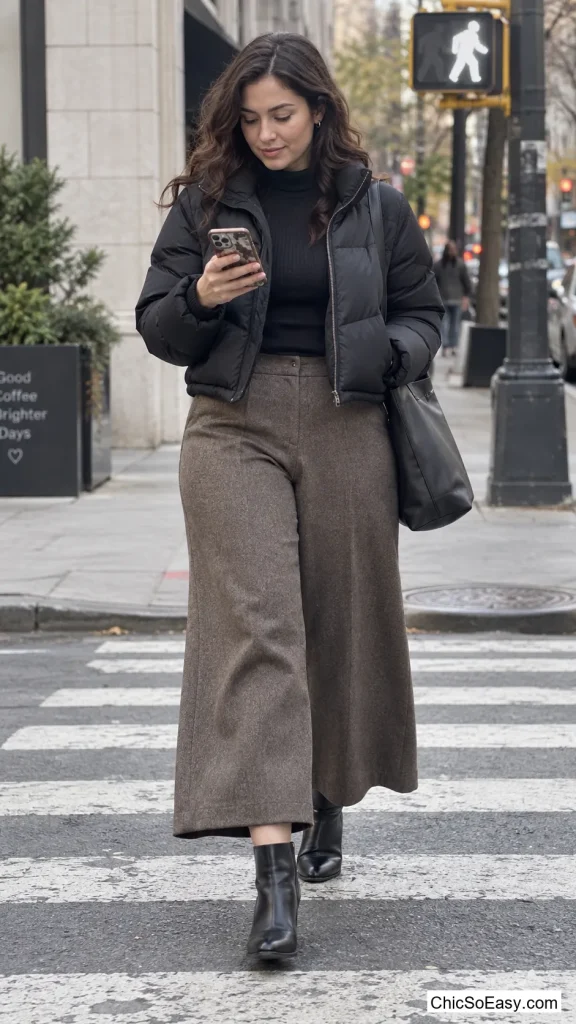
5. Ankle-Length Culottes and a Cropped Puffer
Wide, ankle-length culottes in a wool-blend fabric, paired with a cropped puffer jacket that hits right at the natural waist, plus ankle boots underneath.
Culottes move like a skirt but cover like trousers, which sidesteps the jeans-fit problem completely while still reading as a real outfit rather than loungewear. The cropped puffer stops exactly where the culottes start, so the waistline stays visible instead of getting buried under a longer coat.
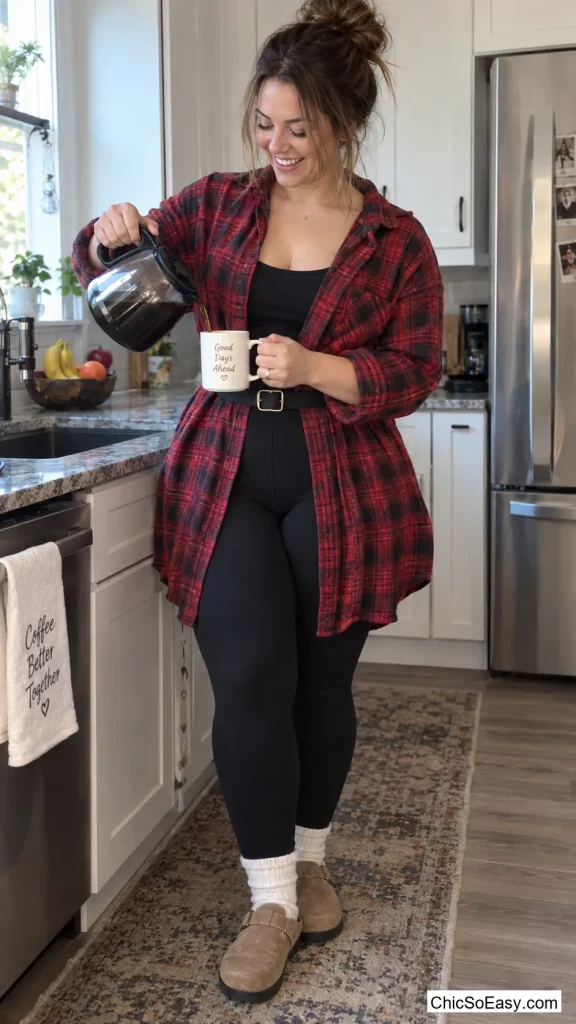
6. Ponte Leggings Layered Under a Flannel Shirtdress
A ponte-knit legging with enough structure to hold its shape all day, worn under an oversized flannel shirtdress belted at the waist and left unbuttoned like a duster.
Ponte behaves more like a fitted trouser than a stretchy legging, so it doesn’t read as loungewear the way cotton leggings can. Belting the flannel dress at the waist keeps the silhouette from turning into one long rectangle, which is the actual risk with any duster-length layer.
Roll the flannel sleeves to the forearm and add a pair of tall boots underneath — flat sandals or sneakers flatten the whole look.
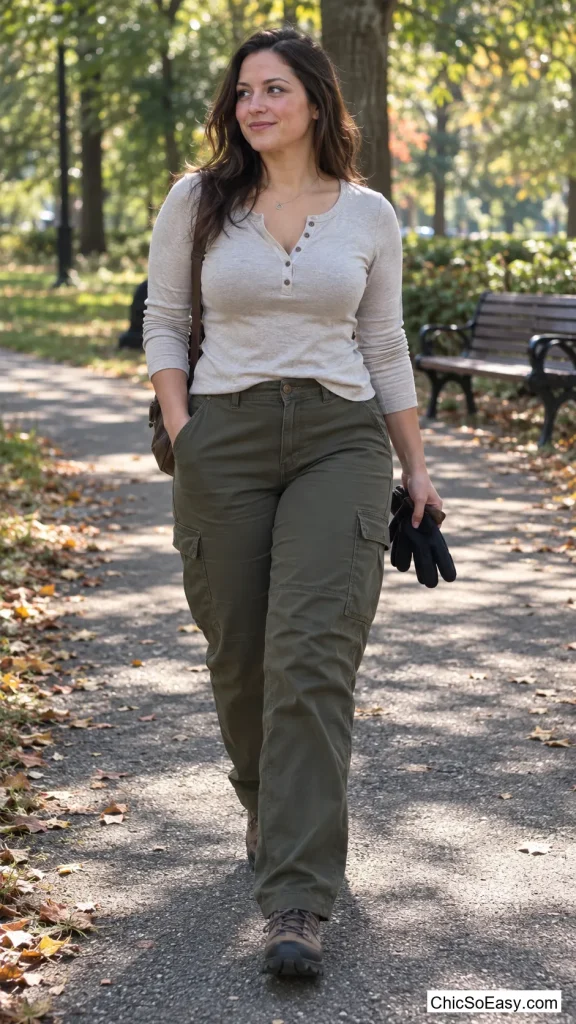
7. Flannel-Lined Utility Pants With a Fitted Henley
Flannel-lined utility pants with a straight leg and cargo pockets sitting flat against the thigh rather than puffed out, worn with a fitted henley tucked in at the front only.
Flat cargo pockets avoid adding visual width right at the widest point, which is the one detail that makes utility pants fail on a pear shape when the pockets are bulky. The front-only tuck shows the waist without a full tuck feeling fussy for a casual day.
Sweaters and Layers That Balance the Line
These three do their work up top, adding shape at the shoulder and collarbone so the bottom half doesn’t have to carry the whole outfit.
8. Cowl-Neck Sweater Tucked Into Straight-Leg Trousers
A cowl-neck sweater in a medium-weight knit, tucked into high-waisted straight-leg trousers, with the cowl left loose rather than pulled tight.
The draped cowl adds soft volume right at the chest and shoulder, which is exactly the width a pear shape benefits from up top. Tucking the sweater shows the waist, and the straight trouser leg keeps the bottom half clean instead of competing with the volume above it.

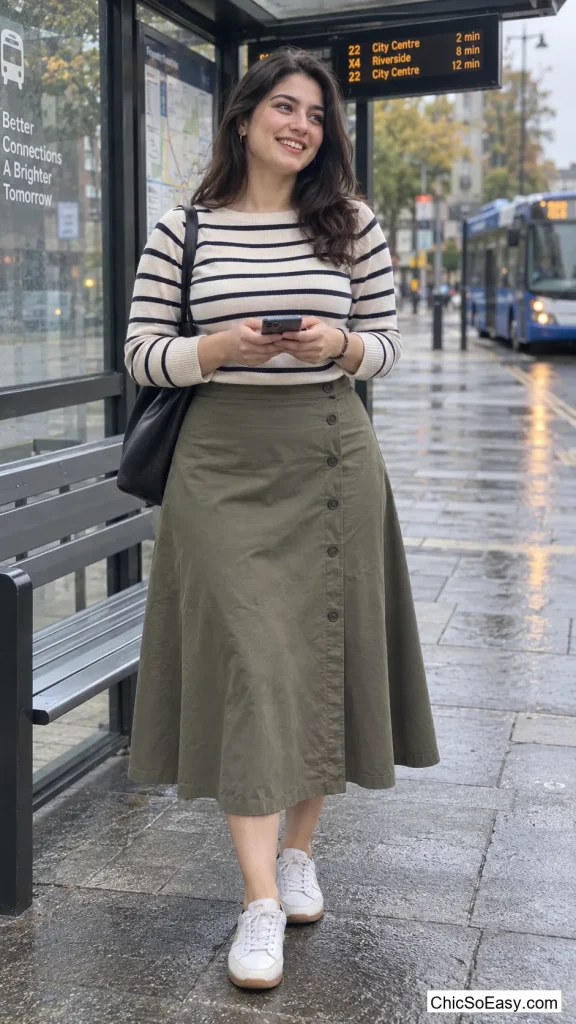
9. Horizontal-Stripe Boatneck With an A-Line Midi Skirt
A boatneck sweater in a horizontal stripe, paired with an A-line midi skirt that flares gently from the natural waist to just past the knee.
The boatneck creates a straight line across the collarbone that reads as wider shoulders, and the stripe reinforces the same effect. The A-line skirt skims over the hip instead of hugging it, so nothing below the waist is fighting the volume being built up top.
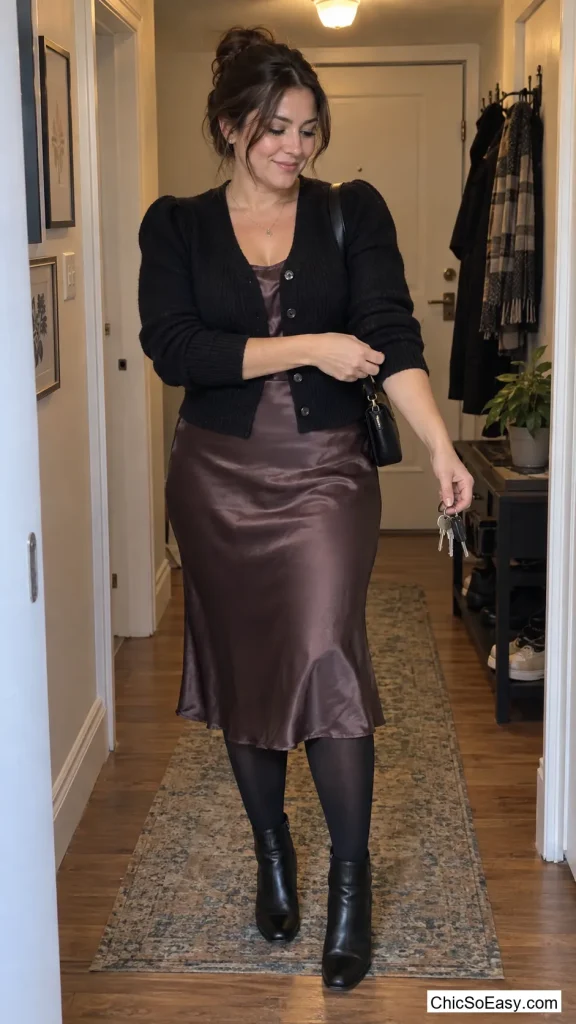
10. Puff-Sleeve Cardigan Buttoned Over a Slip Dress
A fitted puff-sleeve cardigan, buttoned all the way up over a slip dress in a heavier fabric like a brushed satin, with the dress hem showing an inch or two below the cardigan.
The puff at the shoulder adds real structure without bulk, since it’s concentrated at one point instead of spread across the whole sweater. Layering it over a slip dress instead of trousers keeps the waist defined by the dress’s own seam, so there’s no separate belt or tuck needed to find it.
This one wants tights once the temperature drops — a thicker, opaque pair in a color close to the boots keeps the leg line unbroken.
Coats and Jackets Doing the Heavy Lifting
A coat is doing half the work of an outfit before anyone even sees what’s underneath it, so these three earn their place.
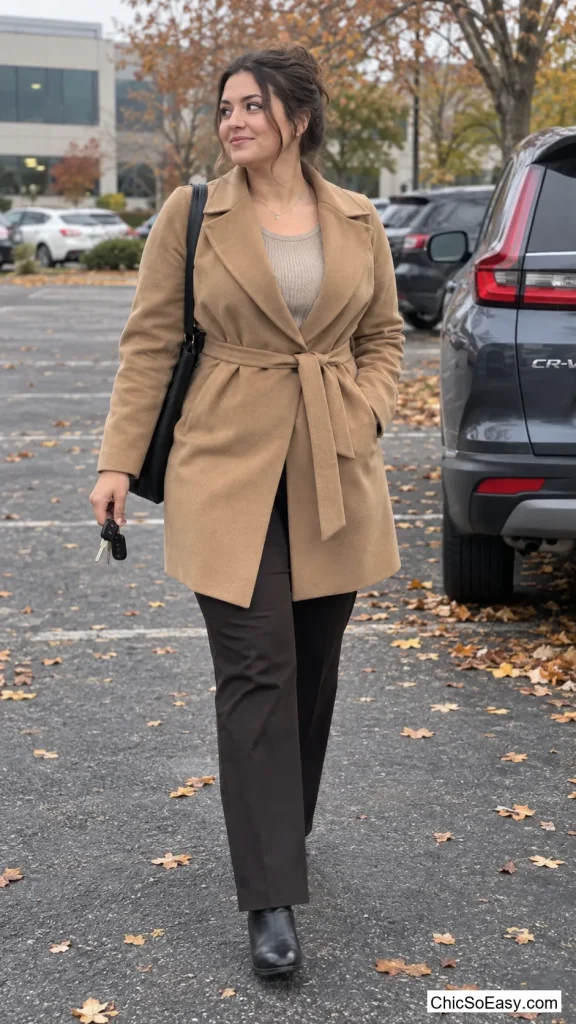
11. Belted Wrap Coat Over Straight-Leg Trousers
A wrap coat that ties at the natural waist rather than buttoning, worn open-necked over a simple knit top and dark straight-leg trousers.
The wrap tie is the whole point — it marks the waist clearly no matter what’s underneath, and the coat falls open below it instead of pulling tight across the hip the way a fitted, buttoned coat can. Choose a length that clears the widest part of the hip rather than stopping right at it.
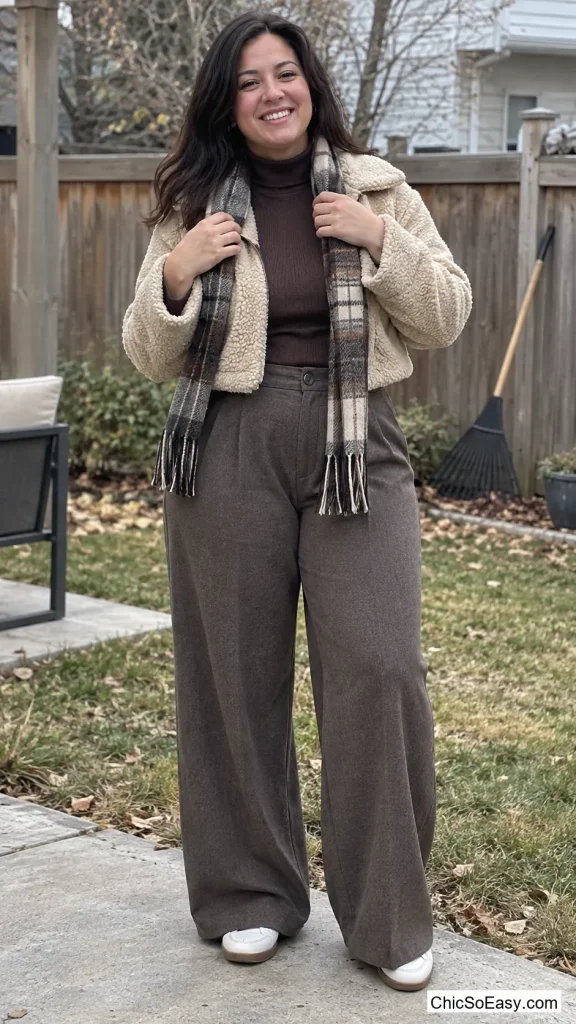
12. Cropped Shearling Jacket With High-Waisted Wide-Leg Pants
A cropped shearling jacket that stops right at the waistband, worn over high-waisted wide-leg wool pants and a fitted turtleneck.
Shearling has natural texture and bulk built into the fabric itself, so a cropped length adds shoulder width without needing anything padded or structured underneath. Because the jacket stops exactly at the waist, the wide-leg pant reads as one clean line instead of getting cut off mid-thigh.
Wide-leg only works here because the pant is high-waisted — the same cut sitting lower on the hip loses the waist definition and starts to look like extra fabric instead of a deliberate silhouette.
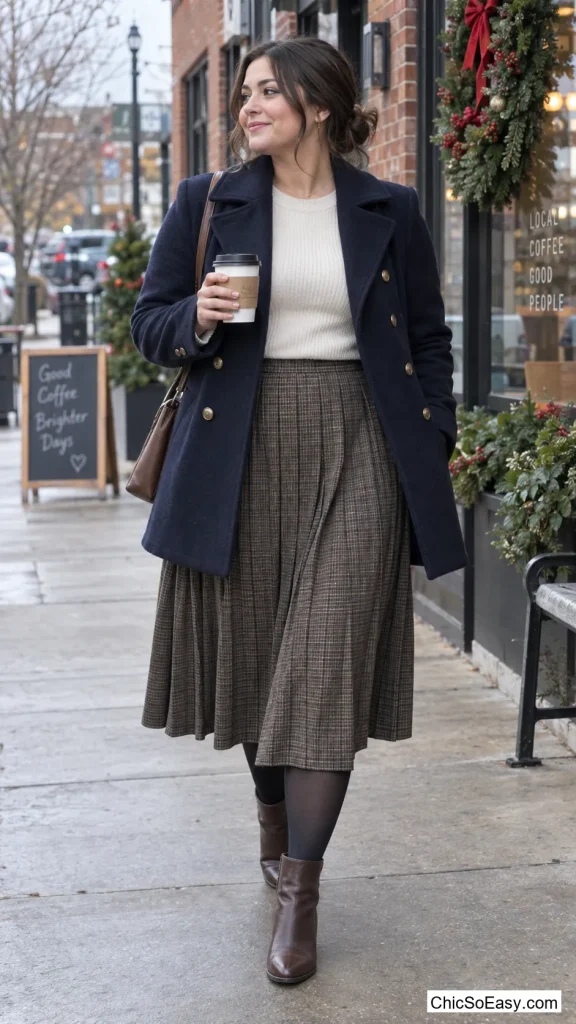
13. Double-Breasted Peacoat Over a Pleated Midi Skirt
A double-breasted peacoat in navy or camel, worn open over a pleated midi skirt that falls from the natural waist, with the peacoat’s own top button left undone.
The double row of buttons and the broader lapel do the shoulder-widening work a single-breasted coat can’t manage on its own. Leaving it open shows the pleated skirt underneath, and because pleats move rather than cling, the skirt doesn’t add any visual weight to the hip.
Dresses and Skirts for Jean-Free Days
For days when trousers feel like too much effort, these four skip the bottoms conversation completely.
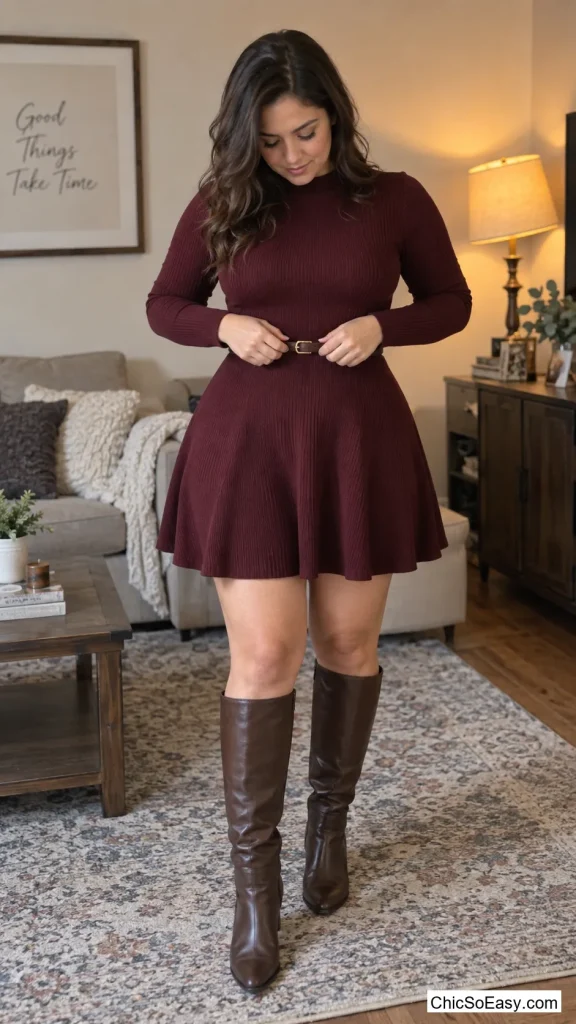
14. Fit-and-Flare Sweater Dress With Knee-High Boots
A fit-and-flare sweater dress — fitted through the ribcage and waist, then flaring out to mid-thigh — worn with knee-high boots and a thin belt at the natural waist.
The fitted bodice defines the waist on its own, and the flared skirt clears the hip instead of skimming it, which is the detail that keeps a sweater dress from clinging in the wrong place. Knee-high boots cover the transition point between the dress hem and the leg, so there’s no bare-skin gap in cold weather.
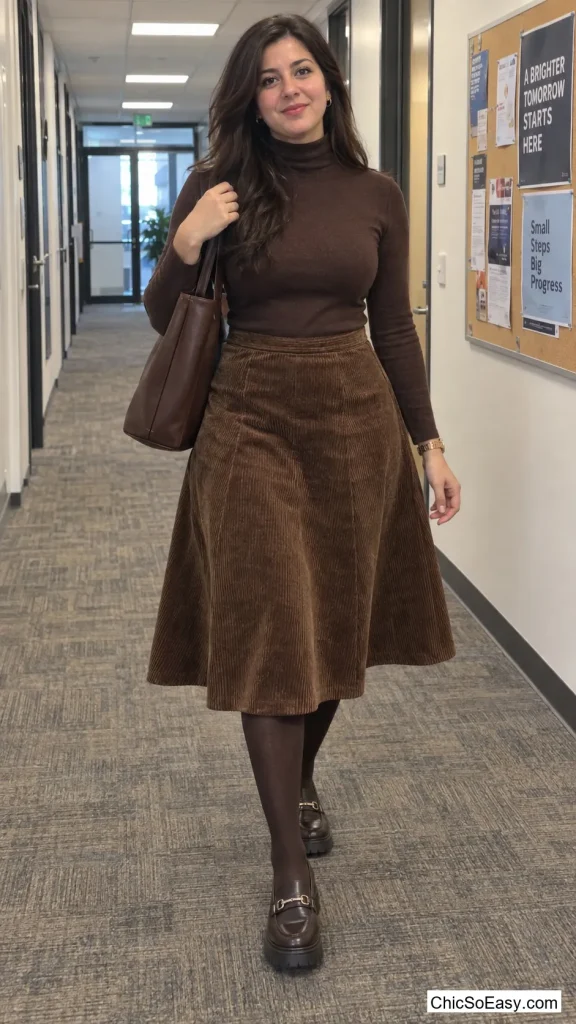
15. A-Line Corduroy Skirt With Opaque Tights and Loafers
A midi-length A-line skirt in corduroy, worn with opaque tights in a matching or darker tone and a pair of chunky loafers, plus a fitted turtleneck tucked in.
Corduroy holds an A-line shape better than a soft knit skirt would, so it skims the hip cleanly instead of collapsing against it by midday. Matching the tights to the skirt color keeps the leg line unbroken all the way to the shoe, which reads taller than a contrasting tight would.
Loafers instead of boots here on purpose — the skirt is already doing the volume work, and a chunkier boot on top of it starts to look bottom-heavy.
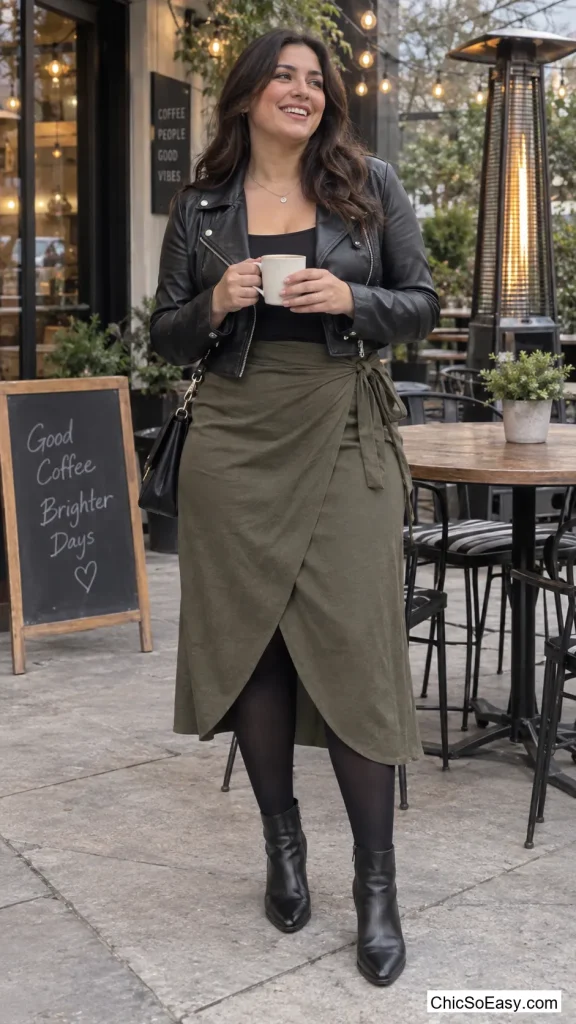
16. Wrap Midi Skirt and a Cropped Moto Jacket
A wrap-style midi skirt that ties at the side, paired with a cropped leather or faux-leather moto jacket and a plain fitted top underneath.
The wrap tie sits at whatever point is actually your natural waist, not a fixed seam that may or may not land right, and the skirt’s soft drape avoids adding stiffness at the hip. The moto jacket’s structured shoulder and short length balance out the skirt’s fuller lower half without needing a separate belt.
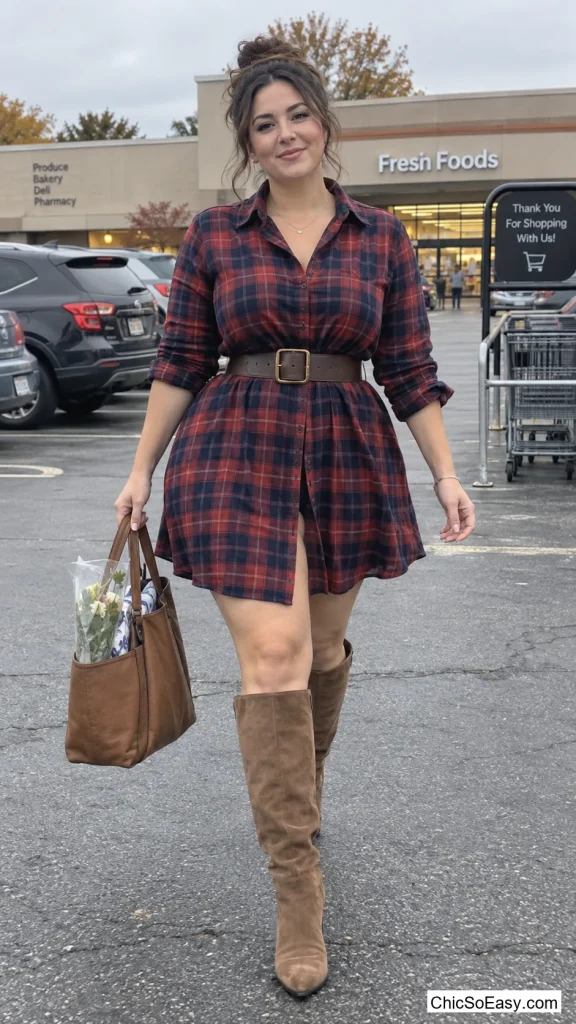
17. Belted Shirtdress With Suede Knee Boots
An oversized flannel or wool shirtdress, cinched with a wide belt at the natural waist, worn with suede knee-high boots and the sleeves pushed up to the forearm.
Without the belt this dress would read as one shapeless block from shoulder to hem — the cinch is what turns a boxy shirtdress into an actual silhouette, marking the waist and letting the fabric fall loose above and below it. Suede reads warmer than smooth leather for fall, and the knee-high coverage means the boot line and the dress hem meet without a gap of bare leg in between.
Final Thoughts
None of these looks require replacing a whole closet before the weather turns. A couple of pieces — a wrap coat, one pair of jeans that actually fits through the hip, a corduroy skirt — will recombine with what’s already hanging up, which is the point of a fall rotation that has to survive more than one wear per item.
If jeans stay the sticking point, start with the barrel-leg or trouser-cut pair before trying a fourth pair of skinny jeans in a different size. The fit problem was in the cut, not the size.