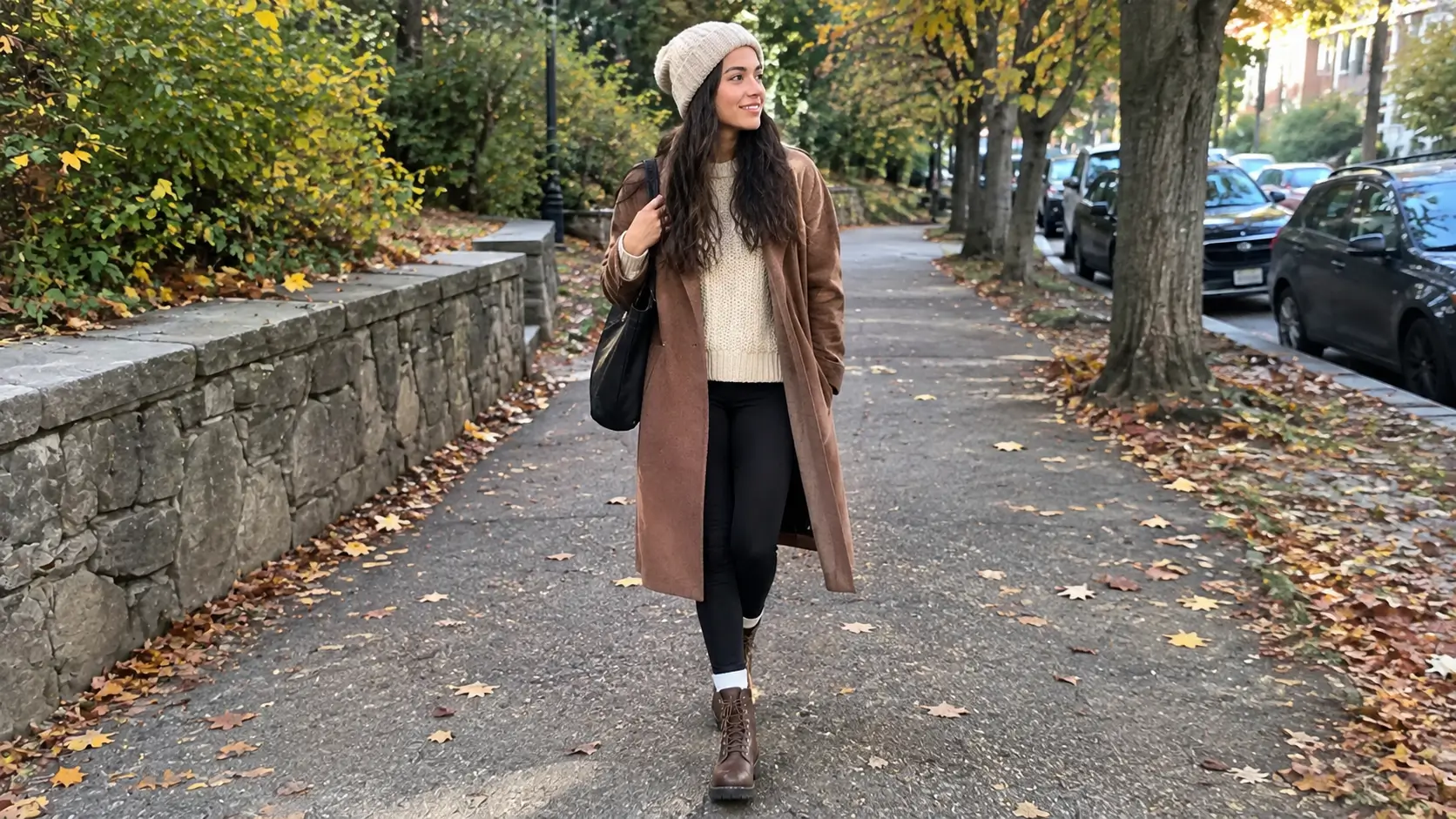
By the fourth hour of a shift, most outfits have already lost the argument. The waistband that looked fine in the mirror is folding over by lunch, and the fabric that felt soft on the hanger is sticking to the backs of your knees by hour six. None of that has much to do with whether the outfit looks put together — it’s about whether it can move the way you do for eight or ten hours straight.
This list skips anything that photographs well and forgets about you by 2pm. Everything here has to survive real motion — bending, reaching, standing on concrete, walking a sales floor, sitting for five minutes between classes — without needing to be adjusted every time you catch your reflection.
Some of it will look familiar, because a few basics earn their spot every fall no matter who’s wearing them. But most of it is built around the specific problem of staying upright and comfortable for a long stretch, which is a different assignment than dressing for a day that mostly happens sitting down.
Layers You Can Shed Without Losing the Outfit
Rooms change temperature more than the weather does when you’re on your feet all day. These layer off in seconds, not outfit changes.
1. Ribbed Tank Under an Unbuttoned Flannel, Tied at the Waist
A ribbed tank tucked into straight-leg jeans, with a flannel layered on top left fully unbuttoned and tied at the waist by its sleeves instead of worn open or buttoned closed.
Tying it at the waist keeps the flannel from flapping open every time you reach overhead or bend to grab something off a low shelf, and it means you can shed the whole layer in one motion without unbuttoning anything first.
On colder mornings, swap the ribbed tank for a thermal version in the same cut so the silhouette doesn’t change.

2. Denim Shirt-Jacket Buttoned Only at the Collar
A denim shirt-jacket over a fitted long-sleeve tee, buttoned only at the top collar button and left open everywhere else, paired with straight-leg trousers.
Leaving it open below the collar means the fabric moves with your arms instead of pulling across the back when you reach, and the single button is enough to keep it from sliding off your shoulders through a shift that has you turning constantly.

3. Quarter-Zip Pullover Over a Mock-Neck Bodysuit
A brushed-fleece quarter-zip pullover worn over a mock-neck bodysuit and straight-leg jeans.
The zip gives you control over neckline temperature without changing the outfit — unzip an inch when a room warms up, the way a cardigan can’t do without coming off entirely.
Bottoms That Won’t Dig In by Hour Six
A waistband that’s fine at 8am and unbearable by 3pm ruins an outfit no matter how good the top half looks.
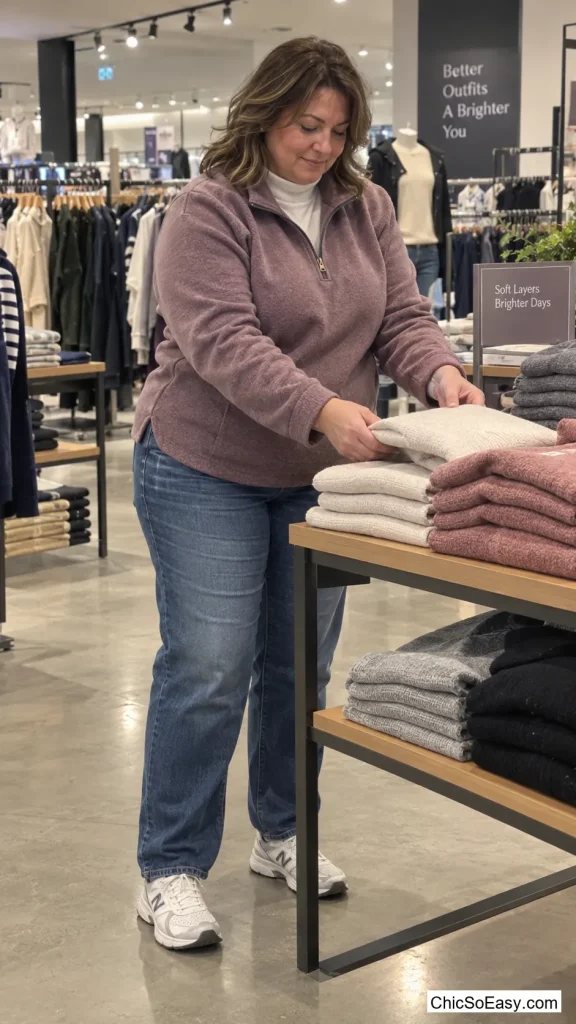
4. Wide-Leg Ponte Pants With a Cropped Puffer Vest
Wide-leg ponte knit pants with a cropped puffer vest over a plain long-sleeve tee.
Ponte holds its shape without needing a stiff waistband, so it doesn’t dig in when you sit for five minutes and stand right back up, and the wide leg gives enough room to crouch or kneel without pulling at the seams.
The vest zips fully for a cold walk in, then hangs open once you’re indoors — no separate jacket to keep track of.
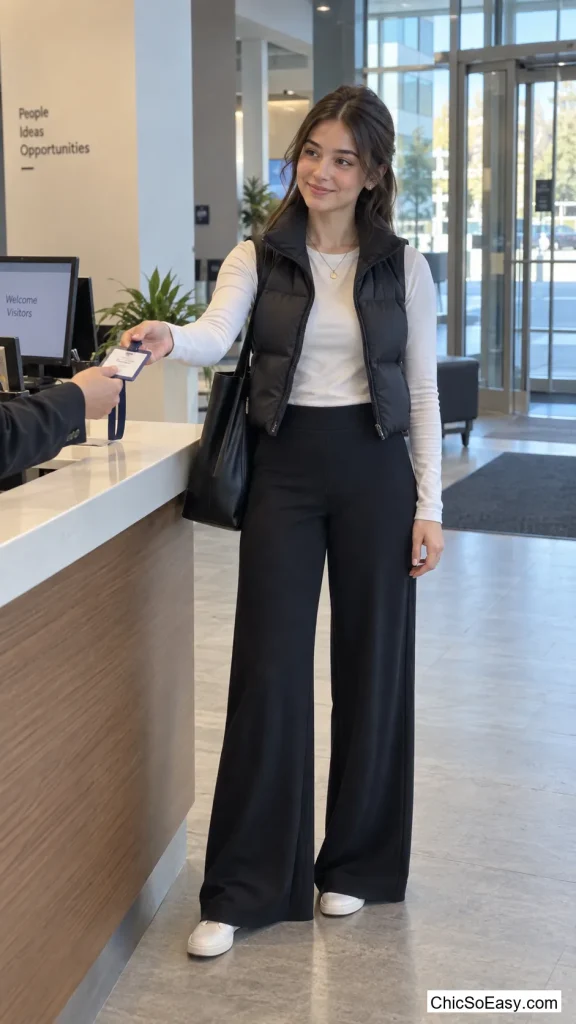
5. Elastic-Waist Trousers in Brushed Twill
Elastic-waist trousers in a brushed twill, ankle length, worn with a chunky loafer and a fitted turtleneck tucked in.
Elastic waist means no waistband math after lunch, and the twill has enough structure that it reads as tailored rather than like something you’d wear to bed.
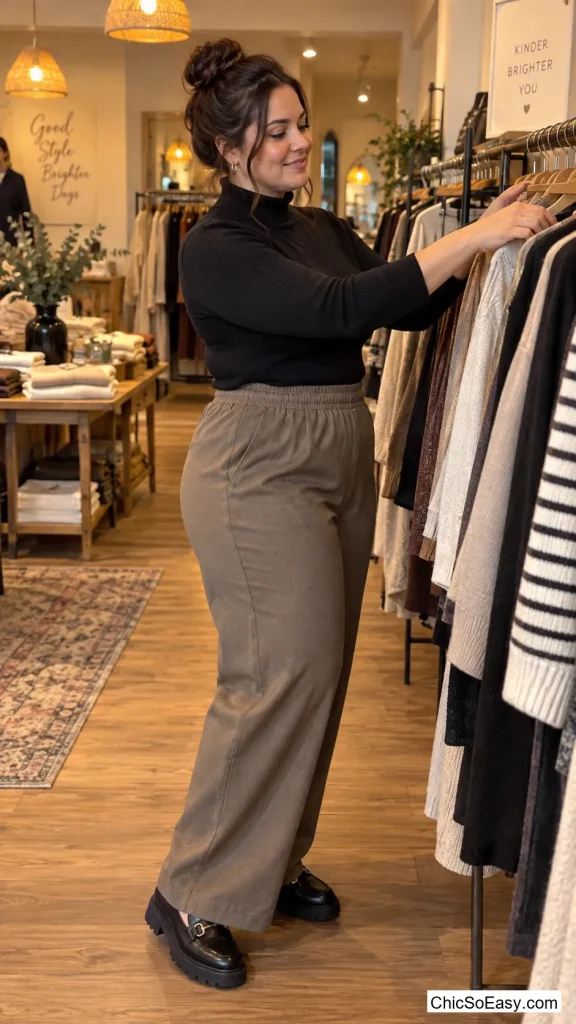
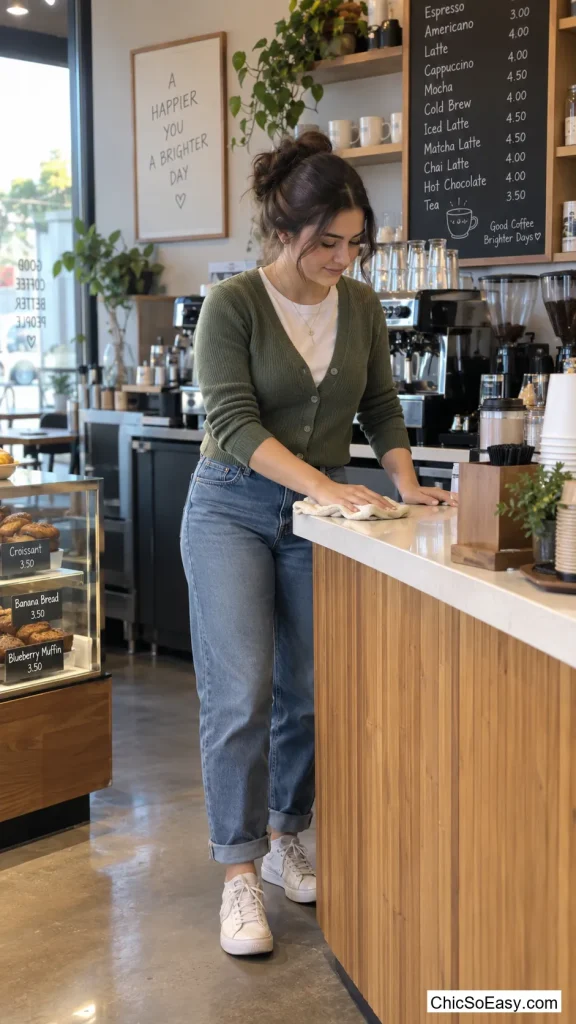
6. Straight-Leg Jeans Cuffed Once, Cropped Cardigan on Top
Straight-leg jeans sized up slightly and cuffed once at the ankle, with a cropped cardigan buttoned over a plain tee.
This is the simplest pairing on the list on purpose — the single cuff keeps denim off the tops of your shoes so it doesn’t fray from a full shift of walking.
One-and-Done Dresses for No-Time Mornings
One piece, no waistband decisions, and still warm enough for a full day of moving around.
7. Rib-Knit Midi Dress With the Belt Left Loose at the Hip
A long-sleeve rib-knit midi dress with a fabric belt looped through the waist but left loose at the hip instead of cinched tight.
A belt cinched at the waist digs in the second you sit down or bend forward, so leaving it loose keeps the shape without the discomfort, and the rib knit stretches with movement instead of resisting it all day.
Flat boots work for a floor that has you walking miles; clean sneakers work just as well underneath if the dress runs long enough to cover them.

8. Sweater Dress With Knee-High Boots
A classic sweater dress with knee-high boots and opaque tights.
One piece means no waistband at all, and knee-high boots keep a sock line from rubbing against a pant hem by the afternoon the way ankle boots sometimes do.

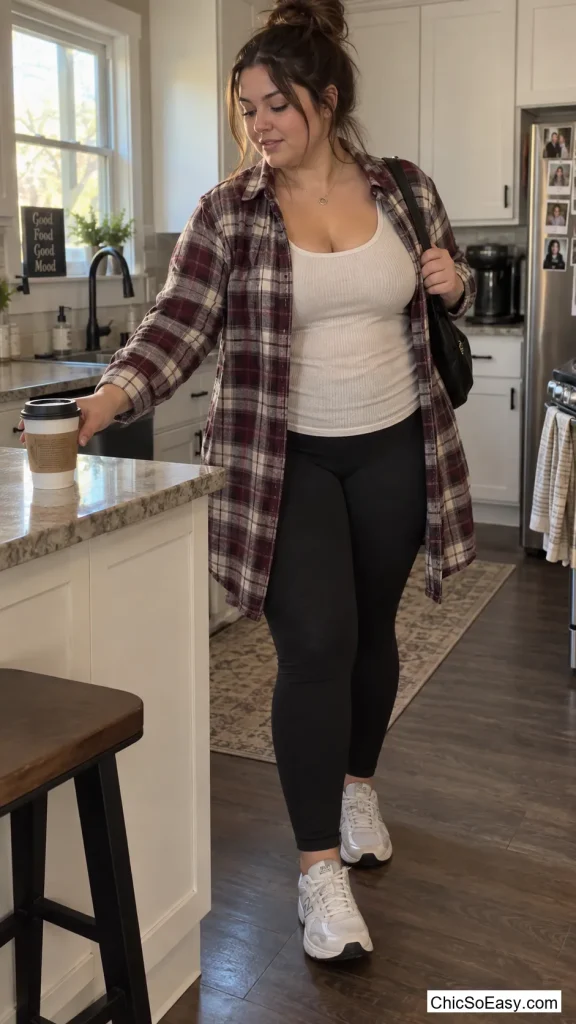
9. Open Flannel Shirt Dress Over a Thermal Tank and Leggings
A flannel shirt dress worn fully open, like a duster rather than a buttoned dress, over a fitted thermal tank and leggings.
It functions as a layer you can peel down to the tank the second a room heats up, without changing out of anything or unbuttoning a single button.
Knits Built for a Full Shift
Warm enough for a cold building, but nothing so heavy it turns into dead weight by the afternoon.
10. Oversized Cable Knit Over Bike Shorts and Knee Socks
An oversized cable knit sweater worn long, over bike shorts and knee socks instead of jeans.
Bike shorts don’t bunch or ride up under a heavy sweater the way leggings can by the end of a shift, and the sweater’s length means it’s doing most of the coverage on its own.
Swap the knee socks for tall boots once the mornings get properly cold.

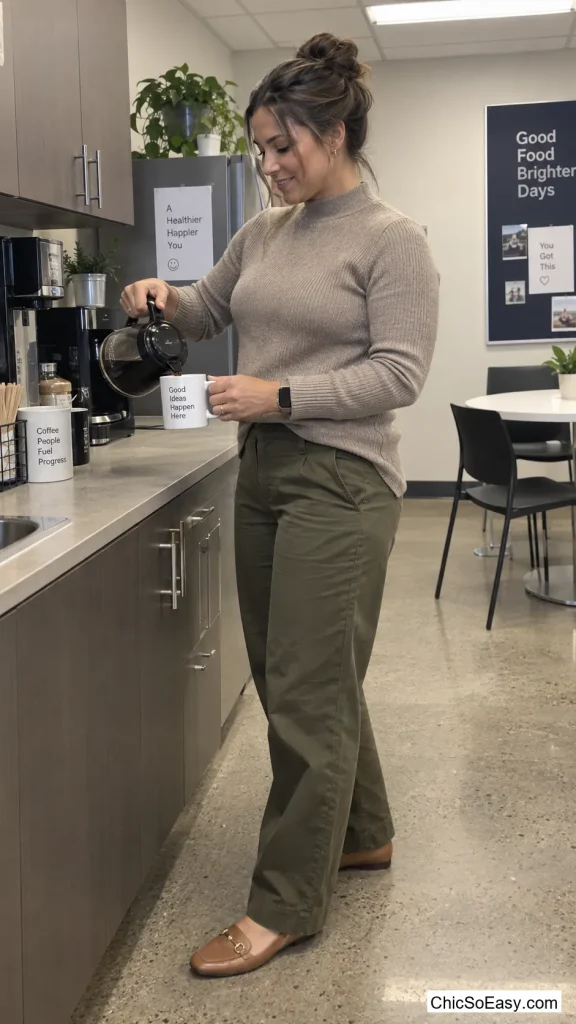
11. Mock-Neck Sweater Tucked Halfway In
A mock-neck sweater tucked halfway in at the front only, left loose at the back and sides, over relaxed chinos.
The half-tuck holds the front shape without the fabric bunching up at the hips every time you sit down, which a full tuck does within the first hour.
12. Turtleneck Under a Blazer, Straight Trousers Below
A fitted turtleneck under a blazer, with straight trousers.
Layering the warmth under the blazer instead of over it keeps the shoulders from getting bulky, so the blazer still moves freely when you reach for something or write on a board.

Outfits for the Job That Has You on a Ladder, a Floor, or a Stockroom
For shifts that involve more bending, kneeling, and carrying than walking a hallway.
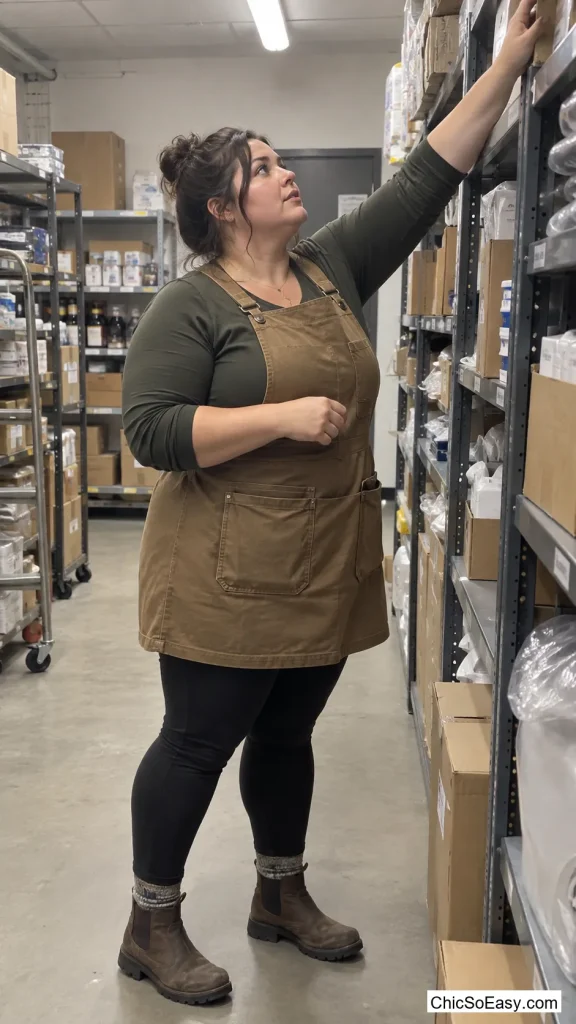
13. Canvas Utility Apron Dress Over Fleece-Lined Leggings
A canvas utility apron dress with deep front pockets, worn over fleece-lined leggings and a long-sleeve tee.
The pockets replace carrying a bag while you’re moving through a stockroom or standing at a booth, and the apron shape means nothing swings loose while you’re bending.
Layer the flannel from earlier in this list underneath for extra warmth on a shift that has you stepping outside.
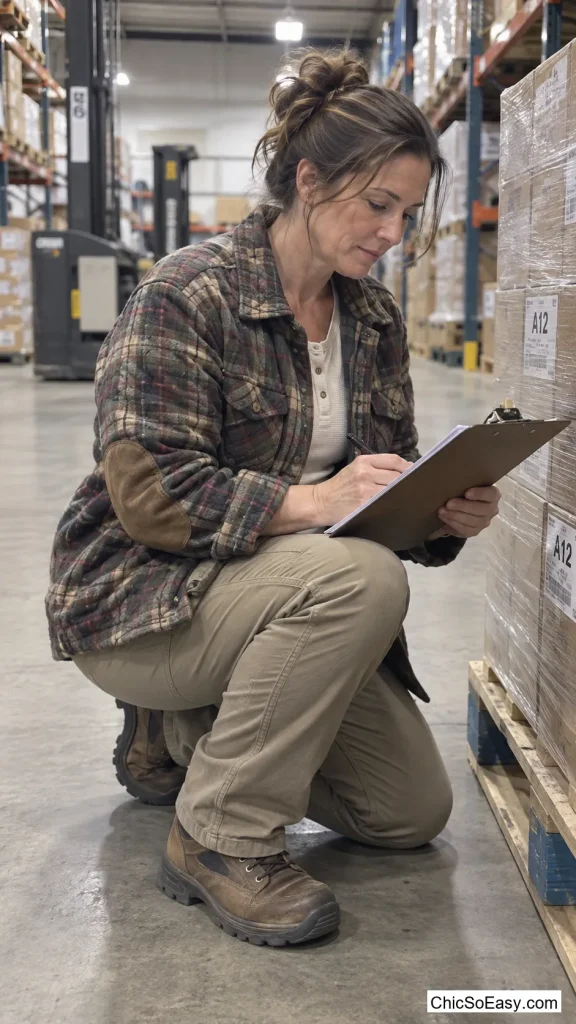
14. Quilted Flannel Shacket With Reinforced Elbows
A quilted flannel shacket with reinforced elbow patches, worn over a thermal henley and stretch canvas pants.
The reinforced elbows hold up to repeated kneeling or leaning against shelving, which is exactly where a regular flannel wears through first.
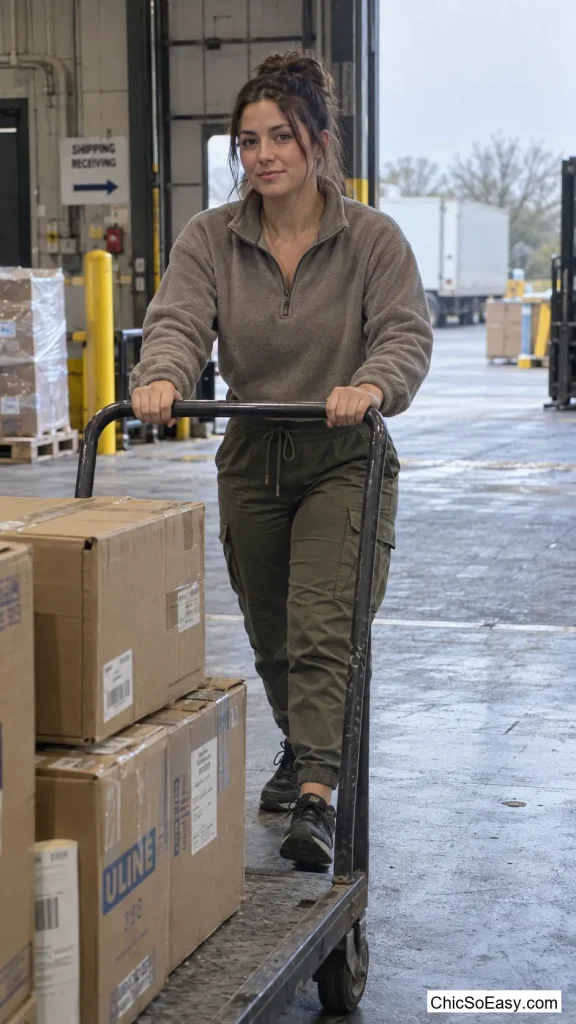
15. Cargo Joggers With a Cropped Fleece and Slip-Resistant Sneakers
Cargo joggers with a drawstring waist, a cropped fleece pullover, and slip-resistant sneakers.
The drawstring waist adjusts without needing a belt, and on a wet floor or a loading dock, slip-resistant soles do more for the outfit than anything else you’re wearing.
Built for a Cold Open and a Warm Close
For the shift that starts in the cold and ends somewhere warmer, without a trip back to the car in between.
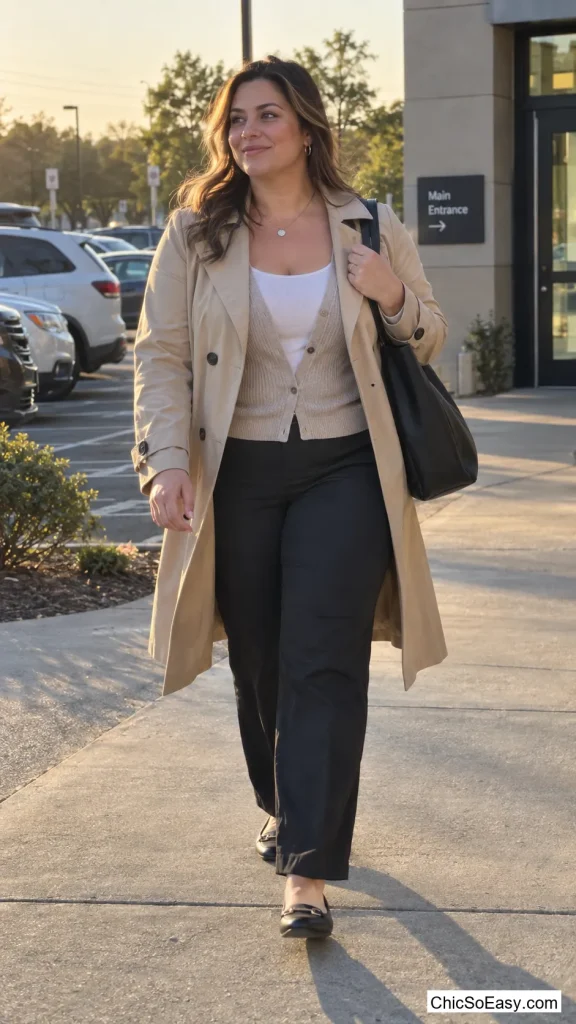
16. Lightweight Trench Over a Tank-and-Cardigan Layer
A lightweight trench coat thrown over a tank layered under a thin cardigan.
The trench sheds fast the moment the day warms up, leaving a complete outfit underneath instead of just a base layer that still needs something over it.
Keep the trench in a bag or a locker once it’s off rather than tying it around your waist — a coat tied at the waist is the one layer that gets in the way when you’re on your feet the rest of the day.
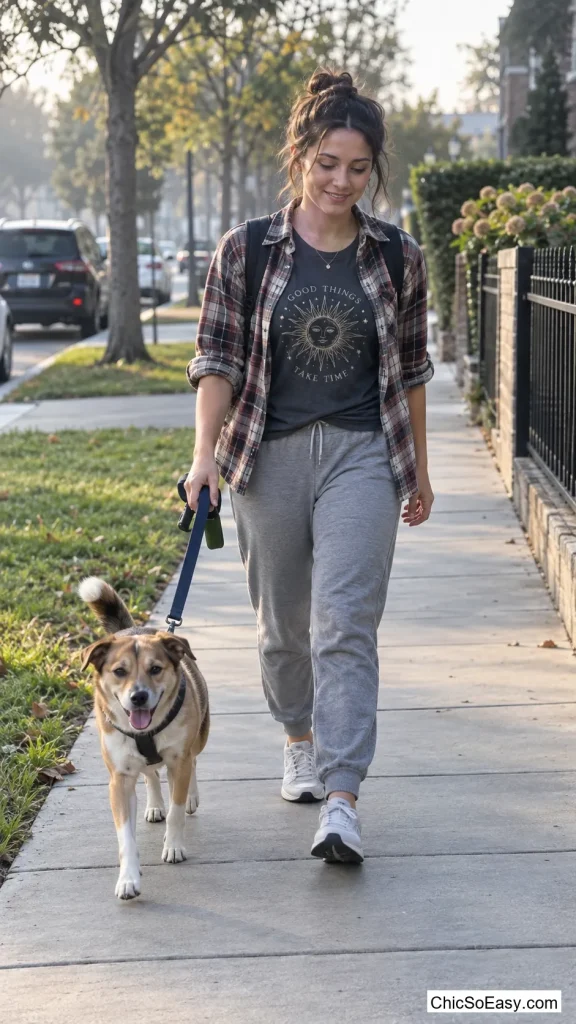
17. Flannel Over a Graphic Tee, Sleeves Rolled
A flannel shirt over a graphic tee with the sleeves rolled to the elbow, paired with joggers.
The flannel swaps out for a denim jacket the moment it’s warm enough, so the base outfit underneath never has to change at all.
Final Thoughts
The thread running through all of this is fabric that moves before you ask it to — nothing that needs adjusting every time you sit, stand, reach, or bend. Pick two or three that match what your actual day looks like, and build the rest of your fall wardrobe around those instead of the other way around.