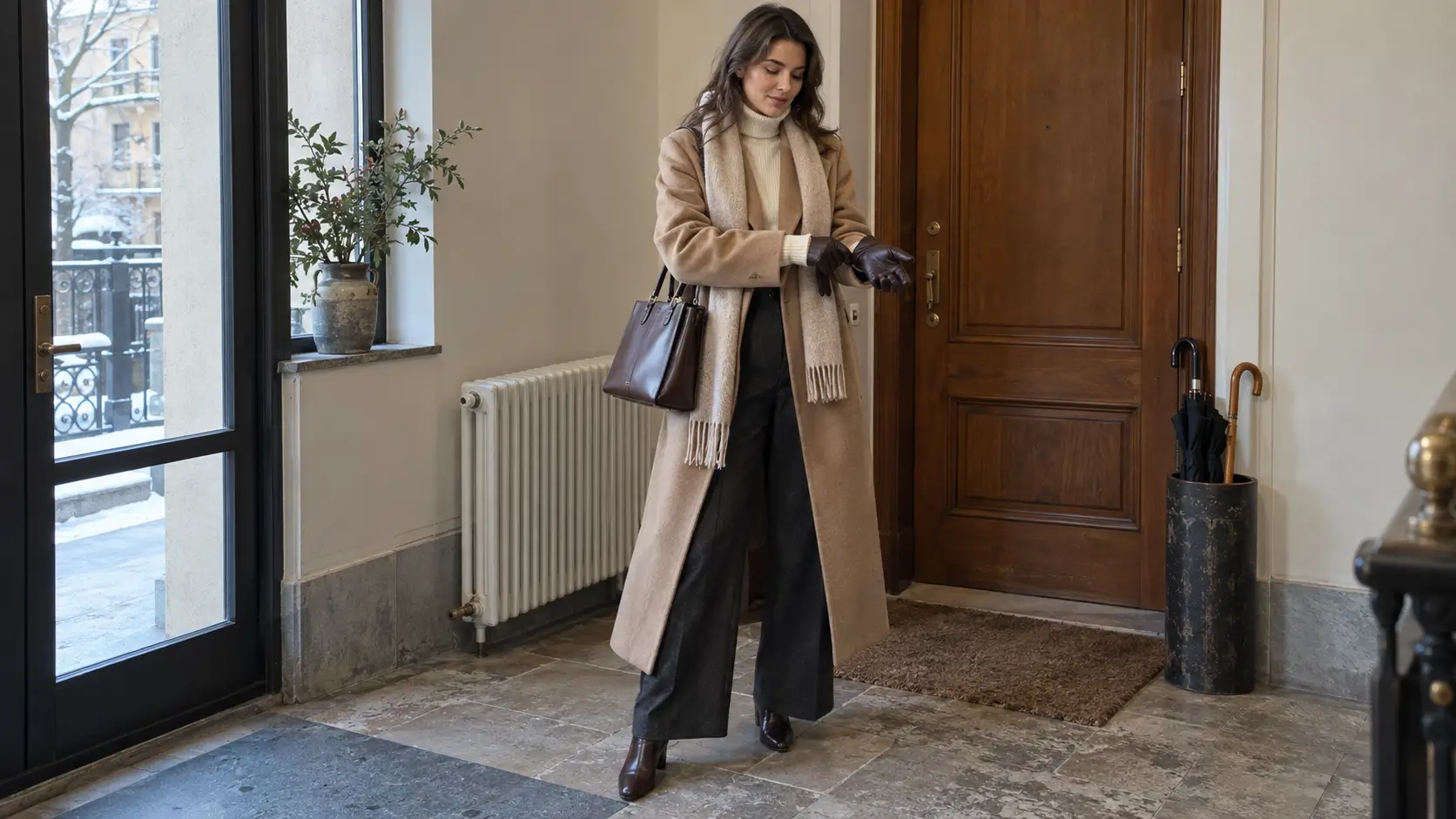
A cashmere sweater from the clearance rack looks expensive standing next to tailored trousers. The same sweater, worn over leggings and slouchy socks, doesn’t.
The difference in most of these outfits isn’t the price of anything in them — it’s proportion, texture, and one deliberate choice per look, like a belt where there wasn’t one, or a coat left open instead of buttoned.
These thirty-one lean into contrast on purpose: an evening fabric worn on an ordinary day, a formal piece paired with something casual, or one neutral color repeated head to toe instead of broken up. Pull from whichever ones use clothes already sitting in the closet.
Neutral Tricks That Read Expensive
Color does a lot of visual work in winter, when everyone is buried under coats. Sticking to one family of neutrals on purpose is the fastest way to look pulled-together instead of just bundled up.
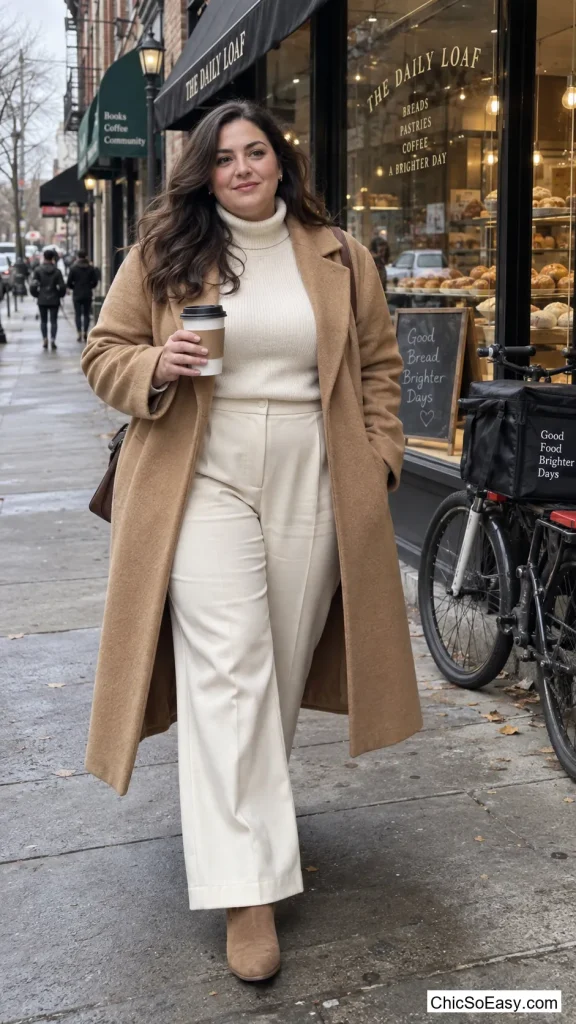
1. Head-to-Toe Cream With a Camel Coat
Start with a cream turtleneck and cream wide-leg trousers, then layer a camel wool coat over the top instead of reaching for black. Add tan ankle boots and a small leather bag in the same warm family so nothing reads as a separate outfit choice.
One tonal family from head to toe reads as intentional in a way that mixing five colors never does. It also photographs better in winter light, when everything outside is already gray, because the cream stands out instead of blending into the slush.
Cream shows everything, so this works best in wool and cashmere rather than anything that pills fast. A quick lint roller before you leave the house does more for this outfit than any accessory.
2. Monochrome Beige Set With a Structured Bag
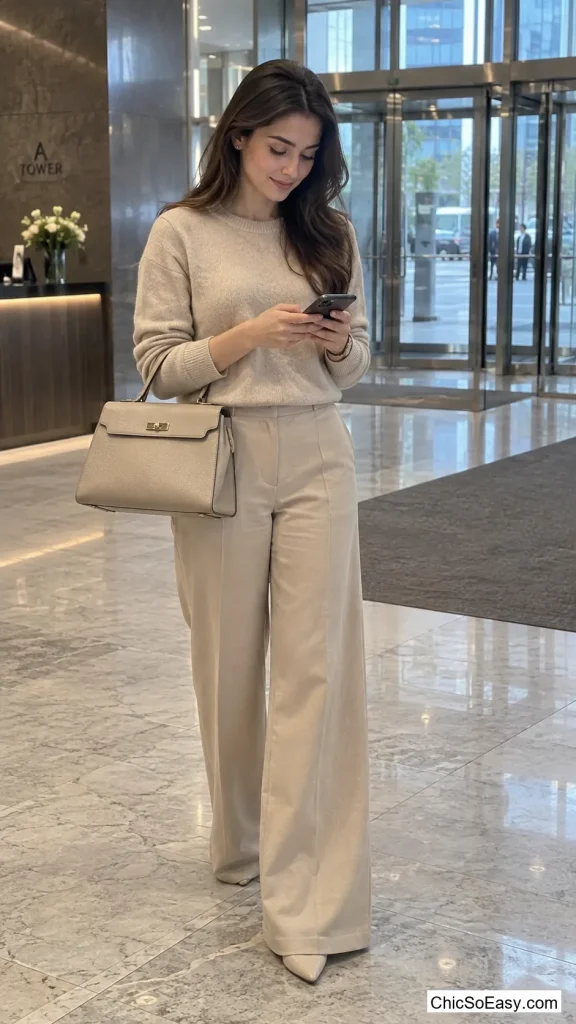
A beige sweater, matching wide-leg pants, and a structured top-handle bag in the same tone. Keep the shoes in the same family too — a stone-colored loafer or a tan boot, not black.
The structure in the bag is what saves this from looking washed out. A soft, slouchy tote in the same beige disappears into the outfit; a bag with a hard shape and a clean handle gives the eye something to land on.
3. Cream Knit Set With Mismatched Gold Jewelry
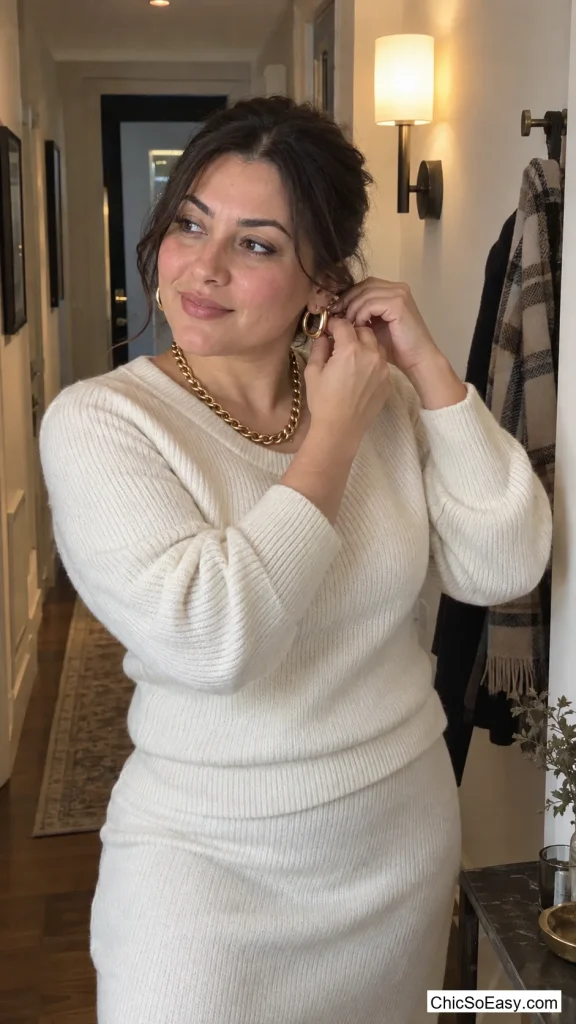
A matching cream knit set — sweater and skirt, or sweater and wide pants cut from the same fabric — worn with jewelry that doesn’t match itself. A chunky gold chain, a thin gold ring, and mismatched hoops instead of a coordinated set.
A knit set alone can look like loungewear. The mismatched gold breaks that up and adds the kind of detail that reads as personal collecting rather than a set bought as one unit off a mannequin.
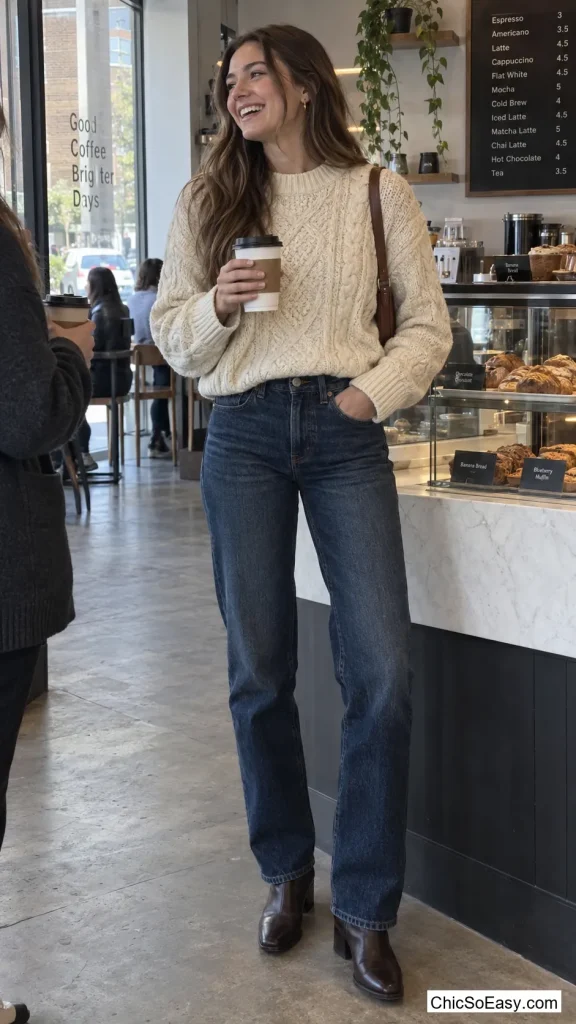
4. Cream Sweater Over Dark Wash Denim
A heavy cream cable-knit or fisherman sweater tucked loosely into dark, straight-leg denim with no fading or whiskering. Finish with a black or dark brown boot and small gold hoops.
Dark, unfaded denim reads as put-together in a way light wash or distressed denim doesn’t — it behaves more like trousers than like weekend jeans. The pale sweater against the dark denim does the contrast work without needing a third color anywhere in the outfit.
Layering That Looks Deliberate
The outfits that look expensive rarely have the fewest pieces — they have layers that were clearly chosen on purpose, not just piled on for warmth.
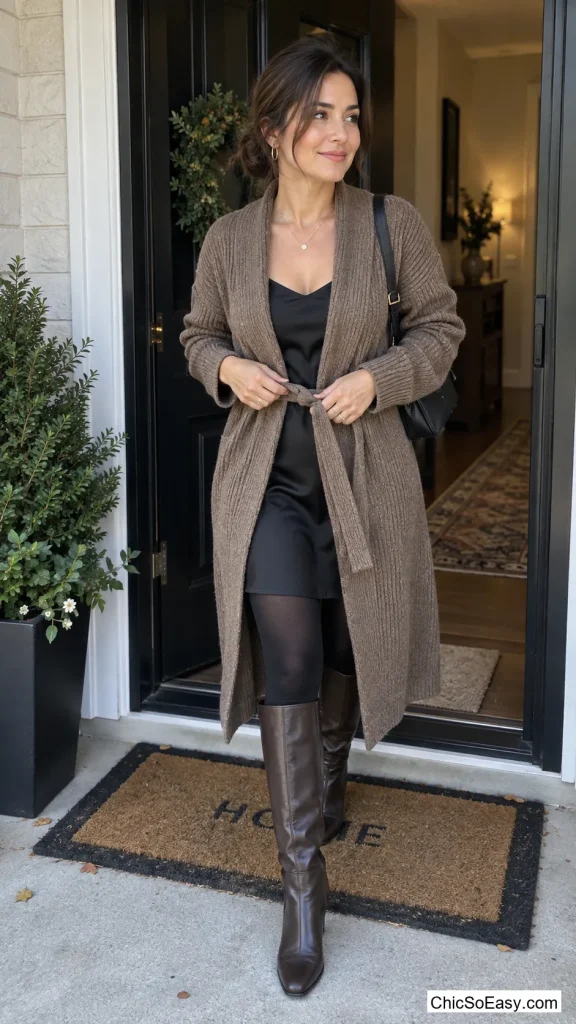
5. Belted Cardigan Over a Slip Dress
A long, ribbed cardigan worn open over a slip dress, then cinched at the waist with a thin leather belt instead of left loose. Add opaque tights and a knee-high boot underneath.
The belt is what makes this read as a real outfit instead of a robe over a nightgown. It carves a waist out of two loose pieces and turns the cardigan into outerwear instead of something you’d wear to answer the door.
Pick a belt with a small, real buckle rather than anything plastic or oversized — a flimsy belt is the one detail on this outfit close enough to the hands to get noticed.
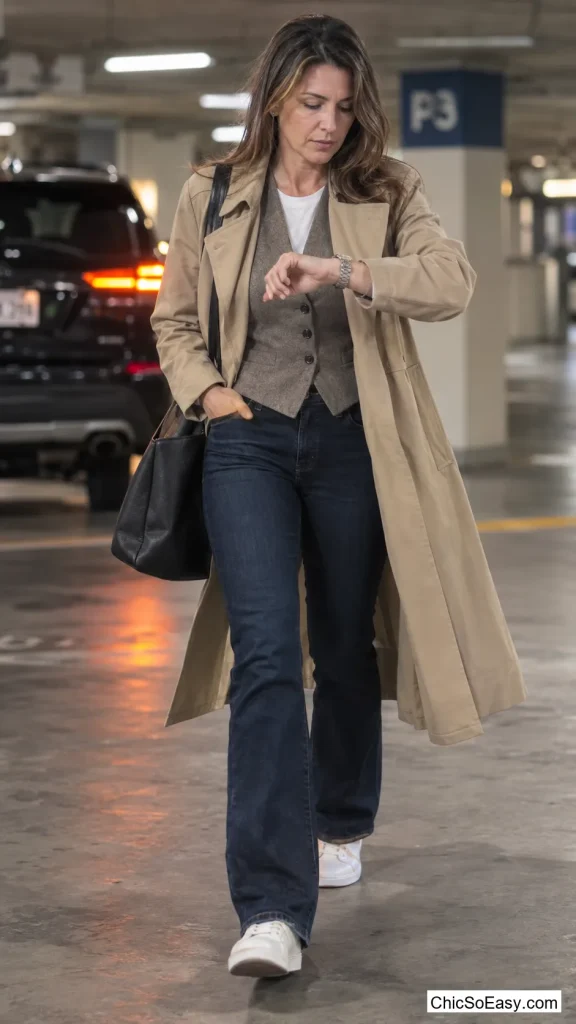
6. Wool Vest Under an Open Trench
A fitted wool vest worn as a mid-layer underneath an open trench coat, over a plain long-sleeve top. The trench stays unbelted and open rather than cinched.
Most people layer with sweaters and jackets and skip vests entirely, which is exactly why this reads as more considered. The vest adds visible structure at the torso without the bulk a second sweater would add underneath a coat.
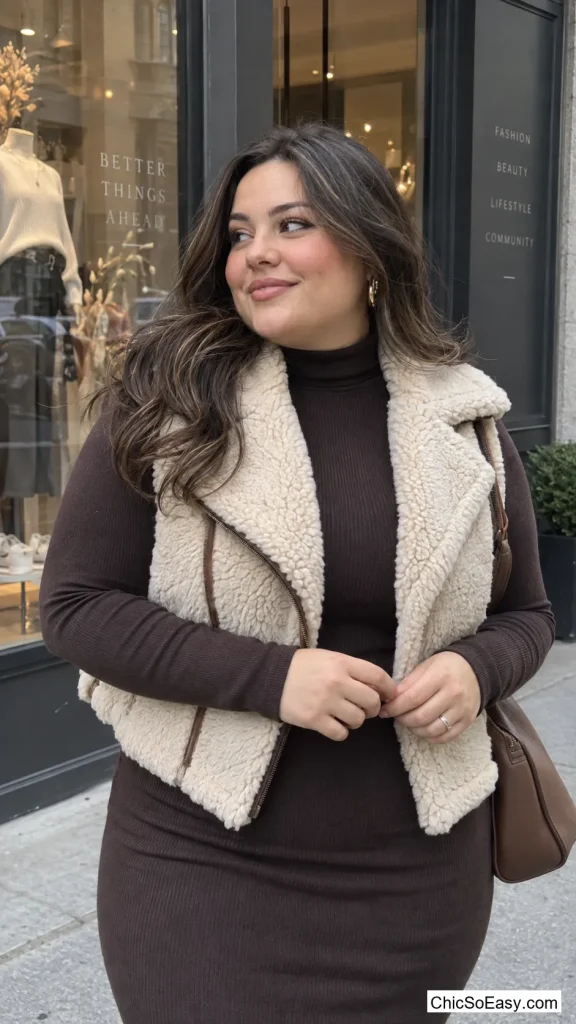
7. Shearling Vest Over a Turtleneck Dress
A cropped shearling or faux-shearling vest worn over a fitted turtleneck dress that hits at the knee, with tall boots underneath. The vest stays open rather than zipped.
A vest over a dress is an unusual pairing, which is what makes it look like a personal styling choice instead of a matched outfit off a rack. The shearling texture also does a lot of visual weight for very little actual bulk, so the silhouette stays slim under whatever coat goes on top.
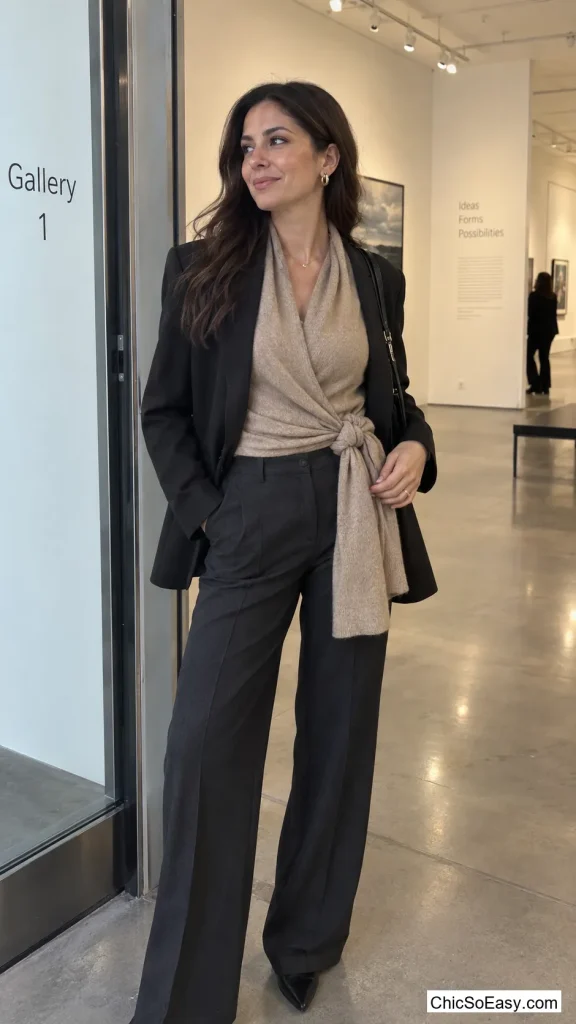
8. Cashmere Scarf Worn as a Wrap Top
A large, rectangular cashmere scarf folded and tied around the torso like a wrap top, worn under a blazer or open coat with high-waisted trousers underneath. The knot sits at one hip rather than centered.
This takes an accessory most people treat as an afterthought and makes it the actual top, which is the kind of detail that gets noticed precisely because it’s unexpected. It only works with a scarf that has real weight to it — a thin polyester one won’t hold the wrap shape.
Mixing Textures Instead of Colors
Neutral doesn’t have to mean plain. Putting two or three different textures in the same neutral color does more visual work than adding another color ever could.
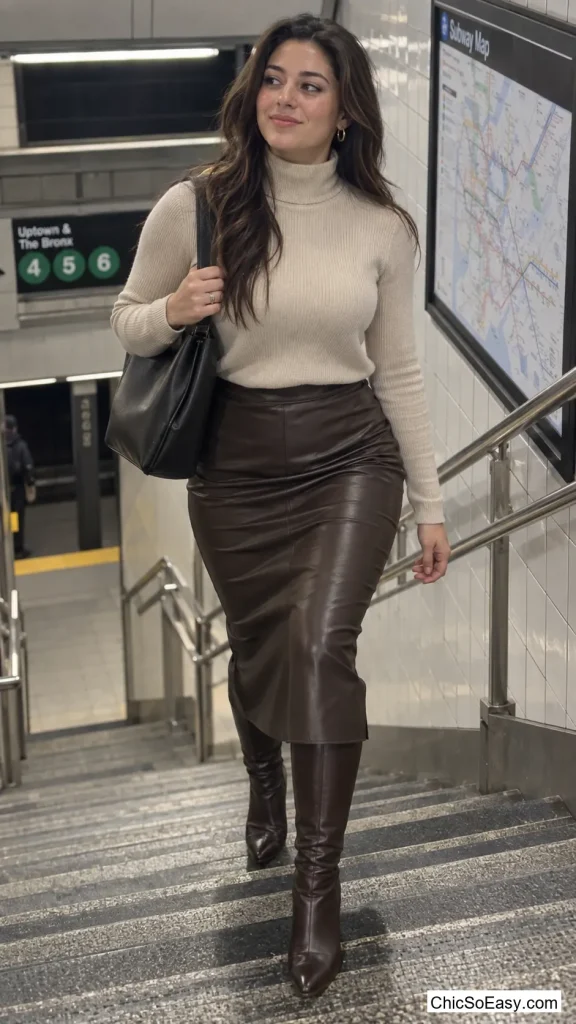
9. Turtleneck Tucked Into a Leather Skirt
A fine-knit turtleneck tucked into a fitted leather or faux-leather midi skirt, with the sweater bloused slightly over a thin belt. Finish with knee-high boots in a matching or darker tone.
The soft knit against the stiff leather is the entire outfit — two textures doing what a print or a second color usually gets asked to do. Keeping both pieces in black or a close neutral keeps the contrast about texture instead of color.
Leather skirts sit differently depending on how much they cling, so blousing the sweater slightly over the waistband hides any gap between the two pieces better than tucking it in flat.
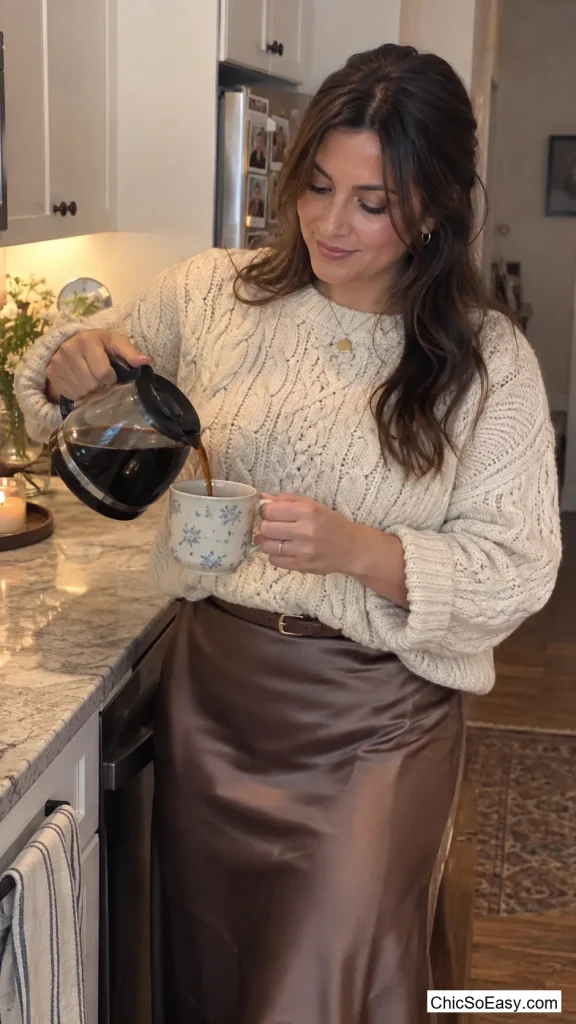
10. Satin Skirt With a Fisherman Sweater
A slippery satin midi skirt paired with a chunky fisherman-knit sweater, the sweater tucked in loosely at the front only. Add a thin belt and ankle boots.
Satin alone can look like it belongs at a holiday party and nowhere else. The heavy knit brings it down to something you’d wear on an ordinary cold day, and the two fabrics next to each other — one that catches light, one that doesn’t — is more interesting than either worn with a plain top or plain trousers.
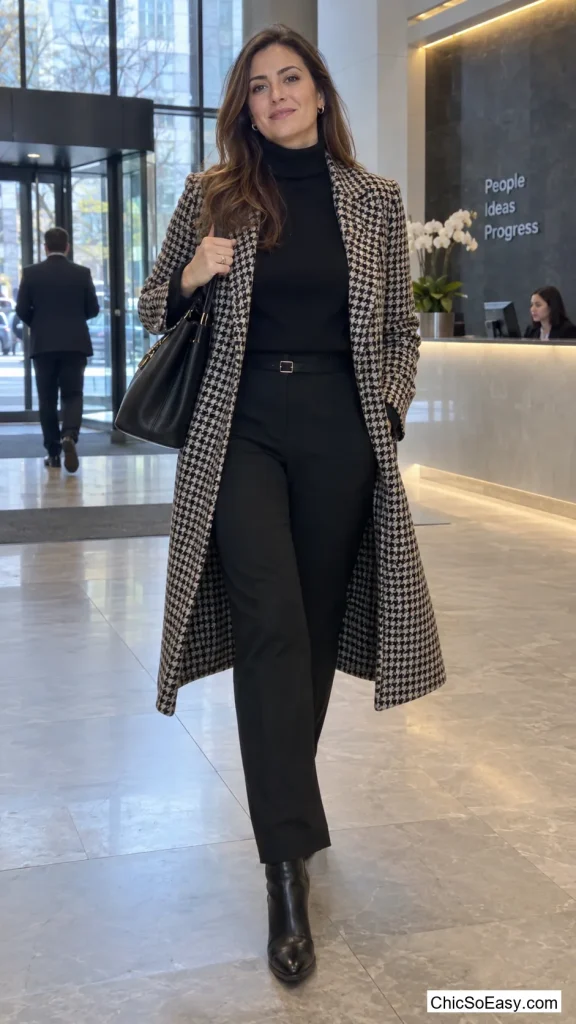
11. Houndstooth Coat Over an All-Black Base
A black turtleneck, black trousers, and black boots, with a houndstooth wool coat worn open on top as the only pattern in the outfit. Keep the bag and any jewelry black or gold, nothing else patterned.
An all-black base means the coat does all the visual work instead of competing with a patterned scarf or a printed top underneath. It also means the coat can go from work to dinner without anything else in the outfit needing to change.
12. All-Black Outfit, Mixed Textures Only
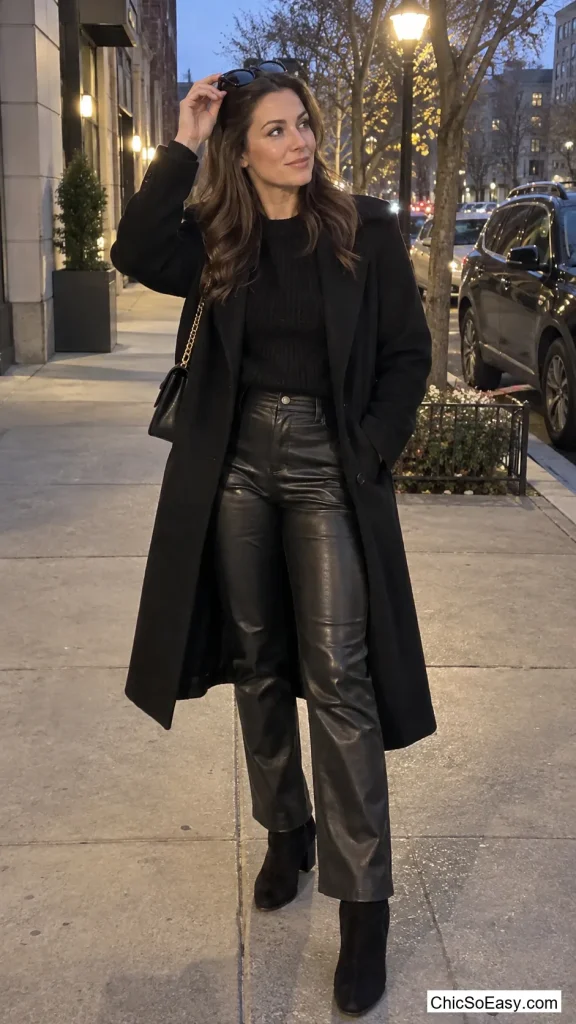
Every piece in black, but from different fabrics — a wool coat, a leather skirt or trousers, a knit sweater, and suede boots, so no two pieces share the same surface.
Flat, single-texture black reads as safe rather than expensive; the fabric changes are what make an all-black outfit look considered instead of like the first dark thing pulled from the closet. Matte wool next to shiny leather next to soft knit gives the eye three different things to register even though the color never changes.
Tailoring, Reworked
Tailored pieces already read as expensive on their own. Worn slightly against type — with the wrong shoe, or in the wrong setting — they read as personal style instead of a work uniform.
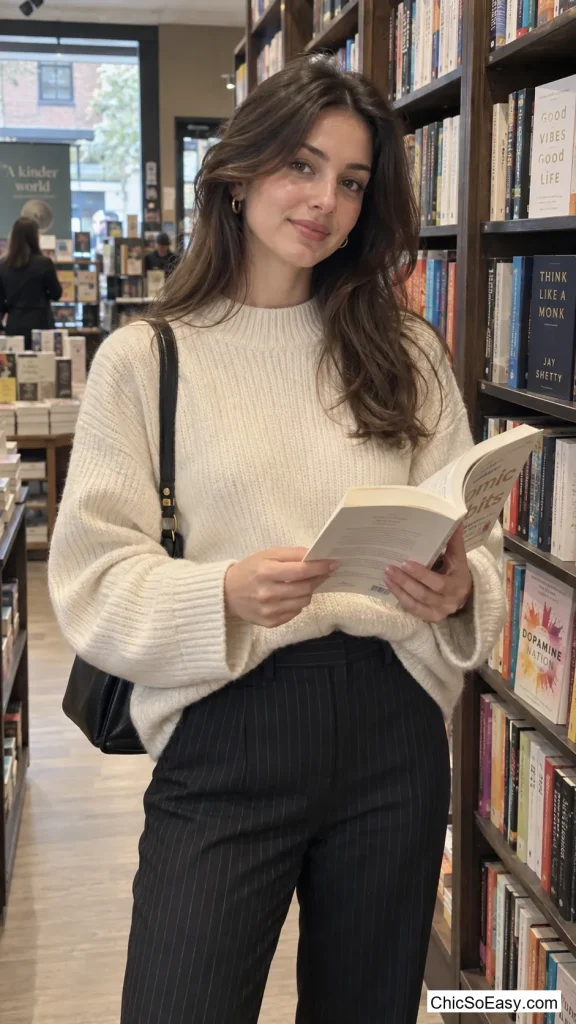
13. Pinstripe Trousers With an Oversized Knit
Slim pinstripe trousers, usually reserved for a suit, worn with an oversized cream or gray knit sweater tucked in at the front and loafers instead of heels.
Pinstripe on its own reads like office wear. Paired with a soft, oversized knit instead of a matching blazer, it reads like someone who owns a suit and decided to wear half of it on a day off — which looks more expensive than the suit itself.
Fold or push the sweater sleeves up to the forearm so the proportion stays balanced; a full sleeve on an already oversized sweater can swallow the sharp trouser line underneath.
14. Structured Blazer Worn as a Coat
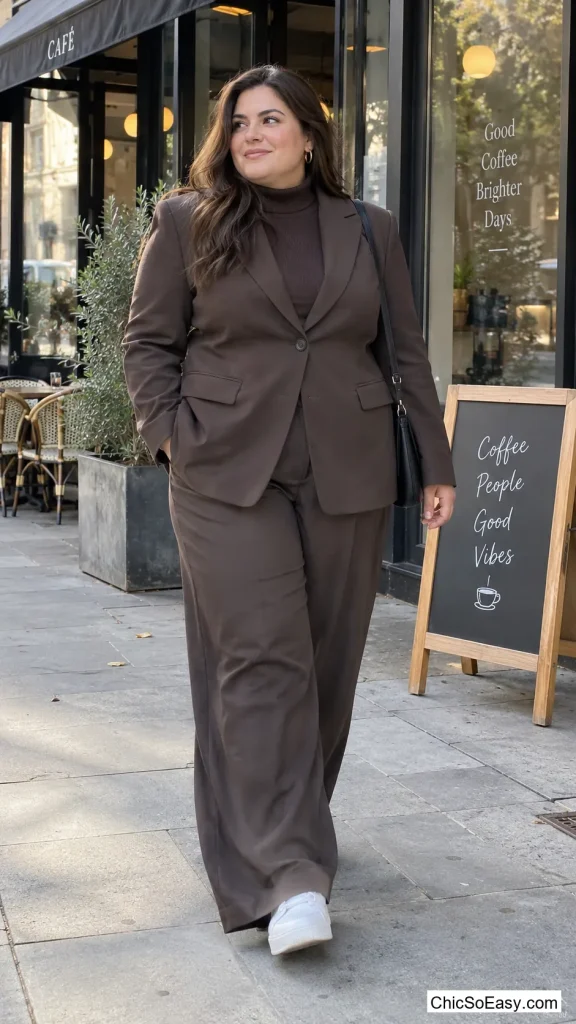
A slightly oversized structured blazer worn buttoned as the outermost layer on a mild winter day, over a turtleneck and wide trousers, with no actual coat on top.
Wearing a blazer as the coat instead of underneath one is a small swap most people don’t think to make, and it reads as confident rather than cold. It only works on days that don’t call for real outerwear — this is a transitional-weather trick, not a January-in-a-blizzard one.
15. Wool Skirt Suit With Sneakers
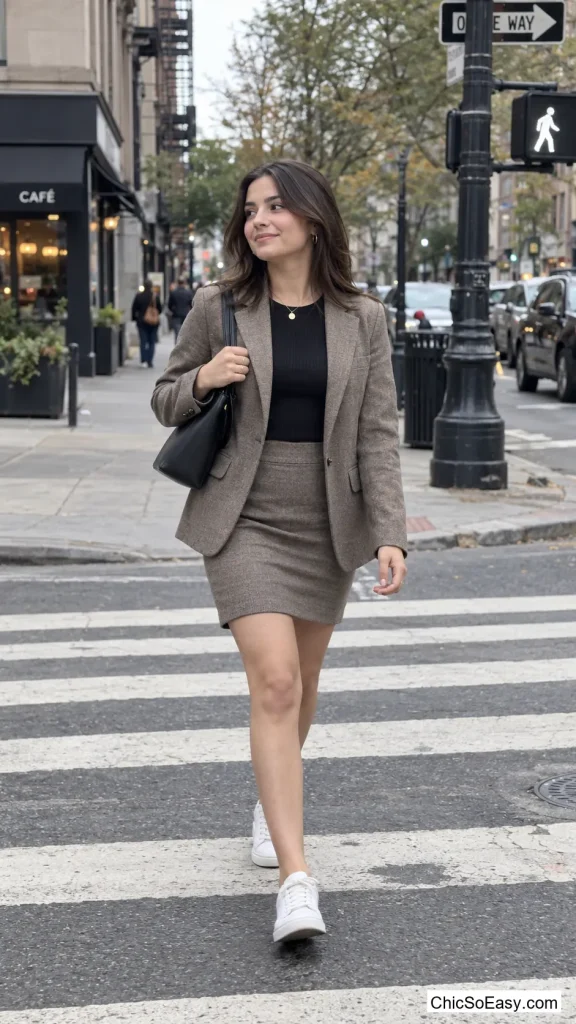
A matching wool skirt suit — blazer and pencil skirt cut from the same fabric — worn with clean white sneakers instead of heels, and a plain long-sleeve top underneath the blazer.
The suit alone can look dressed for an interview. Sneakers pull it toward something more like off-duty French style, and the contrast between formal tailoring and a casual shoe reads as someone who dresses for herself rather than for an occasion.
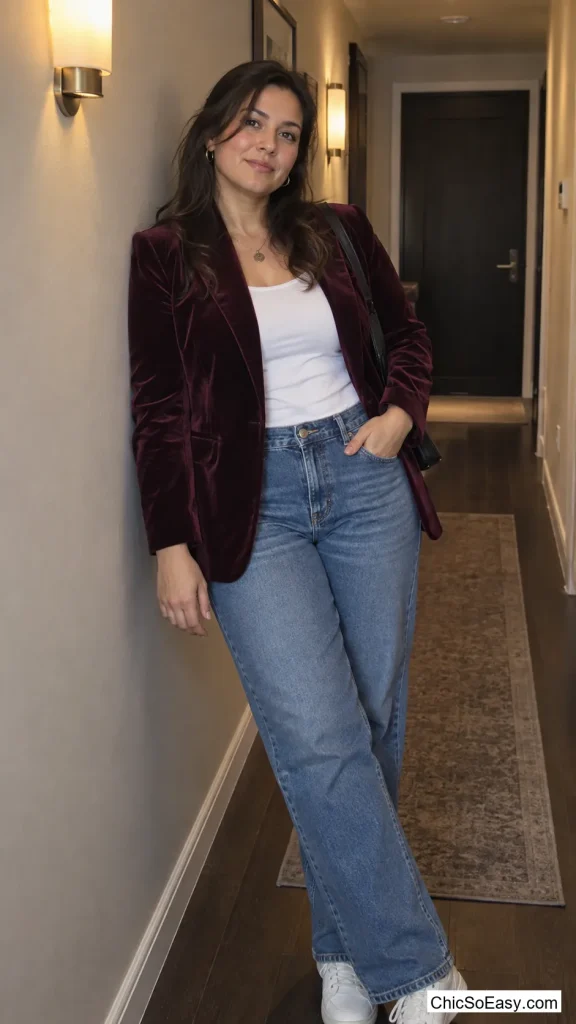
16. Velvet Blazer With Straight-Leg Jeans
A velvet blazer, usually saved for evening, worn during the day over straight-leg jeans and a simple white or black top, buttoned with the blazer’s own closure rather than added belt.
Velvet in daylight, next to ordinary denim, is a deliberate mismatch of formality that ends up looking more expensive than wearing the blazer with dress pants the way it was designed to be worn. The jeans keep it from tipping into costume territory.
Outerwear Doing the Heavy Lifting
The coat sits on top of everything else for most of a winter day, which means it can carry an entire outfit almost by itself.
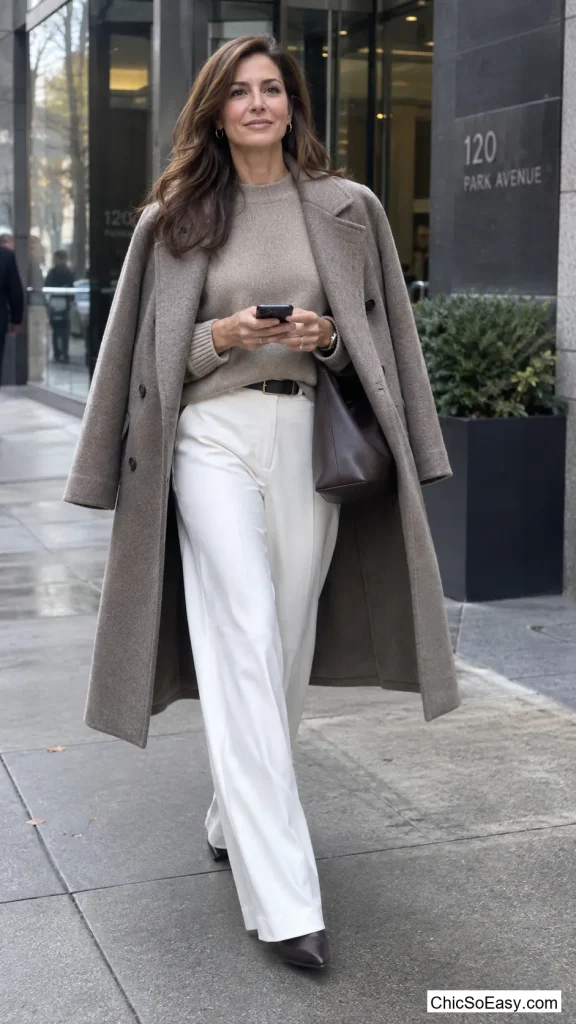
17. Oversized Wool Coat Worn Like a Cape
A long, oversized wool coat draped over the shoulders rather than worn through the sleeves, arms left underneath in a sweater, over a simple outfit of trousers and a top.
Draping a coat over the shoulders instead of wearing it properly is a small, deliberate-looking gesture — the kind of thing that reads as someone who isn’t cold, or doesn’t mind pretending not to be, for the few minutes it takes to walk somewhere. It works best with a coat structured enough to hold its shape without arms in the sleeves.
This one is for short walks between a car and a door, not for staying warm outside for any real stretch of time — carry the coat properly once you’re somewhere that requires actual warmth.
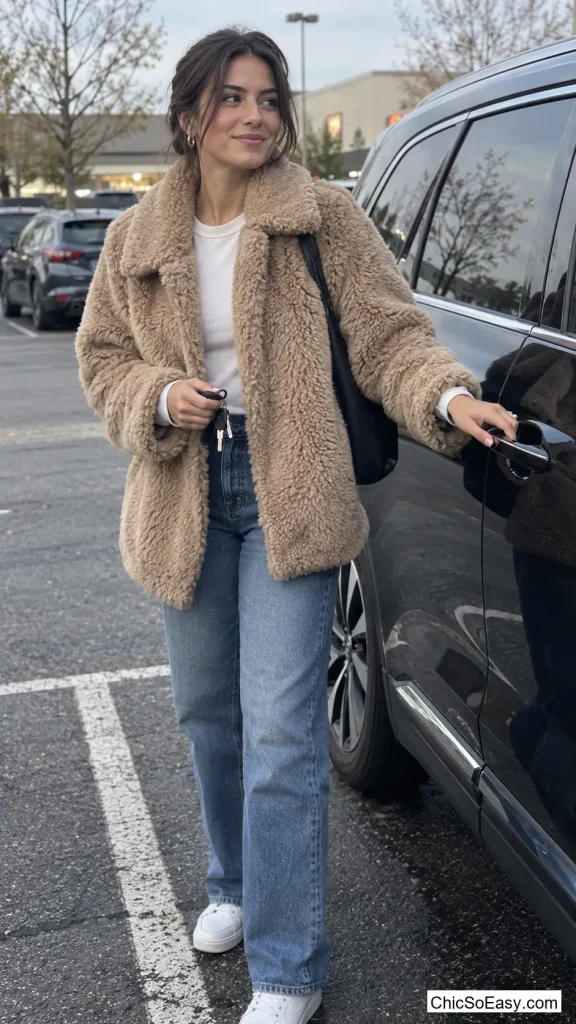
18. Faux Fur Teddy Coat Over Jeans and a Tee
A faux fur or teddy-texture coat worn over the simplest possible base — straight jeans and a plain long-sleeve tee — with the coat doing all the visual work.
Because the coat already carries so much texture, everything underneath should stay flat and quiet. A second textured piece underneath, like a chunky sweater, competes with the coat instead of letting it read as the reason the outfit works.
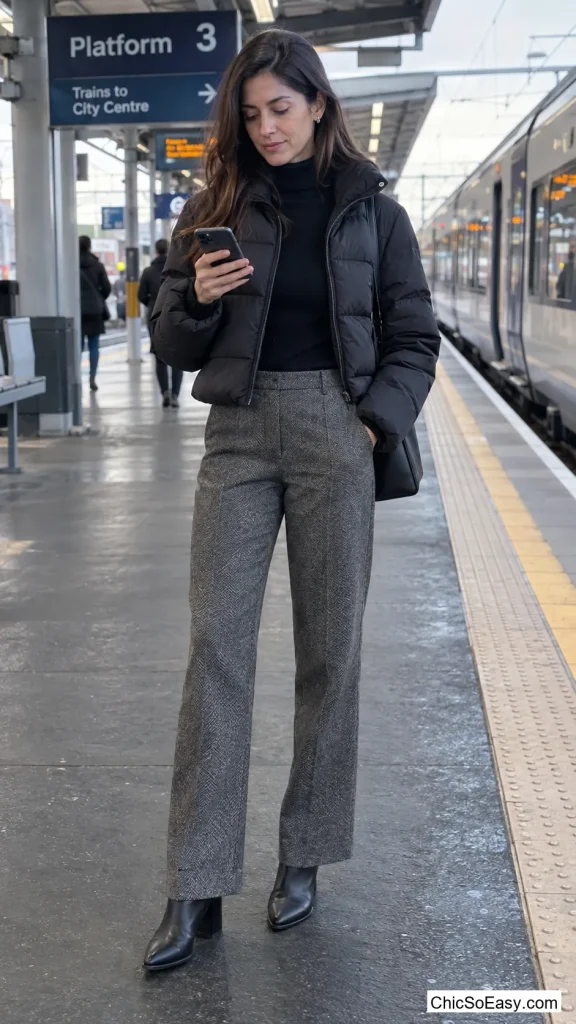
19. Herringbone Trousers With a Cropped Puffer
Tailored herringbone or wool trousers with a cropped, fitted puffer jacket on top instead of a long wool coat, and ankle boots to keep the leg line long.
A puffer usually gets paired with joggers or leggings, so putting one over genuinely tailored trousers is an unexpected combination that photographs better than either piece worn the expected way. The cropped length matters here — a long puffer over tailored trousers just looks like the trousers got layered under the wrong jacket.
Choose a puffer with a matte finish rather than a shiny one; the shine is what tips a puffer toward athletic instead of toward outerwear.
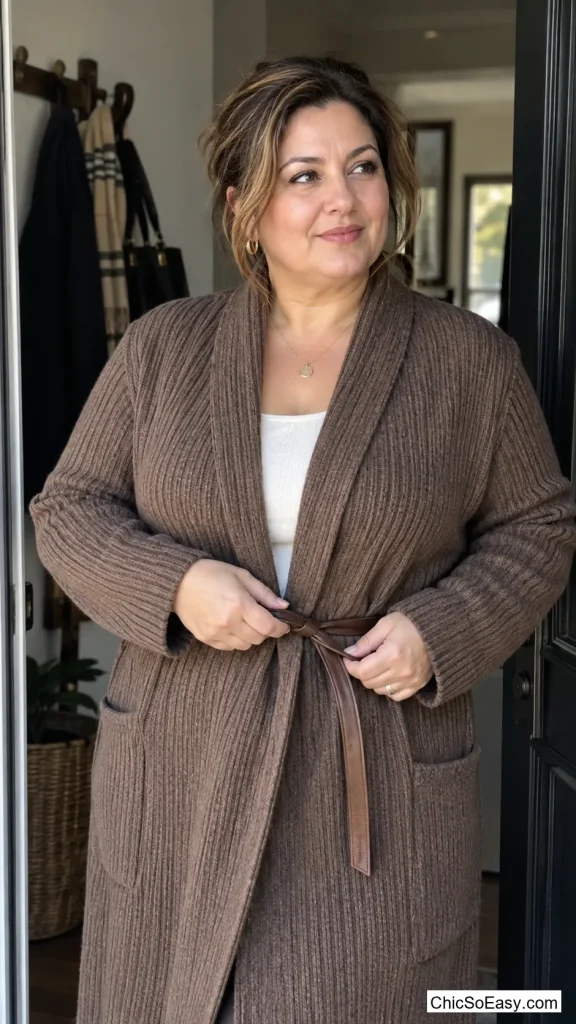
20. Long Cardigan Coat With a Leather Belt
A long, coat-length ribbed or waffle-knit cardigan worn as outerwear over a simple base, cinched at the waist with a thin leather belt instead of left open.
A cardigan coat left open can look shapeless by the time it’s layered over a sweater and trousers. The belt gives it the same waist definition a real coat has, so it holds a shape instead of hanging like a robe.
Evening Pieces, Worn in the Daytime
Fabrics with an evening reputation — satin, silk, anything with a slight sheen — look more expensive precisely because they show up somewhere unexpected, like a Tuesday.
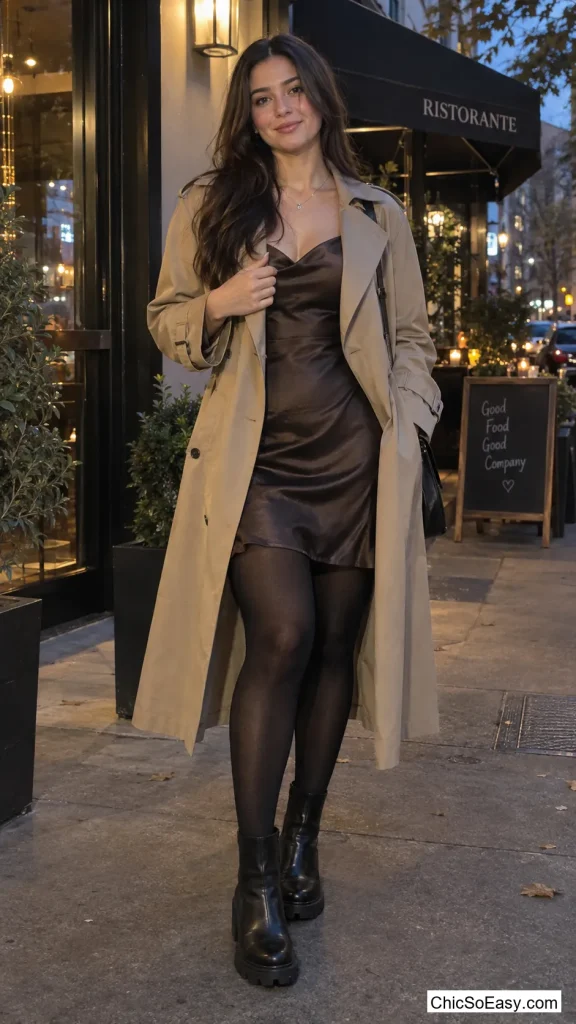
21. Silk Slip Dress Under a Trench Coat
A silk slip dress, usually saved for dinner, worn under an open trench coat with opaque black tights and combat or lug-sole boots instead of heels.
The trench and the boots pull the slip dress into daytime territory without hiding it — it still shows through at the hem and neckline, so it reads as a real choice rather than something worn once by accident. The heavier boots also keep the whole thing from looking like an evening outfit that got interrupted.
A slip dress runs cold on its own, so a thin long-sleeve top underneath, tucked into the dress at the waist, adds warmth without changing the silhouette from the outside.
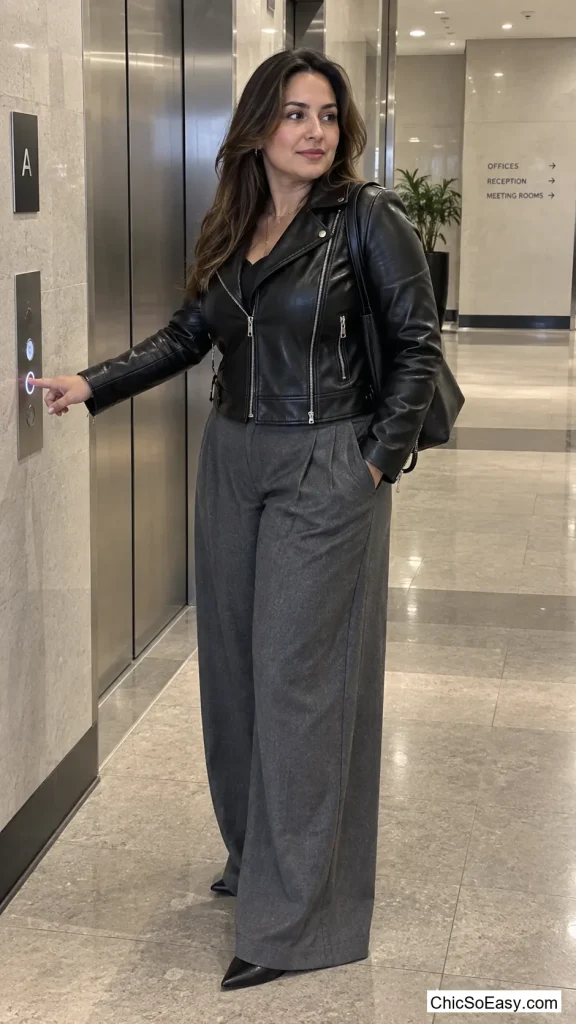
22. Fitted Moto Jacket Over Wide-Leg Trousers
A fitted black leather or faux-leather moto jacket, zipped, worn over wide-leg wool trousers and a simple knit top, with pointed flats or boots.
A moto jacket usually gets paired with skinny jeans, so putting one over wide, fluid trousers instead is a proportion swap that reads as more considered than the expected pairing. The structure of the jacket against the movement of the wide trouser leg is the whole trick.
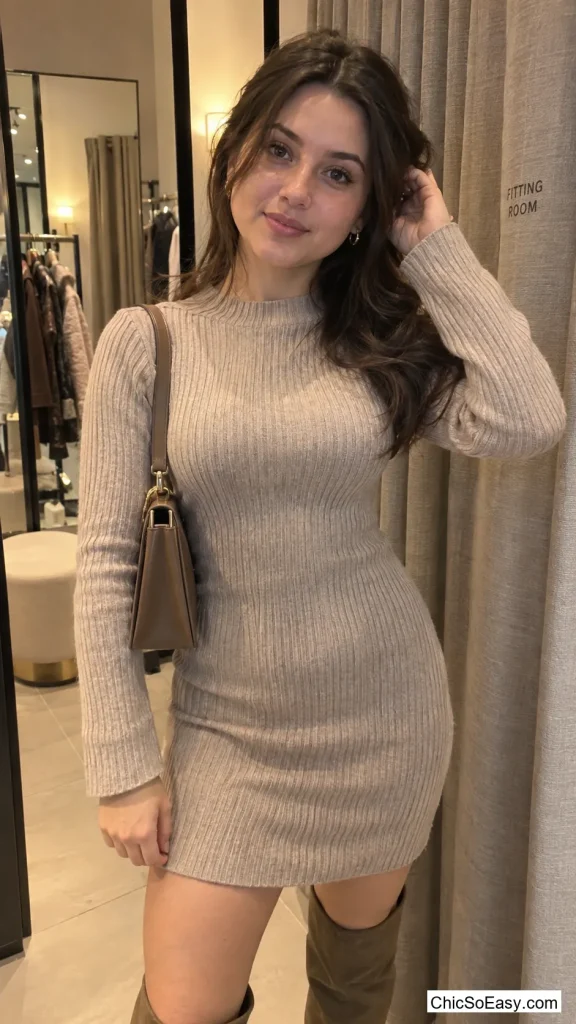
23. Ribbed Knit Dress With Suede Boots
A long-sleeve ribbed knit dress, fitted through the body, worn with knee-high suede boots and a structured shoulder bag rather than a crossbody.
A knit dress alone can read as basic. The suede boots add a second texture at the leg, and swapping a crossbody for a bag with a defined shape and a top handle changes how formal the whole outfit reads, even though nothing else changed.
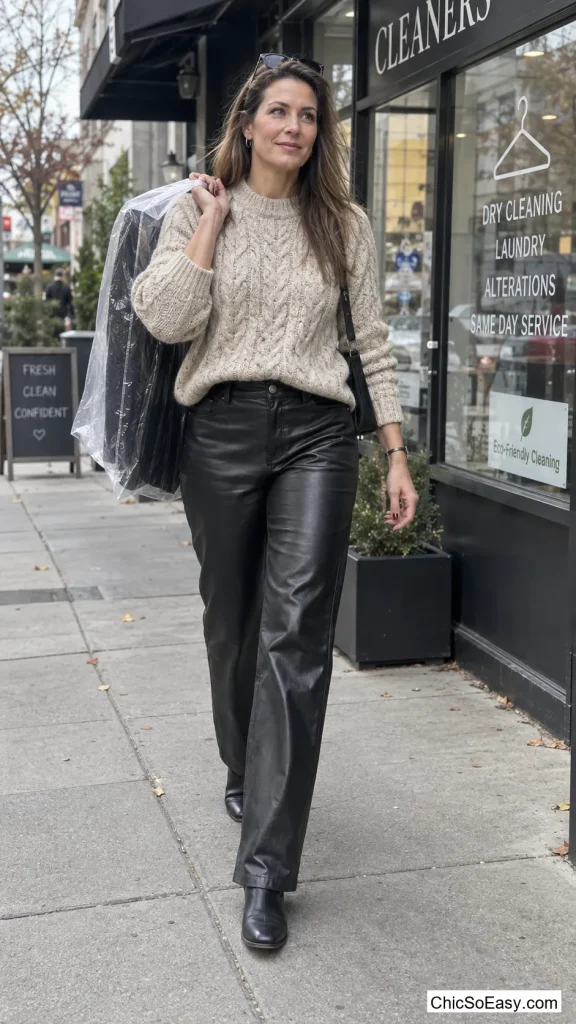
24. Faux Leather Trousers With a Cable-Knit Sweater
Faux leather straight-leg or slightly flared trousers with a heavy cream or oatmeal cable-knit sweater tucked in loosely, and simple flat boots.
Leather trousers on their own can look dressed for going out. A plain, chunky knit sweater on top brings the outfit down to something ordinary enough for running errands, while the leather still does the work of making it look pulled-together.
Faux leather can crack in extreme cold if it’s a stiff, low-quality vinyl — look for a pair with a little stretch in the fabric if you’ll be wearing them outdoors for more than a short walk.
The Details That Do the Work
Some of these outfits change with one addition rather than a full rebuild — the kind of detail that’s easy to skip and does more than it should.
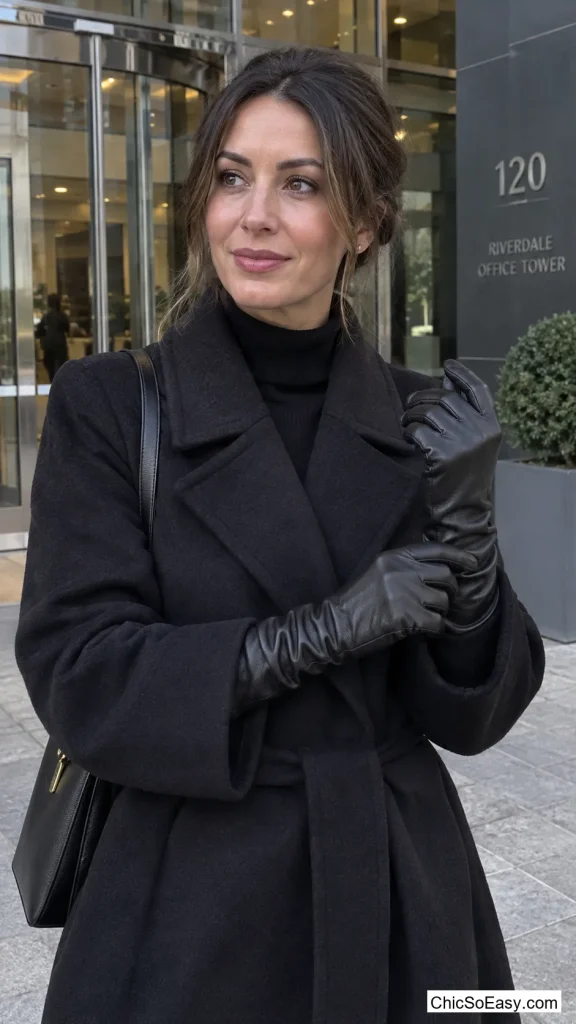
25. Long Leather Gloves Layered Over Coat Sleeves
Long leather or good faux-leather gloves, worn pulled up over the cuffs of a coat sleeve rather than tucked underneath, in black, chocolate, or burgundy.
The gloves going over the sleeve instead of under it is the entire trick — that sliver of leather at the wrist is visible in a way gloves worn the usual way never are. Buy them slightly snug; real and good faux leather both stretch to mold to the hand within a week of wear.
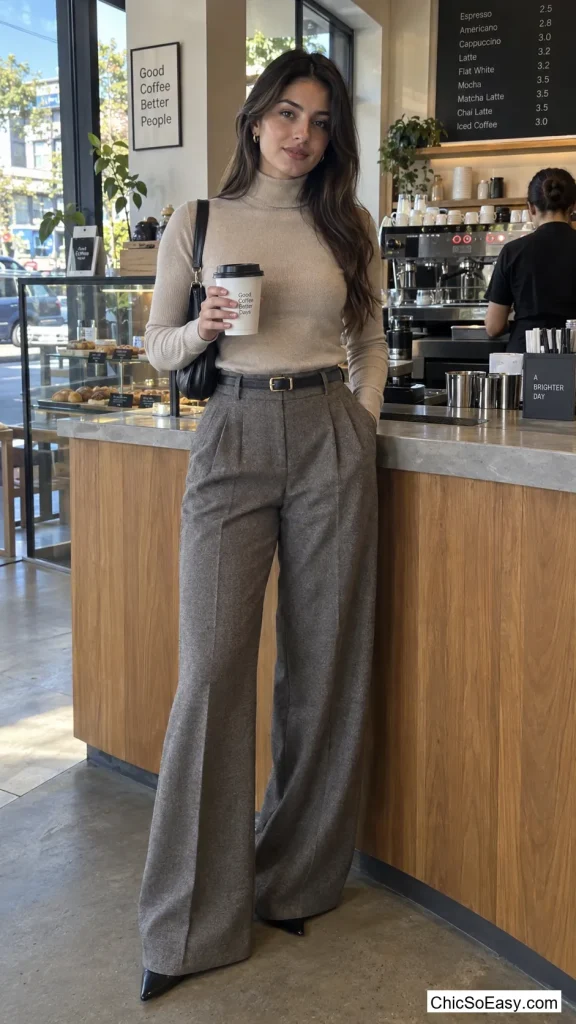
26. Cashmere Turtleneck With Wide-Leg Trousers
A fitted cashmere or cashmere-blend turtleneck, tucked into high-waisted wide-leg wool trousers, with pointed-toe flats or a low heel.
This is close to the most repeated winter combination there is, which means fit is what separates the expensive-looking version from the ordinary one — the turtleneck fitted through the body rather than boxy, and the trouser waist sitting at the natural waist rather than the hip.
A trouser that pools at the ankle reads as sloppy rather than relaxed; a hem that just grazes the top of the shoe is the difference most people miss.
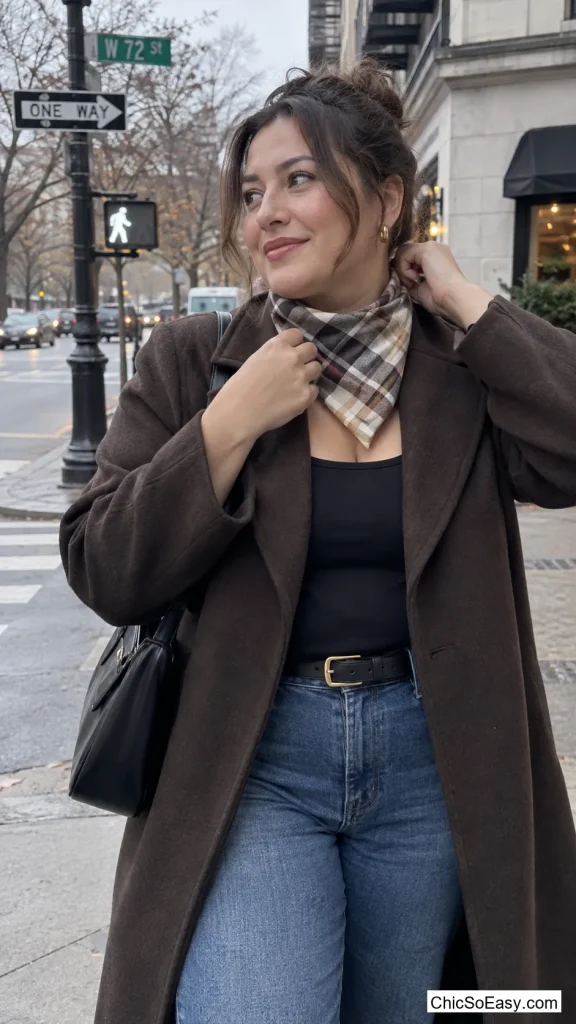
27. Plaid Scarf Knotted Like a Bandana
A plaid wool or silk scarf, folded into a triangle and tied at the back of the neck like a bandana, rather than wrapped the usual way around the throat.
This is a small departure from how a scarf normally gets worn, and it’s exactly that departure that reads as a deliberate styling choice instead of just a way to stay warm. It sits close to the collarbone, so it works best with a coat or jacket open enough to show it.
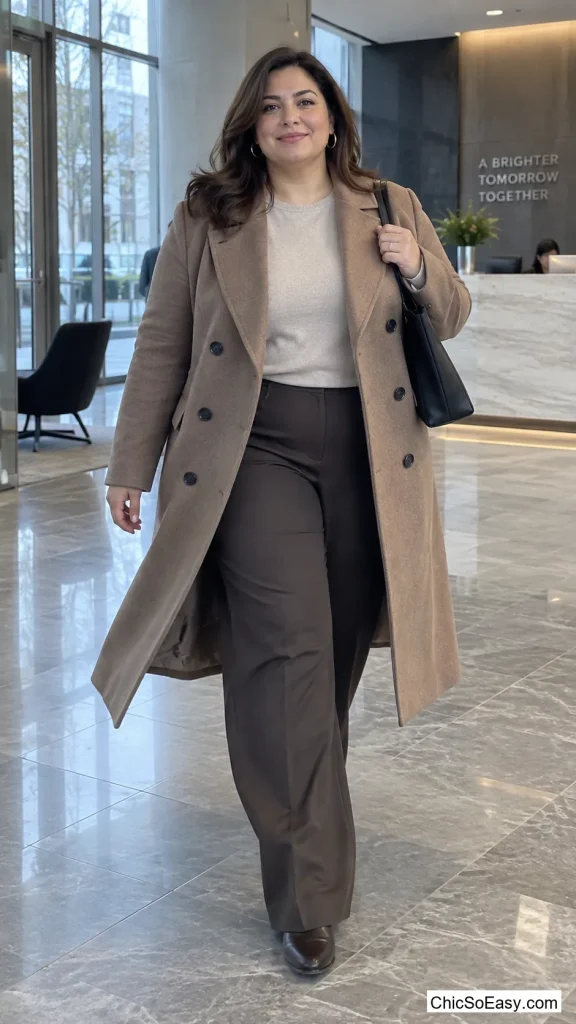
28. Double-Breasted Coat Left Unbuttoned
A double-breasted wool coat worn open rather than buttoned, so both rows of buttons show on either side, over a simple sweater-and-trouser base.
A double-breasted coat buttoned shut hides half of what makes it look expensive — the structure and the button detail only read clearly when the coat is open enough to show the full front. It also drapes differently open, with more movement at the hem.
Cozy Without Losing the Polish
The coziest options here don’t have to look like a day off from getting dressed.
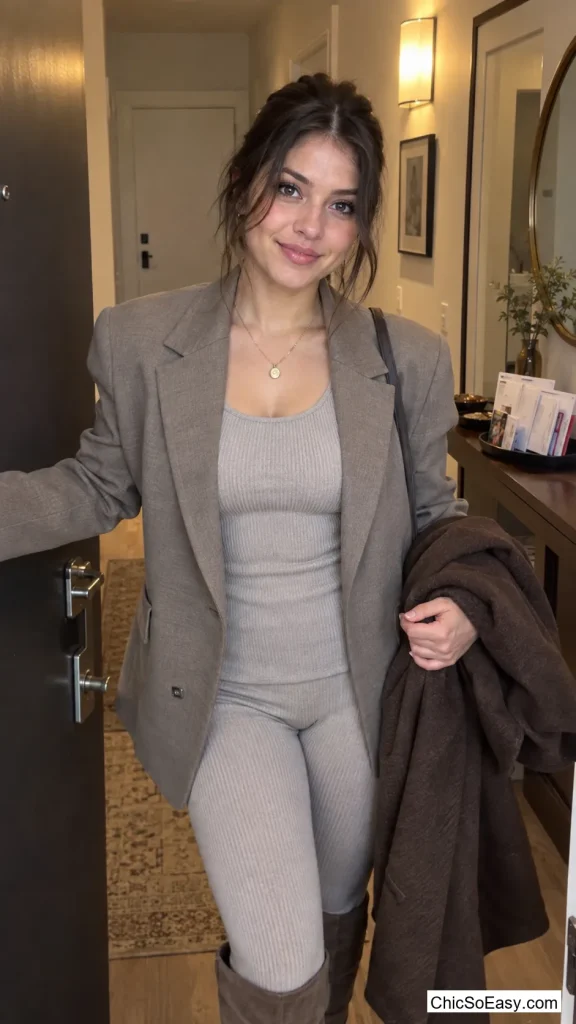
29. Boxy Blazer Over Thermal Leggings
A boxy, slightly oversized blazer worn over a ribbed thermal top and matching leggings styled to look intentional rather than like loungewear, with knee-high boots and a real coat over the top.
Thermal sets are built for warmth, not for being seen, so the blazer is what turns this into an actual outfit if the coat comes off, instead of something worn under a coat and forgotten. The boots do the rest of the work by replacing the slippers or sneakers a thermal set usually gets paired with.
Stick to a thermal set in one solid, neutral color rather than a patterned one — a print reads as pajamas even under a blazer.
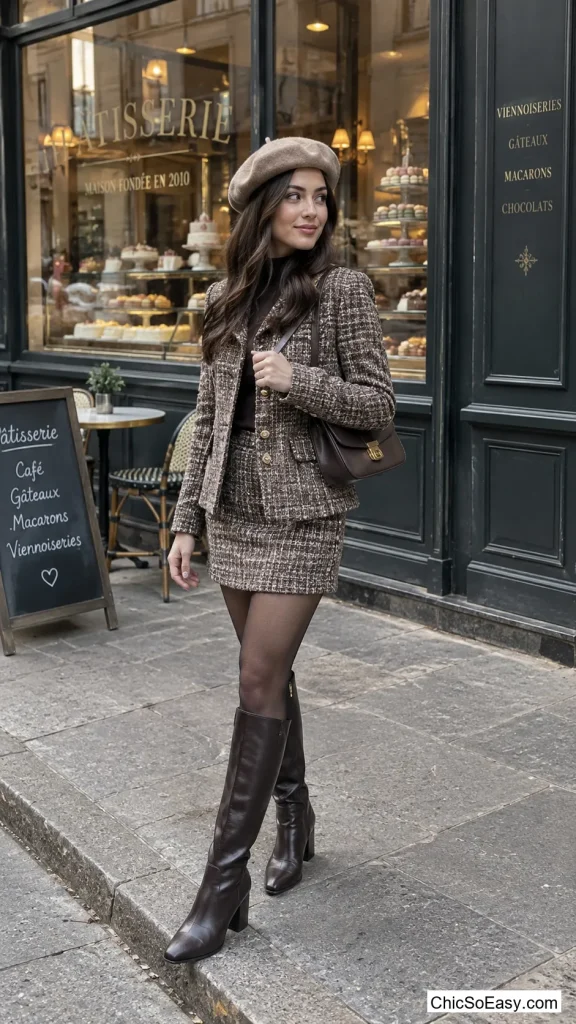
30. Tweed Skirt Suit With a Beret
A tweed blazer and matching mini or midi skirt, worn with a wool beret and knee-high boots, keeping the rest of the accessories minimal.
Tweed already carries a specific, recognizable look, so the beret is doing less work than it seems to — the fabric is the actual reason this reads as expensive. The beret just finishes it instead of leaving the head bare with an otherwise formal outfit.
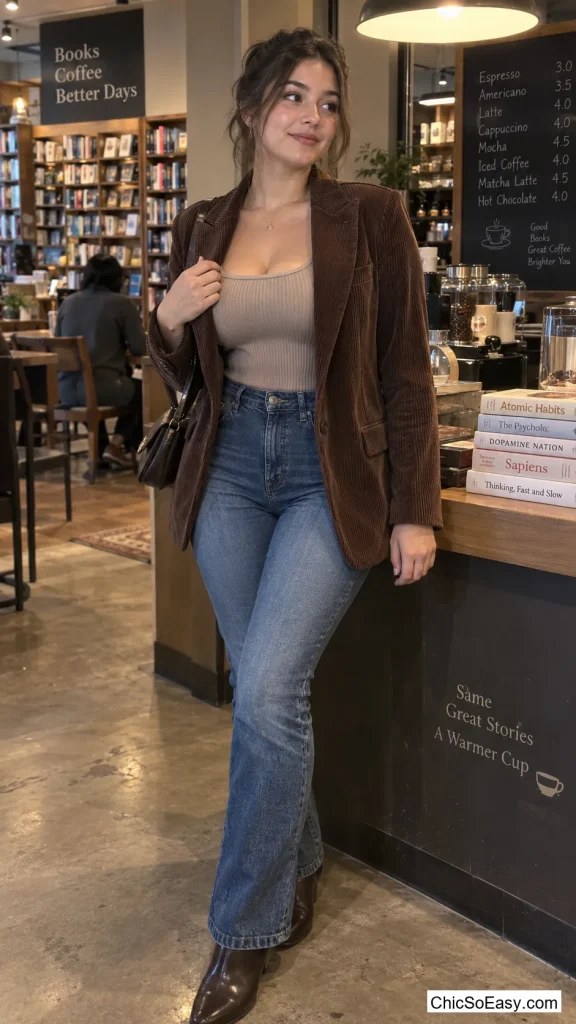
31. Corduroy Blazer Over a Ribbed Tank
A corduroy blazer, buttoned or open, worn over a simple ribbed tank top with high-waisted trousers or jeans underneath, and boots.
Corduroy has a texture close enough to velvet to look dressier than it is, but it’s sturdy enough to wear during the day without looking like it belongs at a holiday party. The tank underneath keeps the neckline simple, so the blazer’s texture stays the focus instead of competing with a printed or textured top.
Final Thoughts
None of these need a closet overhaul or a designer budget. Most of them are the same clothes worn in a slightly different combination than usual — a belt where there wasn’t one, a coat worn open instead of buttoned, gloves pulled over a sleeve instead of under it.
Pick two or three that fit pieces already sitting in a closet before buying anything new. The fastest way to make an outfit look cheap is chasing all thirty-one across separate shopping trips instead of trying the ones already on hand.