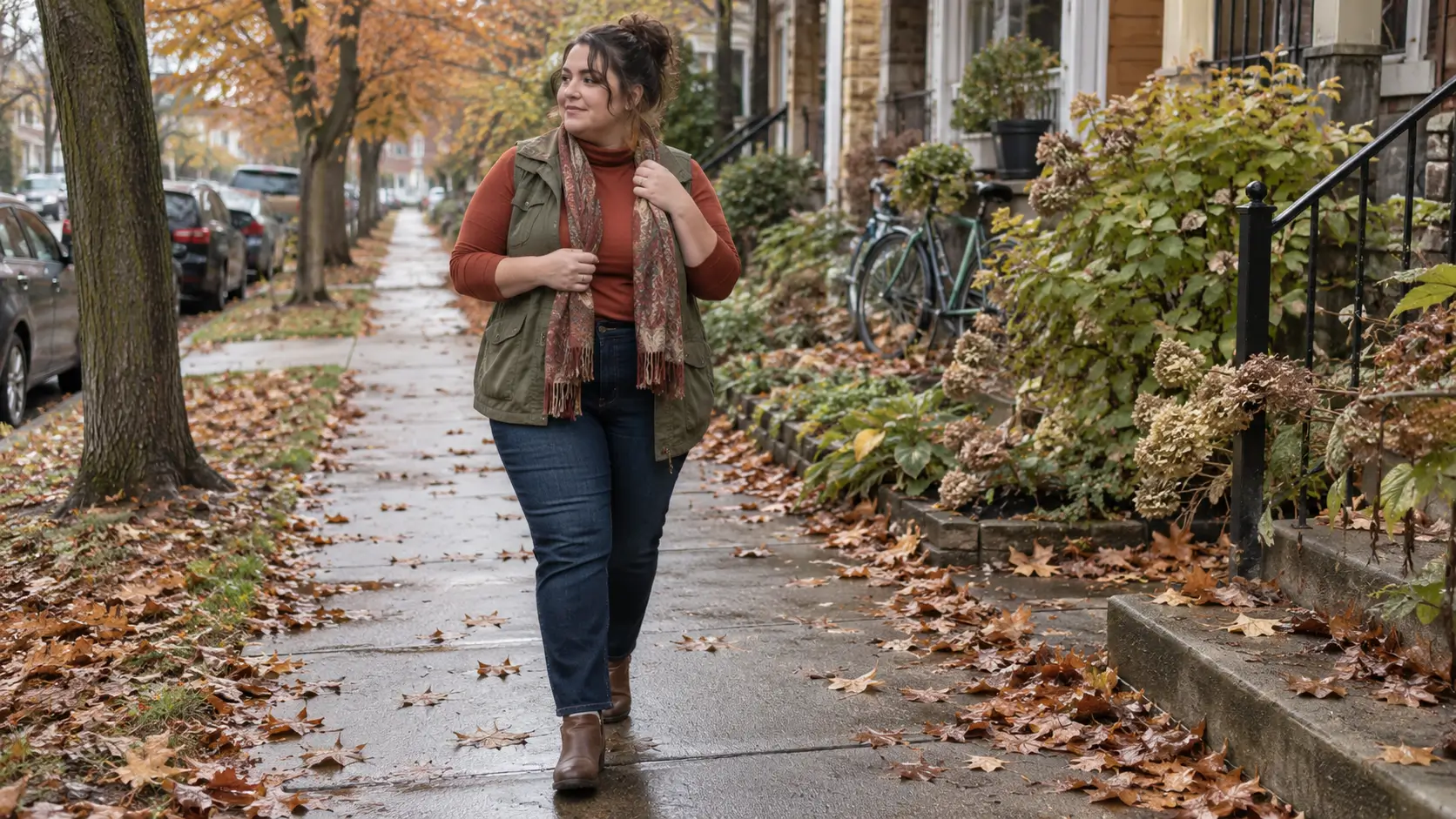
A coat that fits through the shoulders but hangs like a tent through the torso is a very specific kind of annoying, and it’s the reason a lot of plus size women give up on coats around October and just layer harder instead.
None of the twenty outfits below solve for warmth with one heavy piece. They solve it with two or three lighter ones stacked together, so the whole thing still fits through a car door and doesn’t add six inches to your silhouette.
Most of these cover the 40 to 55 degree range on their own, which is most of fall. A real coat still gets the call once it’s actually cold.
Structure Beats Padding
A blazer or a waistcoat does the job a coat’s bulk usually does — it gives the outfit a shoulder line and a waist — without the extra inches.
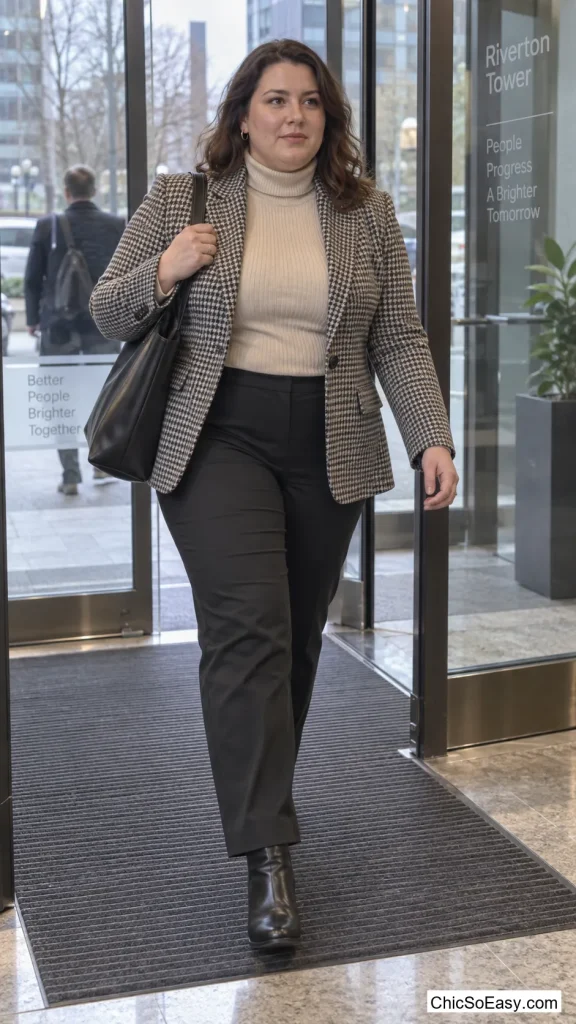
1. Houndstooth Blazer Over a Turtleneck
A fitted houndstooth wool blazer, single button, over a ribbed turtleneck sweater. Straight-leg trousers and ankle boots keep the bottom half clean so the blazer stays the focal point.
The blazer’s structured shoulder is doing the visual work a coat’s bulk would otherwise do, and wool holds heat at a fraction of the thickness. The turtleneck covers the one spot — the neck — where a blazer alone leaves a gap.
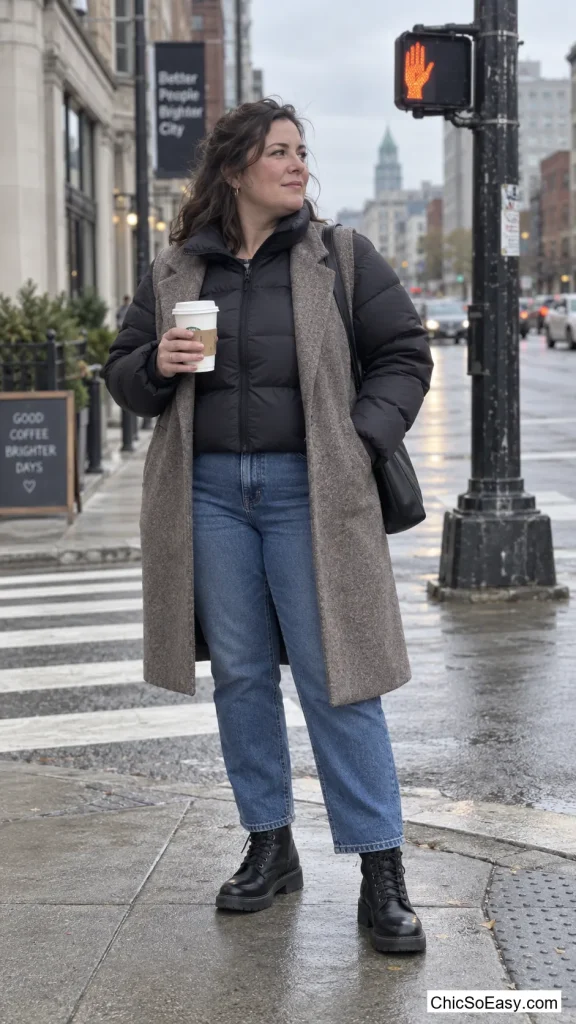
2. Longline Vest Over a Cropped Puffer
A knee-length wool vest, no sleeves, worn open over a cropped puffer jacket that stops at the natural waist. Straight jeans and lace-up boots underneath.
The puffer traps core heat and stops before it reaches the hip, so the bulk it does add never stacks on top of your widest point. The longline vest keeps going past that point instead, which reads as one continuous line rather than two garments piled up.
On a 55-degree day, skip the puffer and wear the vest over a fleece pullover instead — same idea, less insulation.
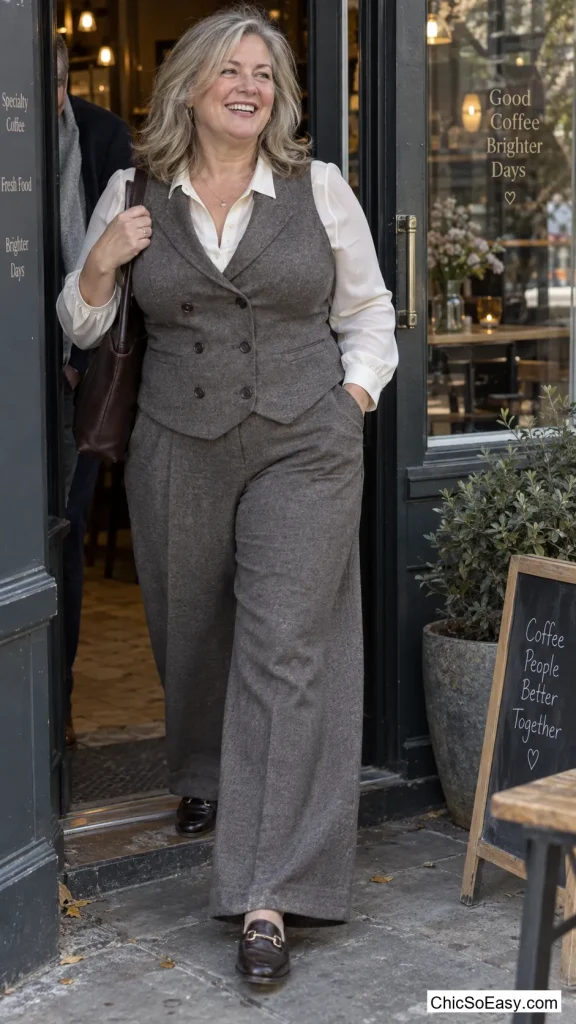
3. Double-Breasted Waistcoat With Wide-Leg Trousers
A fitted double-breasted wool waistcoat over a long-sleeve blouse, buttoned to the top. Wide-leg wool trousers and loafers finish it.
The waistcoat defines a waist the way a belted coat would, and keeping sleeves in the blouse means arms are never bare underneath it. The wide-leg trouser balances a fitted top half so nothing about the outfit reads narrow at the shoulder and wide everywhere else.
Vests: All the Warmth, Half the Layer
A vest insulates the core, which is where most of the heat loss actually happens, without adding a sleeve for a bag strap or a sweater cuff to fight with.
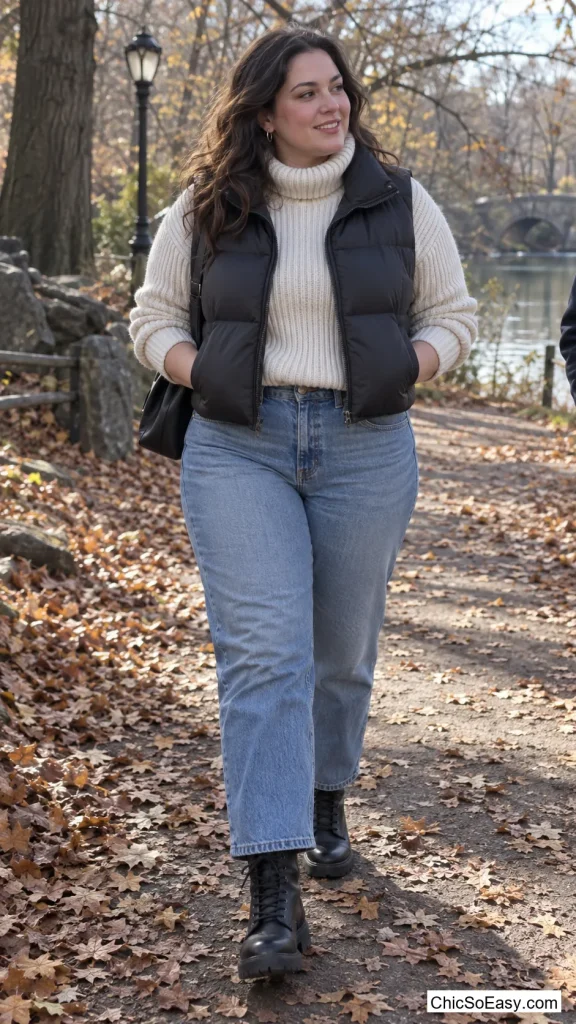
4. Cropped Puffer Vest Over a Turtleneck
A lightweight cropped puffer vest over a chunky ribbed turtleneck sweater, straight-leg jeans, and lace-up boots.
Arms stay in a single layer of sweater instead of getting stuffed into a puffer sleeve, so nothing bunches under a coat sleeve or a bag strap. Cropping the vest above the hip keeps the added bulk off the part of the body that already has curve to spare.
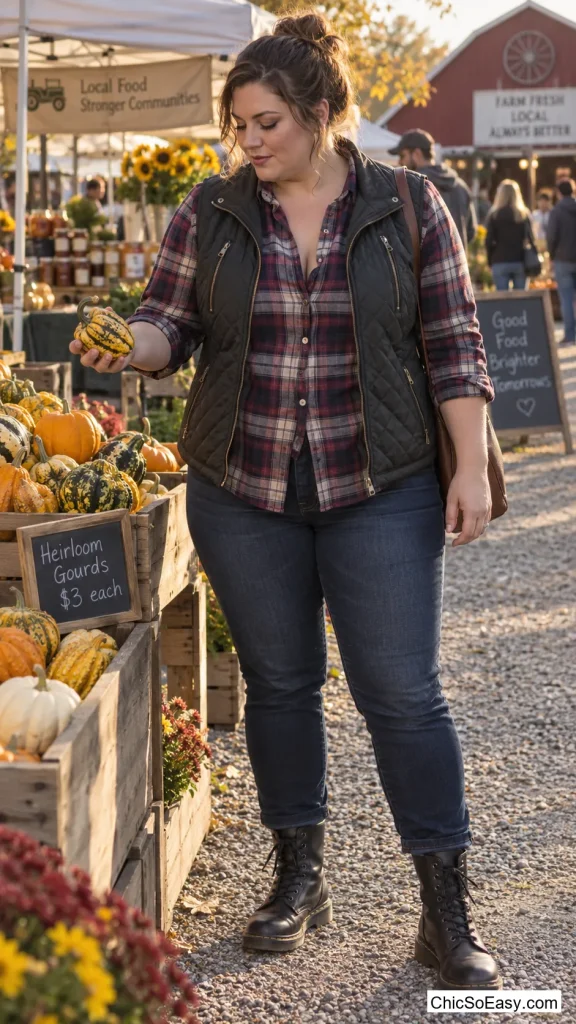
5. Quilted Moto Vest Over Flannel
A quilted moto-style vest, zip front and snap collar, over a plaid flannel shirt left open at the top button. Dark jeans and combat boots underneath.
Quilting traps air in narrow channels instead of one thick layer, so the vest itself stays slim, and the flannel underneath adds a second thin layer of warmth at the torso rather than one bulky one. A moto vest’s fitted armhole is what keeps the shoulders from looking padded.
Size it to sit close through the ribs. A vest bought roomy “for layering” tends to end up looking like a life jacket instead.
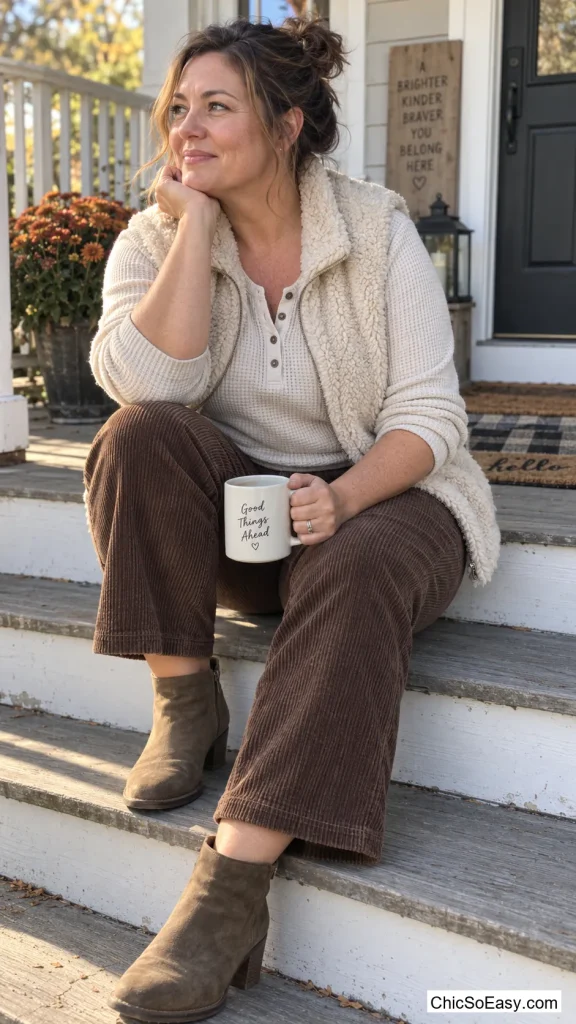
6. Faux Shearling Vest Over a Henley
A cream or tan faux shearling vest over a waffle-knit henley with the sleeves pushed up, corduroy pants, and ankle boots.
Shearling’s texture reads as warm even in a thin vest cut, and waffle knit has its own built-in loft without needing a second sweater over it. Corduroy adds a third texture to the outfit instead of a third layer of thickness.
Wraps, Capes, and Ponchos That Actually Work
A draped layer skips the “does this make me look bigger” question a fitted coat asks, as long as it stops at the hip and something underneath gives it a waistline.
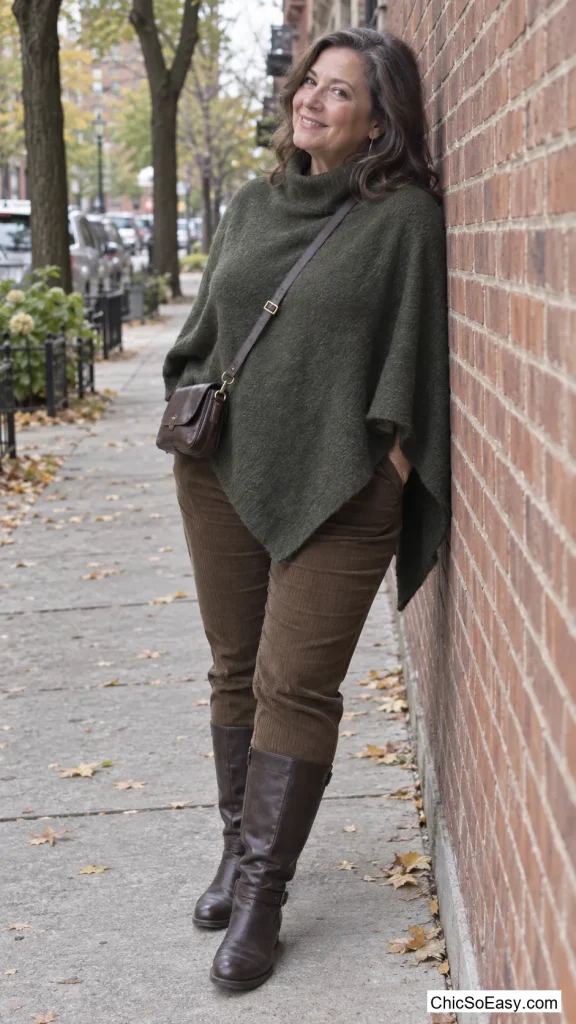
7. Wool Poncho Over Cords and Boots
A solid wool poncho hitting right at the hip, straight corduroy pants, tall boots, and a small crossbody bag worn over the poncho rather than under it.
The poncho drapes instead of clinging, which is what keeps it from reading as a bigger version of you. Stopping it at the hip — not below — is what keeps the proportion in check, and wool holds heat without needing a lining.
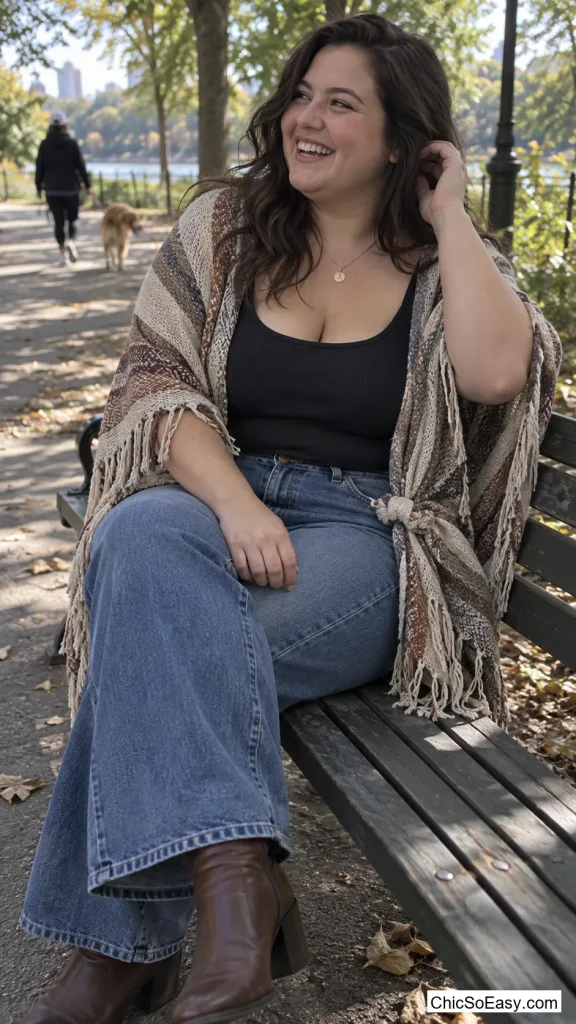
8. Fringed Ruana Knotted at One Hip
An open-front fringed knit ruana with no closure of its own, knotted once at one hip with the ends tucked through. Wide-leg jeans and ankle boots underneath.
The single knot does what a belt does on a coat — it gives fabric that otherwise has no shape a waistline to sit at. Fringe keeps the eye moving instead of stalling at the hemline, and an open front means arms are never restricted the way a sleeve would restrict them.
Knot it on whichever hip is turned away from the wind that day. It isn’t fixed to one side.
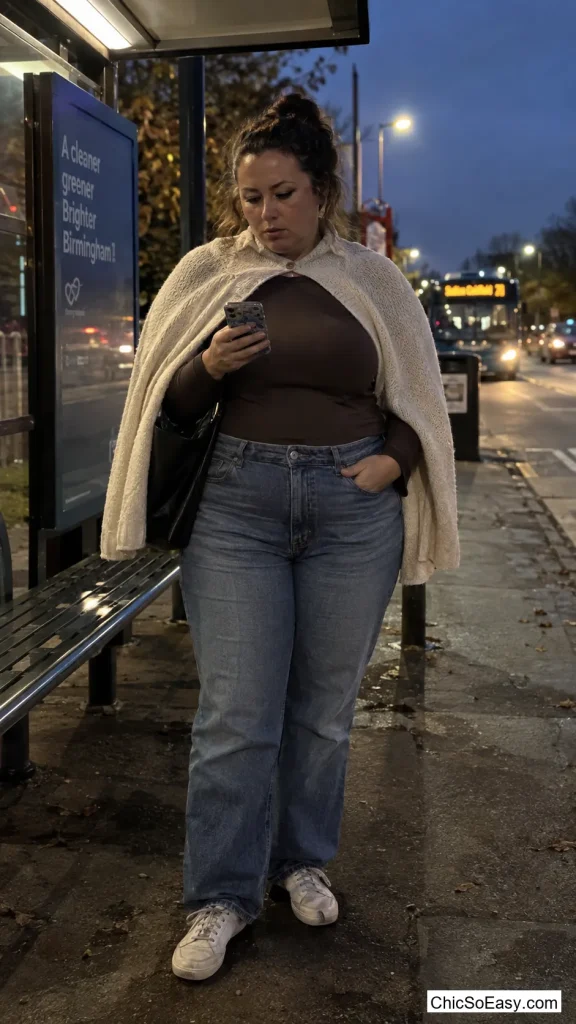
9. Cape-Back Cardigan Buttoned at the Collar
An oversized knit cardigan worn backward, buttoned only at the very top so it hangs off the shoulders like a cape. A fitted long-sleeve top underneath, straight jeans.
Turning the cardigan around gives it a structured shoulder line it doesn’t have worn the normal way, using nothing but a piece already in the closet. Buttoning only at the collar keeps the front open, so it never stacks bulk onto the front of the body.
Shackets and Overshirts: A Coat That Doesn’t Look Like One
A stiffer shirt fabric can hold its own shape without any insulation added to it, which is the opposite of how a puffy coat works.
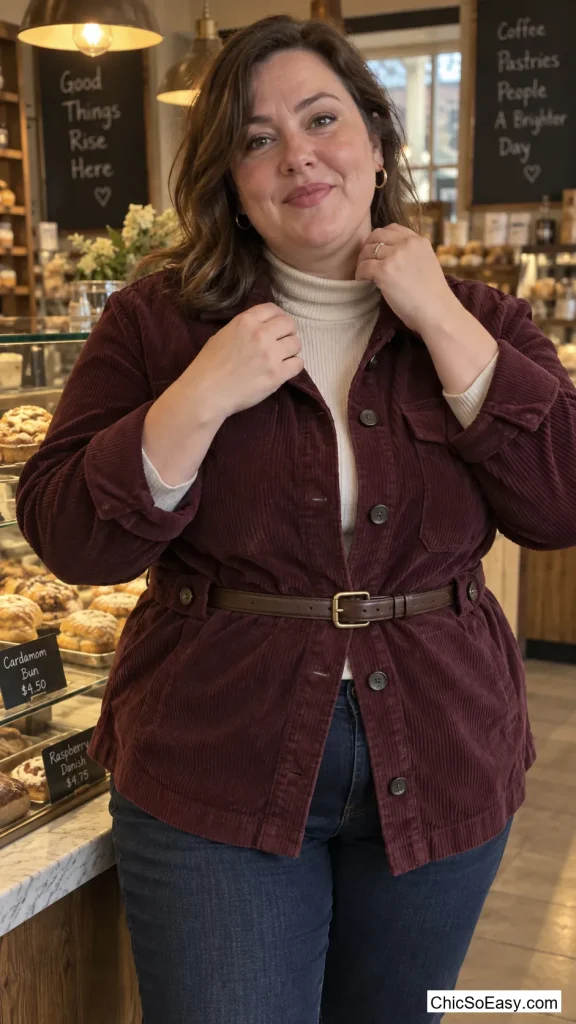
10. Corduroy Shacket Belted at the Waist
An oxblood or olive corduroy shacket over a thin turtleneck, dark jeans, and a belt cinched through the shacket’s own waist tabs.
Corduroy has enough structure to hold a shape without lining, and cinching the belt turns what’s essentially a boxy shirt into something with a defined waist, the same job a coat belt does. The turtleneck fills the gap a shacket’s lower collar leaves open at the throat.
Left unbelted, the same shacket works loose over a dress on a day when a defined waist isn’t the goal.
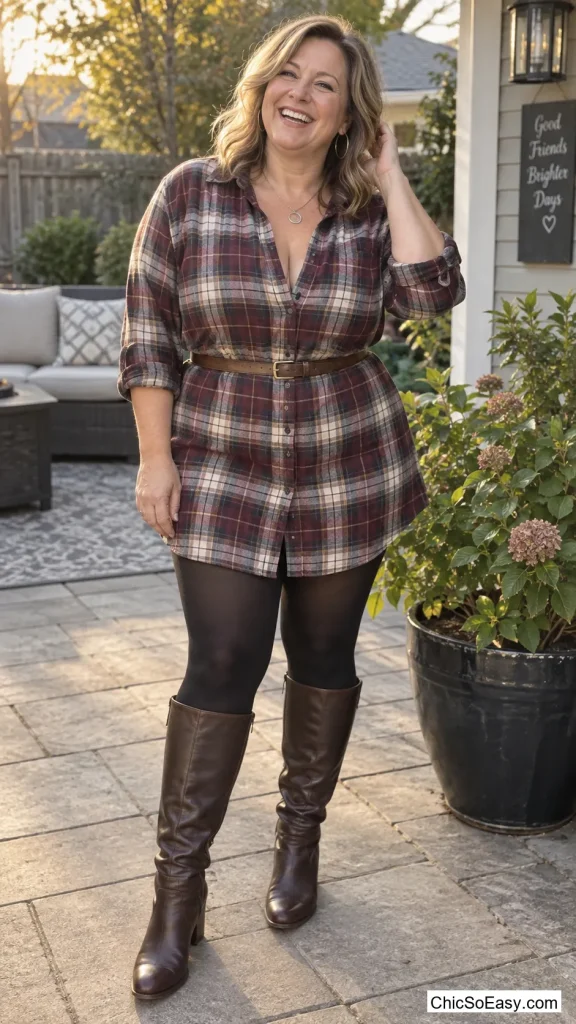
11. Flannel Overshirt Worn as a Dress
An oversized flannel shirt worn as a mini shirtdress, buttoned to mid-chest, thick tights, tall boots, and a thin belt at the natural waist.
Brushed flannel cotton holds more warmth than a typical dress fabric on its own, and the belt is what keeps an oversized shirt from reading shapeless once it’s worn as a dress instead of a jacket. Tights close the leg coverage a coat would otherwise be asked to handle.
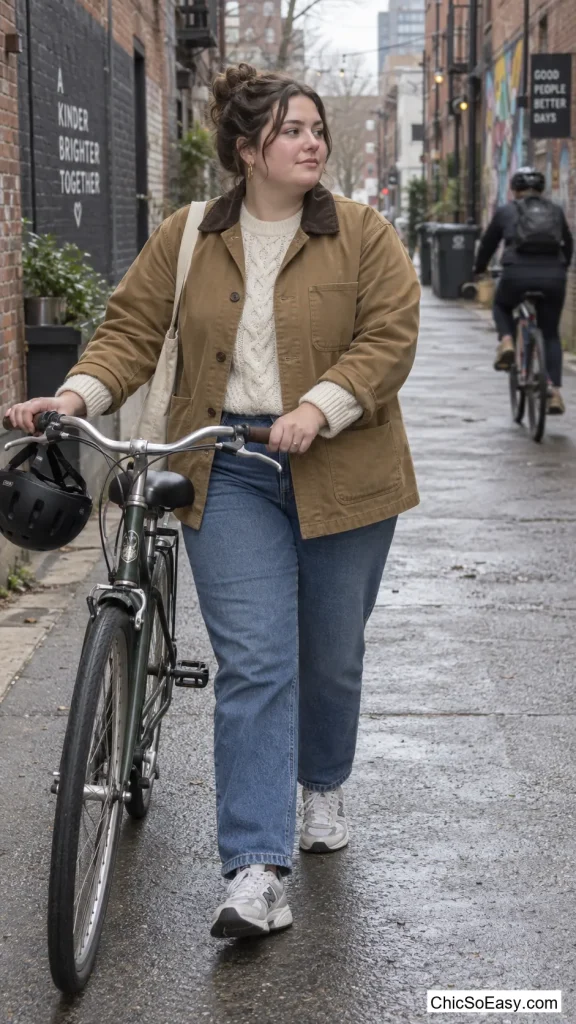
12. Chore Coat Over a Cable Knit
An unlined canvas chore coat over a cable-knit sweater, straight jeans, and sneakers.
Canvas is stiff enough to hold its own shape without any insulation built in, so the actual warmth comes from the cable knit underneath instead. A chore coat’s boxy cut sits away from the body rather than clinging to it, which is most of why it doesn’t read as a coat at all.
The Real Trick Is Underneath
A thin base layer under something you’re already wearing adds heat without adding a single visible inch. It’s the least Instagrammed part of this list and does the most work.
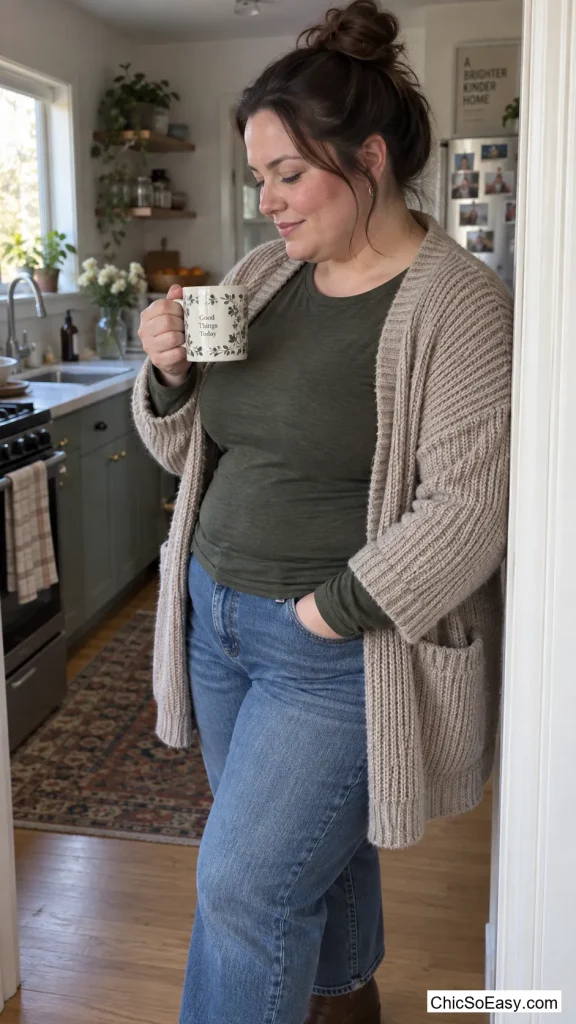
13. Merino Base Layer Under a Cardigan
A thin merino wool long-sleeve top worn as a base layer, with an open chunky cardigan over it, straight-leg jeans, and boots.
Merino traps heat at a fraction of the thickness of fleece or cotton, so the cardigan on top can stay open and loose instead of needing to be zipped up tight to do the actual warming.
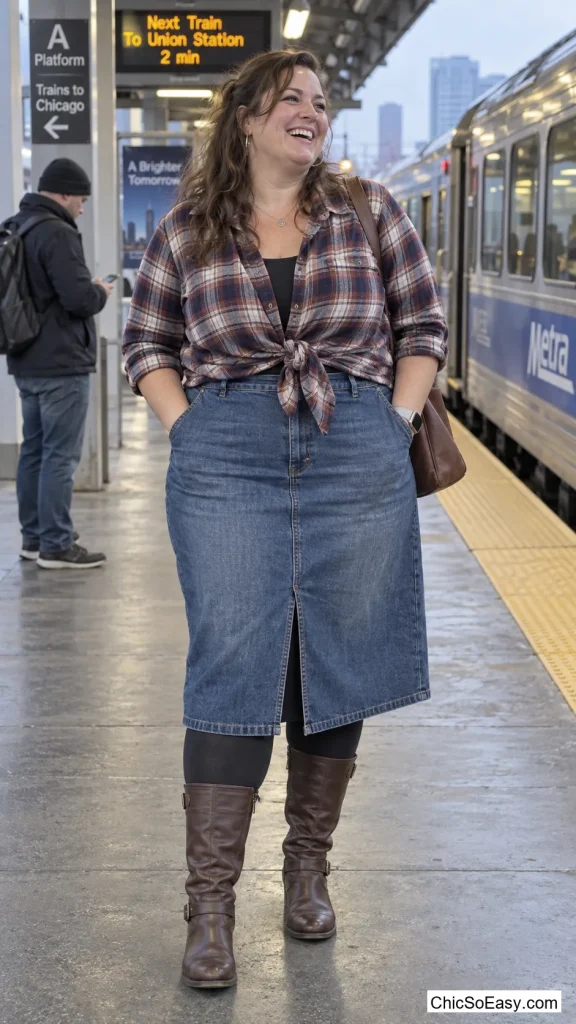
14. Fleece-Lined Leggings Under a Denim Skirt
Fleece-lined leggings under a midi denim skirt, an oversized flannel shirt tied at the waist, and tall boots.
Fleece lining does for legs what a coat does for the torso, which matters because bare legs under a skirt are usually the first place cold gets in. The denim skirt keeps the whole thing structured instead of swingy, which a softer fabric wouldn’t hold as well.
Swap the flannel for a cropped puffer vest on colder days without changing anything below the waist.
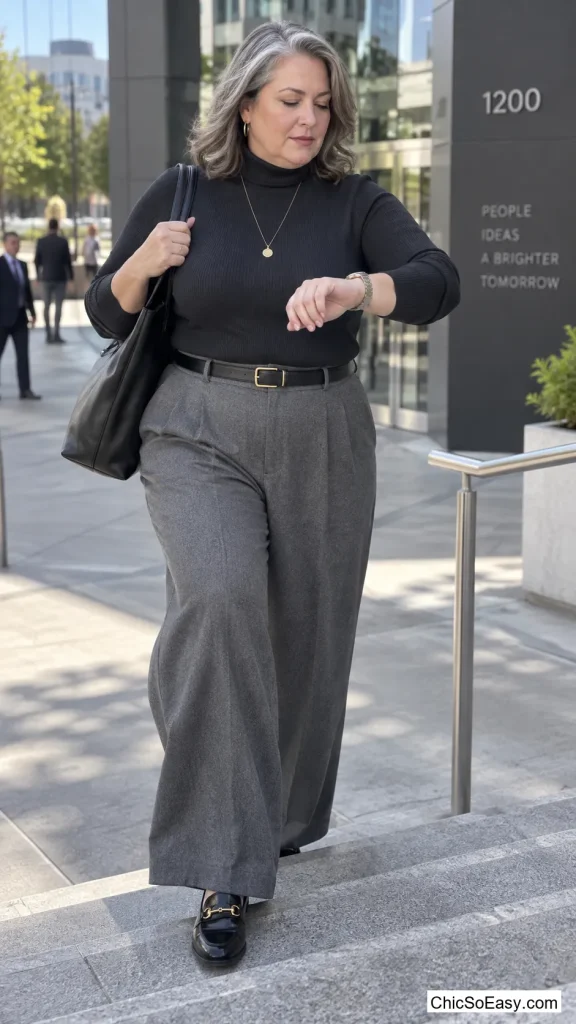
15. Silk Long Johns Under Wide-Leg Trousers
Silk-blend long johns under wide-leg wool trousers, a fitted turtleneck, and loafers or ankle boots.
Silk adds warmth with no visible bulk since it lies flat under trouser fabric instead of adding thickness to it. The wide leg means the base layer never shows through as a line, and the turtleneck covers the one gap trousers and an undershirt leave open at the waist.
Dresses and Skirts That Carry Their Own Warmth
When the dress itself is the insulation, a coat over it stops being load-bearing and starts being optional.
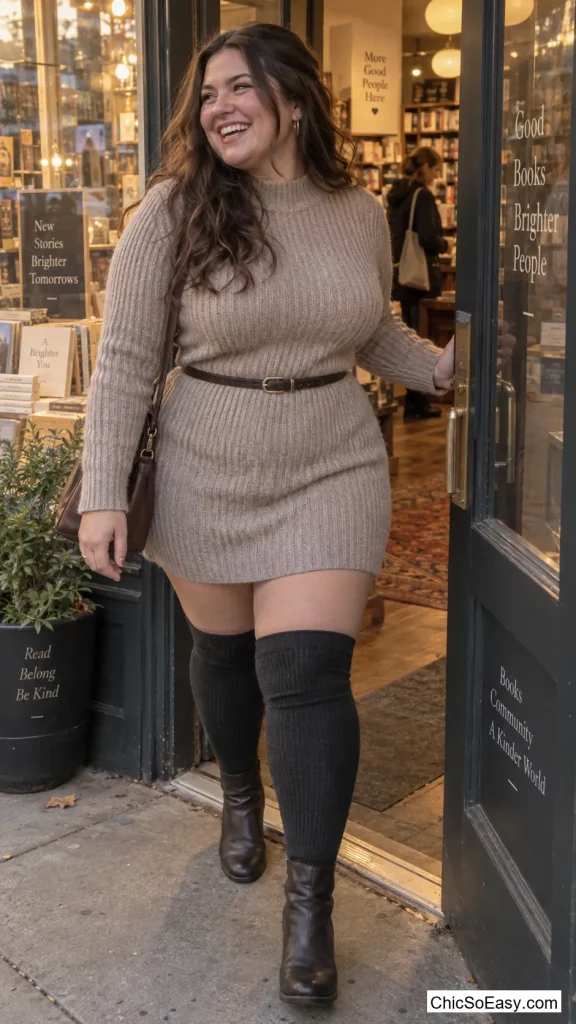
16. Sweater Dress With Over-the-Knee Socks
A ribbed sweater dress hitting mid-thigh, over-the-knee socks, ankle boots, and a thin belt at the waist.
The dress is the insulation instead of a coat layered over something thin, and the socks close the gap between hem and boot where cold usually gets in first. A belt gives a shapeless sweater dress a waist it doesn’t have hanging on its own.
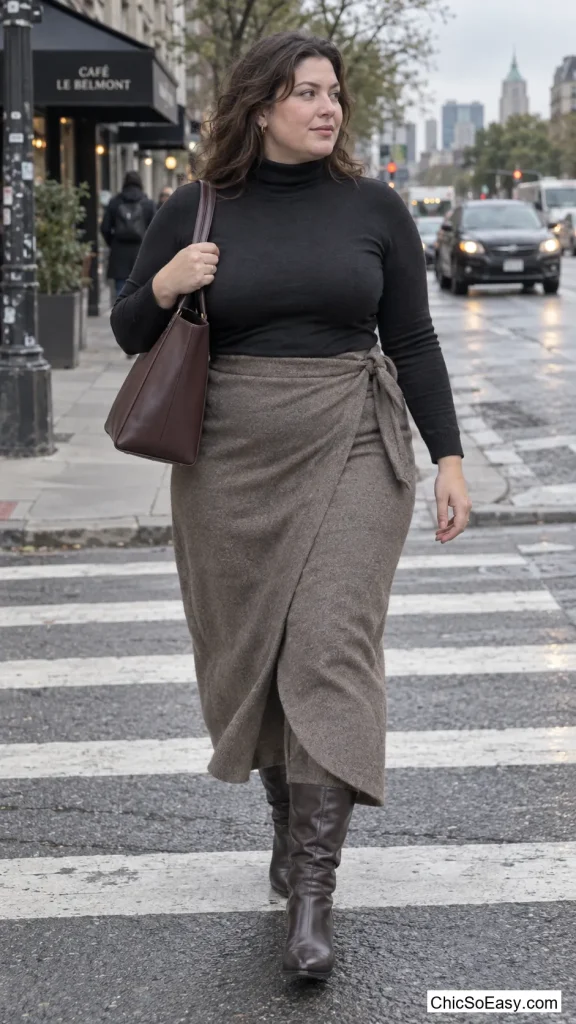
17. Wool Wrap Skirt With a Turtleneck
A midi wool wrap skirt tied at the hip, a fitted turtleneck tucked in, tall boots, and a structured tote.
The wrap tie does the same waist-defining job as a coat belt, and wool holds heat on its own without anything over it. Tucking the turtleneck in keeps the tie visible instead of getting lost under loose fabric spilling over it.
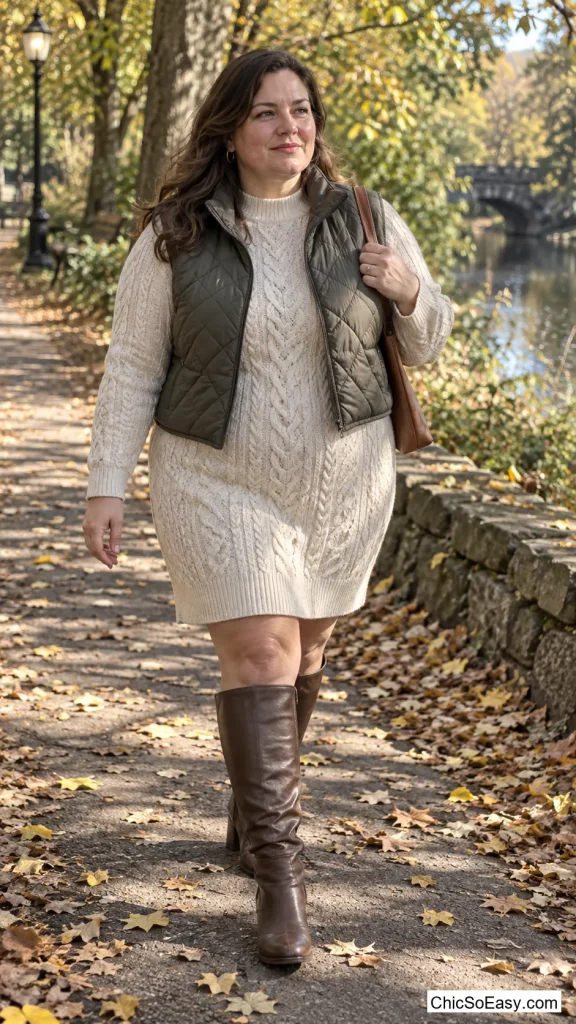
18. Cable-Knit Dress Under a Cropped Vest
A cable-knit sweater dress with a cropped quilted vest over it, ending above the hip, and tall boots.
The dress supplies the base warmth and the vest adds core insulation on top of it without a sleeve or a length that competes with the dress’s own hem. Cropping the vest above the hip is what keeps two garments from reading as one bulky shape.
Cardigans, Reworked
A cardigan already has the fabric and the sleeves a coat has. It just needs a belt, or a backward twist, to act like one.
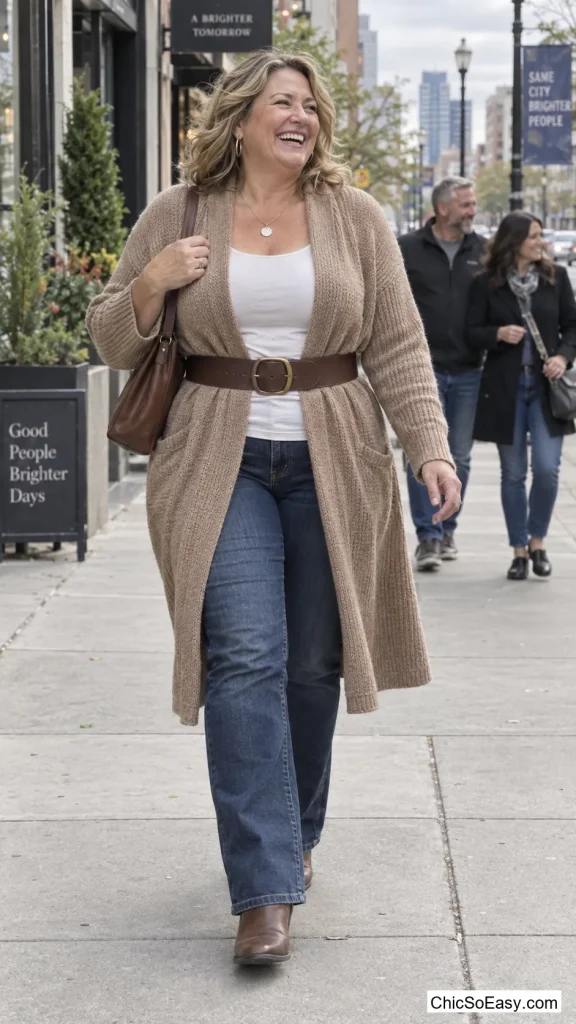
19. Duster Cardigan Cinched With a Belt
A knee-length duster cardigan with a wide obi-style belt cinched at the waist, straight jeans, and a fitted top underneath.
The belt is what turns a duster from “long open cardigan” into something with an actual shape. Its length adds the same visual line a coat’s length would, without a coat’s weight, and a fitted top underneath keeps the whole look from ballooning outward.
20. Chunky Cardigan Worn as a Cowl-Neck
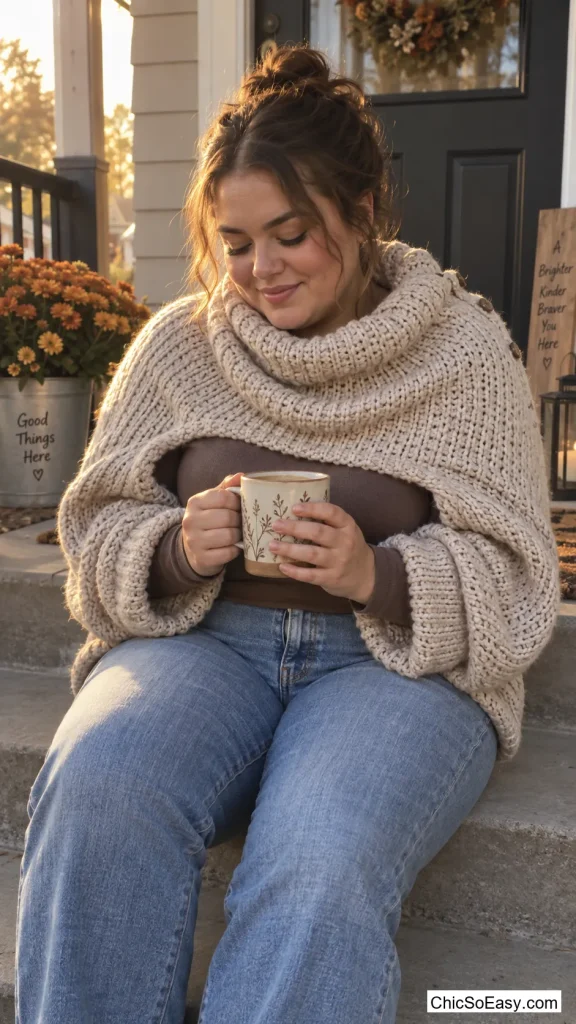
An oversized chunky knit cardigan worn backward and pulled up so the collar sits like a loose cowl at the neck. A fitted long-sleeve top underneath, straight jeans.
Flipping the cardigan around turns two flat front panels into a single draped collar right at the neck, which is where a lot of heat otherwise escapes. The sleeves are already built into the cardigan, so there’s no extra layer needed on the arms.
This only works with a cardigan that has no front pockets. A pocket sitting on your back reads as a mistake, not a styling choice.
Final Thoughts
None of these replace real outerwear once it’s genuinely cold. They’re for the 40 to 55 degree stretch that makes up most of fall, when a full coat is more insulation than the day calls for and one sweater alone isn’t enough.
The pattern across all twenty is the same: warmth comes from two or three thinner pieces instead of one thick one, and the piece doing the most visual work — a vest, a belt, a wrap tie — is usually also the cheapest thing to add to a closet that already has the rest.